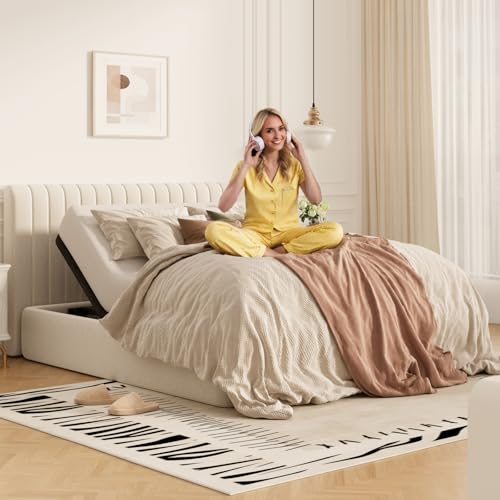
Bed Frames for Adjustable Beds Queen: The Complete Buyer's Guide
Everything you need to know about choosing a queen bed frame that works perfectly with your adjustable base — compatibility, styles, clearance, and setup.
EXPLORE RECOMMENDED FRAMESQuick Answer: A queen adjustable bed frame must have an open support system — typically wide-spaced slats or a platform design — so the base can articulate freely. Solid platforms, fixed center rails, and enclosed box-style frames can block motion and are not suitable. Always verify the frame's weight capacity and clearance before pairing it with your adjustable base.
Why the Right Frame Matters for a Queen Adjustable Bed
An adjustable bed base is a significant long-term investment, and the frame you place it in directly affects how well it performs. A queen-size adjustable base is heavier and wider than a twin or full model, which means the frame must handle more weight and provide more stability across the entire surface. When the head or foot section raises, the base exerts shifting pressure on the frame — a structure that is not designed for this motion can flex, squeak, or gradually loosen over time.
The frame also determines how much of the base's functionality you can actually use. A frame with a tall footboard or a deep side rail can restrict the foot section from rising fully. Similarly, a frame with a solid deck prevents the base from articulating at all. Choosing a compatible frame protects both your base and your mattress, and it keeps the setup safe for daily use.
If you are still deciding on the base itself, our guide to queen adjustable beds covers the different mechanisms and features available. Once you have chosen the base, the frame becomes the next critical decision.
Compatibility Essentials: What Makes a Frame Work
Not every queen frame is built for adjustable bases. Before purchasing, confirm these four compatibility factors:
- Open support system: The frame should use slats with gaps of roughly 2 to 4 inches, or an open platform design. This allows the base to bend without hitting a solid surface.
- No fixed center rail: A rigid center support running the full length of the frame can block the articulation of the base. Removable or low-profile center supports are preferable.
- Adequate weight capacity: Queen adjustable bases are heavy, and the combined weight of the base and mattress can be substantial. Look for frames rated for the combined load, not just the mattress.
- Clearance for the mechanism: The motor and lifting arms need room to move. Check that the frame's under-bed clearance matches the base's requirements, typically 6 to 9 inches.
Frames explicitly marketed as compatible with adjustable beds usually list these specifications clearly. If a frame's description does not mention adjustable base compatibility, treat it with caution and verify the details before buying.
Frame Styles That Pair Well With Queen Adjustable Bases
Once compatibility is confirmed, the style decision comes down to the look of your bedroom and how much access you need to the base. Here are the most common options:
Platform Frames
Platform frames are among the most popular choices because they provide a clean, low-profile look and often come with slatted support. A platform frame with wide slat spacing gives the adjustable base the freedom it needs while keeping the setup visually simple. Many platform frames also offer under-bed clearance, which is useful for storage and for motor access.
Upholstered Frames
Upholstered frames add softness and a tailored look to the bedroom. When choosing an upholstered frame for an adjustable base, confirm that the side rails are not too high and that the frame does not include a solid deck. Upholstered frames with removable slats or an open base are the safest option.
Metal Frames
Metal frames are valued for their durability and straightforward assembly. A heavy-duty metal frame with reinforced slats can support a queen adjustable base well, provided the center support is designed to allow articulation. Look for frames with a rust-proof finish and solid build quality.
Headboard-Only and Open Frames
Some setups use only a headboard attached to the wall or to the adjustable base itself, leaving the rest of the frame open. This approach maximizes access to the base and works well in smaller rooms. Our guide to bed frames and headboards for adjustable beds explains how to combine these elements without blocking the mechanism.
Specialty Frames
If your base is a split queen or a split king configuration, the frame requirements change. Split bases need a frame that supports two independent sections without a fixed divider. Our article on frames for split king adjustable beds covers the specific considerations for multi-section bases.
Frame Type Comparison at a Glance
| Frame Type | Best For | Tier | Key Consideration |
|---|---|---|---|
| Platform Frame (slatted) | Most queen adjustable bases | Essential to mid-tier | Confirm slat spacing of 2–4 inches |
| Upholstered Frame | Bedrooms with a styled look | Mid-range to premium | Check side rail height and open deck |
| Heavy-Duty Metal Frame | High weight capacity needs | Mid-tier to high-end tier | Verify center support flexibility |
| Headboard-Only Setup | Small rooms and easy access | Starter to premium | Ensure headboard does not block motion |
| Split Queen Frame | Split adjustable bases | Mid-range to flagship tier | Independent support for each section |
Matching Your Mattress to the Frame and Base
The frame and base are only part of the equation — the mattress must also be flexible enough to bend with the adjustable base. Memory foam, latex, and most hybrid mattresses are designed for this purpose. Innerspring mattresses with rigid edges or very thick coil systems may resist bending and can wear out faster when used on an adjustable base.
Sheet selection also matters. Deep-pocket sheets and split-compatible bedding prevent the sheets from pulling loose when the head section raises. Our guide to bamboo sheets for adjustable beds explains which fabrics and fits work best. If you have a split queen base, look for split-compatible sheet sets that accommodate independent movement.
Setup Tips for a Queen Adjustable Bed Frame
Proper setup protects your investment and keeps the base running smoothly. Keep these tips in mind:
- Assemble the frame on a level surface. An uneven floor can cause the base to bind and strain the motor.
- Place the base directly on the frame's slats. Do not add a box spring or a solid board between the base and the frame.
- Test the full range of motion. Raise the head and foot sections completely before placing the mattress to confirm nothing blocks the movement.
- Leave room behind the headboard. The head section of the base moves backward as it raises, so the frame and headboard need clearance.
- Check the center support. If the frame includes a center rail, make sure it sits low enough to avoid contact with the base.
For a broader overview of base options, see our guide to adjustable bed frames and the full collection of adjustable beds.
Who Should Choose a Queen Adjustable Bed Frame
Queen size remains the most popular bed size for couples and single sleepers who want room to stretch. An adjustable base adds value for people who read or watch television in bed, for those who need elevation for reflux or breathing comfort, and for anyone recovering from surgery or managing back discomfort. Our articles on adjustable beds for back pain and adjustable beds for seniors explore these use cases in more detail.
If you are comparing base sizes, the guide to queen-size split adjustable beds explains when a split configuration makes sense for couples with different comfort preferences.
Common Mistakes to Avoid
- Buying a frame before checking the base specs. Always confirm clearance and weight requirements first.
- Assuming all platform frames are compatible. Solid platforms and tight slat spacing can block articulation.
- Ignoring the headboard clearance. A tall or deep headboard can prevent the head section from rising fully.
- Using a box spring. Box springs are not designed for adjustable bases and can interfere with movement.
- Overlooking mattress flexibility. A rigid mattress shortens the lifespan of both the mattress and the base.
Frequently Asked Questions
Can any queen bed frame hold an adjustable bed base?
No. An adjustable queen bed frame needs an open, flexible support system such as slats with gaps or a platform design that allows the base to articulate. Frames with a solid platform or a fixed center rail may block the motion of the adjustable base and are not recommended.
Do I need a box spring with an adjustable bed frame?
No. Adjustable bed bases are designed to support the mattress directly. A box spring adds height and can interfere with articulation, so it is generally not used with adjustable bases.
What mattress works best with a queen adjustable bed frame?
Flexible mattresses such as memory foam, latex, and hybrid models work best. Innerspring mattresses with a rigid border or very thick coils may not bend smoothly and can shorten the lifespan of both the mattress and the base.
How much clearance do I need under a queen adjustable bed frame?
Most adjustable bases require at least 6 to 9 inches of clearance beneath the frame for the motor and mechanism. Check the base specifications before choosing a frame, especially if you want under-bed storage.
Ready to choose? Browse our recommended queen bed frames for adjustable bases below, compare features, and check availability on Amazon. Always verify compatibility with your specific base model before purchasing.