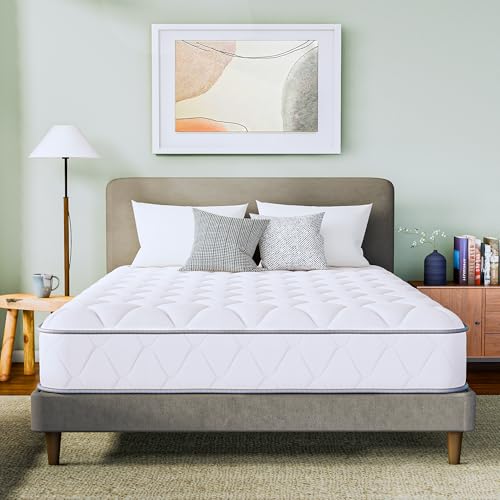
Innerspring Mattresses: The Classic Support Choice
Discover the benefits of coil-based mattresses, types, firmness levels, and find the perfect innerspring for your sleep style.
See Recommended ProductsWhy Innerspring? Innerspring mattresses have been a trusted choice for generations. They offer excellent breathability, responsive support, and a wide range of firmness options to suit every sleeper.
What Is an Innerspring Mattress?
An innerspring mattress uses a core of metal coils or springs to provide support. The coil system is surrounded by layers of padding, foam, or fiber to enhance comfort. This traditional construction has evolved significantly, with modern innersprings offering advanced features like pocketed coils and zoned support.
Unlike all-foam or hybrid options, innersprings are known for their bouncy feel, excellent airflow, and temperature regulation. They are often more affordable than premium hybrids or latex, making them a popular choice for budget-conscious shoppers who still want reliable support.
For a broader overview, visit our complete mattress guide to compare with other types like memory foam or hybrid mattresses.
Types of Innerspring Systems
The coil system is the heart of an innerspring mattress. Understanding the different types helps you choose the right level of support and durability.
Bonnell Coils
The classic hourglass-shaped coils, connected by helical wires. They offer a firm, bouncy feel and are durable, but may transfer motion more than other types. Often found in budget-friendly mattresses.
Offset Coils
Similar to Bonnell but with flattened tops that pivot, allowing them to conform better to the body. They provide improved pressure relief and are commonly used in higher-end traditional mattresses.
Continuous Coils
Made from a single continuous wire, these coils are interconnected. They are durable and provide a firm, consistent support, but may not contour as well as pocketed coils.
Pocketed Coils (Individually Wrapped)
Each coil is wrapped in fabric, allowing it to move independently. This reduces motion transfer and provides targeted support. Pocketed coils are a hallmark of premium innersprings and hybrids.
If you're considering a bed frame to go with your new mattress, explore our guides on metal bed frames or wooden bed frames for sturdy support.
Choosing the Right Firmness
Innerspring mattresses come in a range of firmness levels. Your ideal choice depends on your sleeping position and personal comfort preference.
- Soft (Plush): Best for side sleepers who need pressure relief on shoulders and hips. Provides a cradling feel.
- Medium: Versatile option for combination sleepers and those who prefer a balanced feel. Good for back sleepers.
- Medium-Firm: The most popular choice, offering a balance of support and comfort. Ideal for back and stomach sleepers.
- Firm: Provides maximum support, best for stomach sleepers and those with back pain who need a solid surface.
For detailed guidance based on your sleep position, check our side sleeper guide, back sleeper guide, or stomach sleeper guide.
Innerspring Mattresses: Pros & Cons
✅ Pros
- Excellent airflow: Coil structure promotes breathability, keeping you cool.
- Responsive bounce: Easy to move around on the bed, great for combination sleepers.
- Wide price range: Options available for every budget.
- Durable: High-quality innersprings can last 8–10 years.
- Edge support: Many modern innersprings have reinforced edges for better sitting support.
⚠️ Cons
- Motion transfer: Traditional coils may transfer movement across the bed (pocketed coils reduce this).
- Pressure relief: May not offer the same contouring as memory foam.
- Noise: Older or lower-quality coils can squeak over time.
- Heavier: Can be bulky and harder to move compared to foam beds.
Caring for Your Innerspring Mattress
To extend the life of your innerspring mattress, follow these simple care tips:
- Rotate regularly: Rotate your mattress head-to-foot every 3–6 months to prevent sagging.
- Use a mattress protector: Protect against spills, dust mites, and allergens. Browse our mattress protectors for options.
- Proper support: Ensure your bed frame or foundation provides adequate support. Check our bed frames section for sturdy bases.
- Clean regularly: Vacuum the surface and air out the mattress periodically.
For more detailed maintenance advice, visit our mattress care guide.
When to Replace Your Innerspring Mattress
Most innerspring mattresses last between 7 to 10 years. However, you may need to replace yours sooner if you experience:
- Visible sagging or indentations
- Worsening allergies or asthma (dust mites accumulate)
- Increased back or joint pain upon waking
- Discomfort or lack of support
- Audible squeaking or creaking
Learn more signs in our when to replace mattress guide.
Innerspring vs Other Mattress Types
How does an innerspring compare to other popular options?
- vs Memory Foam: Innersprings are cooler and more responsive; memory foam offers deeper contouring and pressure relief.
- vs Hybrid: Hybrids combine a coil support core with foam or latex layers, offering the best of both worlds – support and comfort.
- vs Latex: Latex is more durable and eco-friendly but typically more expensive; innersprings are more affordable and widely available.
For a side-by-side comparison, see our mattress comparison guide.