Best Mattresses: Your Complete Guide to Smarter Sleep Choices
Choosing the right mattress is one of the most impactful decisions you can make for your sleep, health, and daily energy. This guide breaks down every material, firmness level, and feature so you can compare options with confidence and find the mattress that truly fits the way you sleep.
Explore Top PicksWhether you are upgrading from an aging mattress or furnishing a new bedroom, the sheer number of options can feel overwhelming. Below, you will find a structured breakdown of mattress types, firmness scales, sleeper profiles, and the practical details that matter most. When you are ready to shop, our curated selection of recommended mattresses appears further down the page.
Understanding the Main Mattress Types
Every mattress on the market falls into a handful of core categories, each defined by its support system and comfort layers. Knowing how these categories differ is the fastest way to narrow your search. The tier labels below describe the general market positioning of each category, which helps you set expectations for construction quality and features.
Memory Foam
Layers of viscoelastic foam contour closely to the body, isolating motion and easing pressure at the shoulders and hips. Entry-level models are typically simpler single-layer builds, while premium and luxury models layer multiple foam densities for targeted support and cooling.
Hybrid
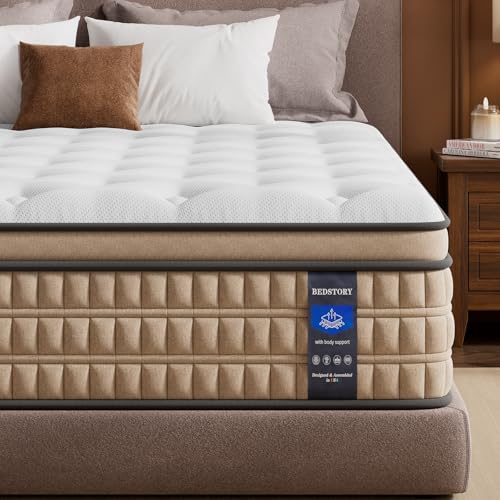
Foam or latex comfort layers sit on top of a pocketed coil support core. Hybrids offer more bounce, better airflow, and stronger edge support than all-foam designs, making them a balanced choice for couples and combination sleepers.
Innerspring
A traditional coil system with minimal comfort padding. These models feel bouncier and more responsive. Modern innerspring designs with reinforced coil counts sit comfortably in the mid-tier and suit sleepers who prefer a firm, traditional feel.
Latex
Natural or blended latex delivers a resilient, buoyant feel that sleeps cooler than memory foam. High-end tier latex mattresses are known for durable construction and a responsive surface that suits a wide range of sleep positions.
Gel-Infused Foam
Gel particles are mixed into foam to improve heat dissipation. These models are a solid choice for hot sleepers who still want the contouring feel of foam, and they often sit in the balanced tier of the market.
Organic & Natural
Built with certified organic cotton, wool, and natural latex. These mattresses appeal to sleepers focused on material transparency. Professional-grade certifications such as GOTS and GOLS are worth checking before you commit.
If you are still comparing frame options to pair with your new mattress, our guide to the best bed frames covers platform, panel, and upholstered designs that complement each mattress type. For a broader overview of sleep products, you can also browse our roundup of best pillows to complete your setup.
Decoding the Firmness Scale
Firmness is the single most subjective factor in mattress shopping. Manufacturers typically rate mattresses on a scale from 1 (very soft) to 10 (very firm). The key is to match the rating to your body weight and sleep position rather than assuming firmer is always better.
- Soft (1–3): Deep cushioning that lets the body sink in. Best suited to lighter sleepers and side sleepers who need pressure relief at the shoulders and hips. Larger sleepers may find soft models lack sufficient support.
- Medium (4–6): The most versatile range. Medium mattresses balance contouring and support, making them a reliable choice for combination sleepers and couples with different preferences.
- Medium-Firm (6–7): Often recommended for back pain because it supports spinal alignment while still relieving pressure. A solid choice for average-weight back and stomach sleepers.
- Firm (8–10): Minimal sinkage and a flat, supportive surface. Heavier sleepers and stomach sleepers often prefer firm models, though side sleepers may experience pressure buildup.
A practical rule of thumb: lighter sleepers usually feel a mattress as firmer than its rating, while heavier sleepers feel it as softer. If you and your partner have different firmness preferences, a dual-firmness or adjustable model may be the most efficient long-term investment.
Matching a Mattress to Your Sleep Position
Your dominant sleep position determines where your body needs support and where it needs cushioning. Use the profiles below as a starting point, then fine-tune based on your body weight and personal comfort.
Side Sleepers
Look for medium to medium-firm models with generous pressure relief at the shoulders and hips. Memory foam and hybrid designs in the mid-range and premium tiers are popular because they contour without bottoming out.
Back Sleepers
A medium-firm mattress supports the natural curve of the lower back while keeping the shoulders from sinking too deep. Hybrid and latex models offer the responsive support many back sleepers prefer.
Stomach Sleepers
Firm to medium-firm surfaces prevent the hips from sinking and keep the spine level. Innerspring and firm hybrid models are common picks, especially for heavier sleepers who need consistent support.
Combination Sleepers
Versatility is key. A medium hybrid or a responsive latex mattress accommodates position changes throughout the night without creating pressure points or excessive sinkage.
Mattress Type Comparison at a Glance
The table below summarizes how each mattress category performs across the factors that matter most. Use the tier column to understand where each type typically sits in the market, then weigh the trade-offs against your priorities.
| Mattress Type | Tier | Best For | Feel | Motion Isolation | Airflow |
|---|---|---|---|---|---|
| Memory Foam | Entry-level to luxury | Side sleepers, pressure relief | Hugging, contouring | Excellent | Moderate to good |
| Hybrid | Mid-range to premium | Couples, combination sleepers | Balanced, responsive | Good | Excellent |
| Innerspring | Entry-level to mid-range | Stomach sleepers, firm-preference | Bouncy, traditional | Fair | Excellent |
| Latex | Premium to luxury | Hot sleepers, eco-conscious | Buoyant, resilient | Good | Very good |
| Gel-Infused Foam | Mid-tier to top-tier | Hot sleepers who want foam | Contouring, cooler | Very good | Good |
A Practical Buying Checklist
Before you commit to a mattress, run through the following checklist. These are the details that separate a purchase you will be happy with for years from one you regret within months.
- Confirm the firmness rating matches your primary sleep position and body weight.
- Check the trial period and return policy, especially for online purchases.
- Review the warranty length and what it covers, such as sagging depth thresholds.
- Verify the support core is suited to your bed frame type, particularly if you use a platform bed or adjustable frame.
- Look for breathable covers and cooling features if you sleep hot.
- Check certifications for foam emissions and organic materials if material safety is a priority.
- Measure your bedroom and doorways to ensure the mattress can be delivered and set up without issues.
If you are also updating the bedding that sits on top of your new mattress, our guide to best sheets explains how to choose breathable, durable linens. And if you prefer to soften a mattress you already own, a mattress topper can be an efficient way to adjust comfort without replacing the whole bed.
Frequently Asked Questions
How often should I replace my mattress?
Most mattresses last between seven and ten years. Signs that it is time to replace yours include visible sagging, waking up with stiffness, or noticing that the surface no longer feels supportive. Higher-tier models with durable construction often hold their shape longer than entry-level options.
Which mattress type is best for side sleepers?
Side sleepers generally benefit from a medium or medium-firm mattress that cushions pressure points at the shoulders and hips while keeping the spine aligned. Memory foam and hybrid models in the mid-tier and premium categories are popular choices because they balance contouring with support.
Is a firmer mattress always better for back pain?
Not necessarily. Research suggests that medium-firm mattresses often work best for back pain because they support the spine while still relieving pressure. A mattress that is too firm can create pressure points, while one that is too soft may allow the hips to sink. The right choice depends on your body weight, sleep position, and preferences.
Do I need a mattress topper or a new mattress?
If your mattress is structurally sound but slightly too firm or lacking in cushioning, a topper can be an efficient way to adjust comfort. If the mattress sags, has broken springs, or is near the end of its lifespan, a new mattress is the better long-term investment.
What is the difference between memory foam and hybrid mattresses?
Memory foam mattresses use layers of viscoelastic foam to contour to the body, which suits people who like a hugging, motion-isolating feel. Hybrid mattresses combine foam comfort layers with a coil support core, offering more bounce, airflow, and edge support. Hybrids tend to sit in the mid-range to premium tiers, while memory foam spans entry-level to luxury categories.
Ready to Find Your Best Mattress?
Browse our curated selection of recommended mattresses below. Each option is chosen to cover a different sleep profile, so you can compare features side by side and make a confident decision.
View Recommended MattressesStill exploring? Our full best mattresses collection and our guide to beds can help you build a complete sleep setup. If you are setting up a guest room, our full bed sets and bedside tables with storage are worth a look.