Canopy Beds: A Complete Guide to Styles, Sizes & Buying
Canopy beds turn a bedroom into a focal point. This guide explains frame types, materials, size options, and practical setup tips so you can choose a canopy bed that fits your room, your sleep habits, and your long-term needs.
Jump to Buying ChecklistWhy canopy beds matter: A canopy bed is more than a frame—it defines the visual height, privacy, and atmosphere of the room. Because canopy beds are a long-term furniture investment, understanding post height, rail construction, material durability, and curtain compatibility before buying prevents costly setup mistakes and helps you choose a frame that stays practical for years.
What Is a Canopy Bed?
A canopy bed is a bed frame with tall corner posts connected by a top frame. The structure supports fabric panels, curtains, or an open decorative canopy above the sleeping area. Unlike standard bed frames, canopy beds add vertical presence and can create a semi-enclosed sleep space. They appear in traditional four-poster designs, modern minimalist frames, and upholstered styles. For a broader comparison of bed frame categories, see the full beds and frames guide.
Popular Canopy Bed Styles
Canopy bed styles differ in post thickness, top-rail design, and material. The right style depends on ceiling height, room size, and how much visual weight you want the frame to add.
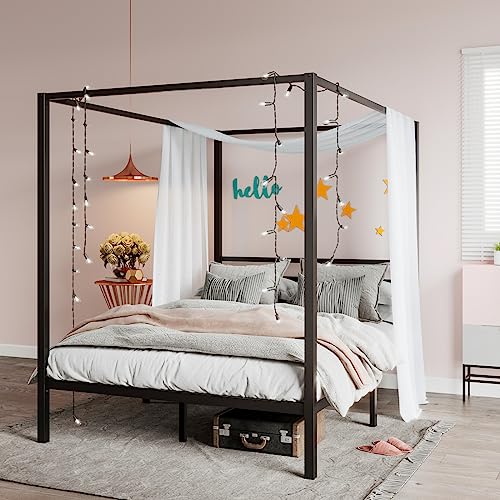
Minimalist Metal Canopy
Slender metal posts and an open top frame keep the look light. These frames suit modern and industrial bedrooms and work well in smaller rooms because they add height without heavy visual mass. Metal frames are typically durable and straightforward to assemble.
Traditional Four-Poster Wood
Solid wood posts with decorative finials and a structured top rail create a classic look. Wood frames offer warmth and traditional character and pair well with fabric curtains. Check joinery quality and post stability, especially on taller designs.
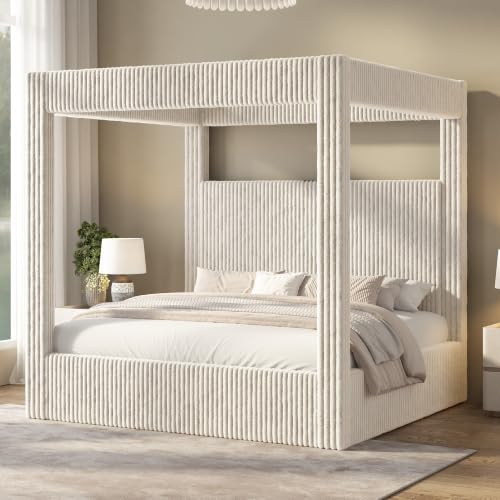
Upholstered Canopy Bed
Fabric-wrapped posts and headboards soften the frame and add acoustic comfort. Upholstered canopy beds suit contemporary and transitional bedrooms. Look for removable, cleanable covers and reinforced internal framing for long-term stability.
Low-Profile Canopy
A lower top rail reduces the height requirement, making canopy beds viable in rooms with standard ceilings. These designs keep the canopy concept while limiting visual bulk. Ideal for apartments and smaller primary bedrooms.
Canopy Bed Sizes: Matching Frame to Room
Canopy bed sizes follow standard mattress dimensions, but the frame footprint is larger because of the corner posts. Measure the room and the path to the bedroom before ordering. If you are comparing mattress dimensions, the mattress size chart provides a full reference. For a broader overview of size-specific frames, see the queen bed guide and king bed guide.
| Size | Best For | Space Consideration |
|---|---|---|
| Twin / Twin XL | Guest rooms, teens, small bedrooms | Compact footprint; canopy adds vertical emphasis |
| Full / Double | Single sleepers, smaller primary bedrooms | Check post clearance against nightstands |
| Queen | Most couples and primary bedrooms | Balance post height with ceiling height |
| King | Larger primary bedrooms, couples | Requires generous floor space around posts |
| California King | Taller sleepers, large bedrooms | Long frame; verify room length and door access |
Frame Materials and Construction
Material choice affects durability, weight, assembly difficulty, and how the canopy interacts with curtains.
- Solid wood: Warm appearance, traditional character, and good long-term durability. Check that posts are solid rather than hollow and that joinery is reinforced.
- Metal: Slender profile, high strength-to-weight ratio, and typically rust-resistant finishes. Metal frames suit modern interiors and are often easier to move.
- Upholstered fabric: Adds softness and acoustic benefit. Confirm removable covers and reinforced internal framing.
- Mixed materials: Wood posts with metal rails or upholstered headboards combine visual interest and structural strength.
Canopy Bed Buying Checklist
- Measure ceiling height: Confirm clearance above the top rail and room for curtains to hang without dragging.
- Check post stability: Tall posts benefit from reinforced base connections and, where available, wall-anchoring hardware.
- Plan curtain compatibility: Confirm whether the frame includes curtain rods or rings, and measure the drop length before buying fabric.
- Verify assembly requirements: Canopy beds often need two people; check that hardware is labeled and instructions are clear.
- Confirm mattress fit: Ensure the frame accommodates your mattress size and thickness.
- Consider room flow: Leave clearance around posts for nightstands, doors, and walking paths.
Who Should Choose a Canopy Bed?
Canopy beds suit sleepers who want a strong visual anchor and a sense of enclosure. They work especially well in primary bedrooms with generous ceiling height and in guest rooms where a dramatic focal point is welcome. If you prefer a low-profile look or have a very compact room, a platform bed or panel bed may be a better fit. For rooms that need practical storage, consider a storage bed instead.
Care and Maintenance Tips
Regular care keeps the frame stable and the canopy fabric fresh. Tighten post connections periodically, dust the top rail, and wash or vacuum curtains according to the fabric care label. Upholstered frames benefit from regular vacuuming with a soft brush attachment. For general mattress care that complements any bed frame, see the mattress care tips.
Related Bed Frame Guides
Frequently Asked Questions
What is a canopy bed?
A canopy bed is a bed frame with tall corner posts connected by a top frame, allowing fabric, curtains, or a decorative canopy to be draped over the sleeping area. It adds visual height, privacy, and a focal point to the bedroom.
What ceiling height do I need for a canopy bed?
Most canopy beds need at least 8 to 9 feet of ceiling height for comfortable clearance and a balanced look. Low-profile canopy designs work better in rooms with lower ceilings, while full four-poster styles suit taller rooms.
Are canopy beds suitable for small bedrooms?
Yes, when chosen carefully. Low-profile, open-frame, or minimalist canopy beds with slender posts can suit smaller rooms. Avoid heavy curtains and oversized frames that visually crowd the space.
What materials are canopy beds made from?
Common canopy bed materials include solid wood, metal, upholstered fabric, and mixed-material designs. Wood offers warmth and traditional character, metal provides a slender profile and durability, and upholstered frames add softness and a modern feel.
Do canopy beds require special assembly?
Canopy beds typically involve more assembly than standard bed frames because of the taller posts and top rails. Check whether the frame includes clear instructions, labeled hardware, and whether a two-person assembly is recommended.