Bed Frames for Memory Foam Beds: The Complete Buying Guide
Your memory foam mattress is only as good as the foundation beneath it. Learn how to choose a frame that protects your mattress, supports your body, and extends the life of your sleep investment.
Why the right frame matters: Memory foam is designed to contour and absorb pressure, but it needs a firm, even, and breathable base to perform correctly. The wrong frame can cause sagging, trapped heat, and premature wear. This guide explains exactly what to look for so you can buy with confidence.
If you have already chosen your memory foam mattress, the next decision is the frame that will hold it. Unlike traditional innerspring setups, foam mattresses are sensitive to how weight is distributed and how air moves underneath. A frame that is too flexible, has wide gaps, or restricts airflow can undermine the comfort and durability you paid for.
This guide walks you through support requirements, slat spacing, ventilation, weight capacity, and the most popular frame styles. By the end, you will understand which frame types suit different sleepers and bedrooms, and how to match a frame to your mattress size and sleeping habits.
What Makes Memory Foam Different
Memory foam responds to body heat and pressure, slowly molding to your shape. That responsive quality is its greatest strength, but it also means the material needs consistent support underneath. If the base flexes or has wide gaps, the foam can sink into those gaps over time, creating permanent impressions and reducing comfort.
Foam also tends to retain heat more than innerspring or hybrid designs. A breathable foundation helps dissipate warmth and keeps the sleep surface cooler. This is why slatted frames with adequate airflow are often preferred over fully enclosed solid platforms, although both can work depending on the design.
Key Takeaway
A memory foam mattress needs a firm, flat, evenly supportive base with good airflow. Prioritize rigid construction and closely spaced slats over decorative flexibility.
The Core Requirements for a Memory Foam Frame
Before comparing styles, understand the four non-negotiable requirements that every suitable frame should meet. These apply whether you choose a platform bed, an adjustable base, or a metal frame.
1. Firm, Even Support
The frame must resist flexing under concentrated weight. Memory foam distributes load across the mattress, but the frame still needs to hold that load without bending. A rigid platform or a sturdy slatted base prevents the mattress from dipping in the middle, which is one of the most common causes of premature foam breakdown.
2. Appropriate Slat Spacing
If the frame uses slats, spacing matters more than most buyers realize. Wide gaps allow the foam to push through under pressure. A widely cited guideline is to keep slats no more than 2 to 3 inches apart. Some mattress manufacturers specify their own maximum spacing, so always check the warranty terms before pairing a frame with a new mattress.
3. Ventilation and Breathability
Slatted bases allow air to circulate beneath the mattress, helping moisture escape and heat dissipate. Solid platforms can also work well if the mattress is rotated regularly, but slats generally offer better airflow. Avoid frames with solid, non-breathable surfaces unless the mattress manufacturer explicitly approves them.
4. Adequate Weight Capacity
Add the mattress weight to the weight of the sleepers and any bedding or accessories. The frame should comfortably exceed that combined figure. Heavy-duty and reinforced frames are the safer choice for larger mattress sizes, couples, and heavier sleepers. Check the stated capacity rather than assuming a frame is strong enough based on appearance alone.
Slat Spacing Explained
Slat spacing is one of the most common points of confusion. The table below summarizes general guidance, but always defer to your mattress manufacturer's warranty requirements, since some brands are stricter than others.
| Slat Spacing | Support Level | Best For |
|---|---|---|
| Up to 2 inches | Excellent — near-solid support | Heavier sleepers, softer foam, long-term durability |
| 2 to 3 inches | Very good — standard recommendation | Most memory foam mattresses and sleepers |
| 3 to 4 inches | Moderate — check warranty terms | Firmer foam and lighter sleepers, with caution |
| More than 4 inches | Weak — risk of sagging | Not recommended for memory foam |
If your chosen frame has wider spacing than recommended, a simple fix is to add a solid bunkie board or a close-spaced slat insert. This converts an unsuitable frame into a supportive base without replacing the entire bed.
Popular Frame Styles Compared
Different frame styles suit different rooms and sleepers. The comparison below focuses on how each type performs with memory foam, rather than on decoration alone.
| Frame Type | Support Quality | Airflow | Best For |
|---|---|---|---|
| Platform bed | Excellent — built-in support | Good with slats; moderate with solid deck | Most memory foam mattresses; minimalist bedrooms |
| Slatted bed frame | Very good when slats are closely spaced | Excellent | Hot sleepers and humid climates |
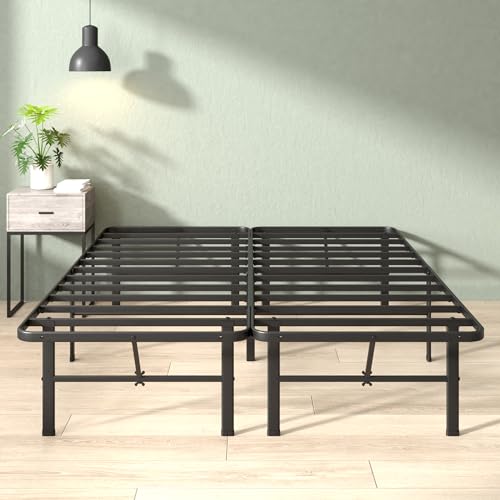
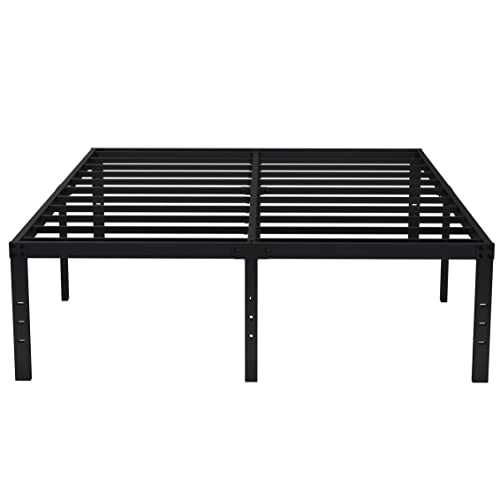
| Metal bed frame | Good — depends on slat or grid design | Good | Durable, straightforward setups |
| Adjustable base | Excellent — solid articulated deck | Moderate | Sleepers who want reclining and ergonomic positions |
| Upholstered bed frame | Good — depends on internal slat system | Moderate | Bedrooms where style and softness matter |
| Traditional box spring | Variable — often too flexible for foam | Low | Generally not ideal for memory foam |
Platform Beds
Platform beds are a natural match for memory foam because they provide built-in support without requiring a box spring. Look for models with closely spaced slats or a ventilated deck. Solid platform beds are sturdy but can reduce airflow, so rotate the mattress regularly if you choose one.
Slatted Frames
Slatted frames are excellent for breathability and are widely recommended for foam mattresses, provided the slats are close together and made of a rigid material. Avoid flexible or bowed slats, which can create uneven support.
Metal Frames
Metal frames are durable and straightforward. Many use a grid or closely spaced wire system rather than traditional slats. Check the spacing carefully and confirm the weight capacity. A metal frame with a solid or close-spaced support surface can work very well with memory foam.
Adjustable Bases
If you want reclining or elevated leg positions, an adjustable base is a strong option. Many modern memory foam mattresses are compatible with adjustable bases, but confirm this with the mattress manufacturer. Adjustable bases provide a solid, articulated deck that supports foam well.
Upholstered Frames
Upholstered beds add softness and style, but their performance depends on the internal support system. Ask about slat spacing and frame rigidity before buying. A well-built upholstered frame with close slats can be a good choice; a decorative frame with weak support is not.
Related Reading
If you are still comparing foundation types, our bed frame comparison breaks down the trade-offs between styles. For a broader overview of choosing a bed, see our bed buying guide.
Matching Frame Size to Mattress Size
Frame and mattress sizes should match exactly. A frame that is too large allows the mattress to shift; a frame that is too small creates overhang and uneven support. Measure both the mattress and the frame's internal dimensions before purchase.
- Twin and twin XL: Common for kids, teens, and single sleepers. Twin XL is longer and suits taller sleepers.
- Full: A good fit for single adults and smaller bedrooms.
- Queen: The most popular size for couples and solo sleepers who want extra room.
- King and California king: Best for couples who want maximum space; confirm room dimensions and frame weight capacity.
If you are shopping for a specific size, our guides on queen beds and king beds cover dimensions and room-planning considerations in more detail.
Ventilation, Heat, and Moisture
Memory foam tends to sleep warmer than other materials because it conforms closely to the body and reduces airflow at the surface. A breathable foundation helps offset this. Slatted frames are the simplest way to improve airflow beneath the mattress.
Humidity and moisture are also worth considering. Good ventilation helps prevent moisture buildup under the mattress, which can affect comfort and hygiene over time. If you live in a humid climate, prioritize a slatted or ventilated base and avoid fully enclosed solid platforms.
Weight Capacity and Durability
Frame durability affects both safety and mattress lifespan. Look for reinforced joints, sturdy center supports on larger sizes, and a stated weight capacity that comfortably exceeds your combined load. Heavy-duty frames are especially important for king and California king sizes, where the span is longer and flex is more likely.
Materials matter too. High-grade steel, solid wood, and reinforced engineered wood generally outperform lightweight or hollow components. A durable frame is a long-term investment that protects the mattress and avoids the disruption of early replacement.
Assembly, Access, and Room Fit
Before buying, consider how the frame will enter your home and fit your room. Measure doorways, hallways, and stairwells. Some frames ship flat and assemble on site, while others arrive partially assembled. Check whether tools are included and whether the frame can be disassembled for future moves.
Also think about clearance underneath. Higher clearance offers storage space but may reduce stability if the frame is not well braced. Lower profiles look streamlined but can be harder to clean under. Choose based on your room and routine.
Checklist Before You Buy
- Confirm the frame's slat spacing meets your mattress warranty requirements.
- Verify the weight capacity exceeds the combined mattress and sleeper weight.
- Check that the frame size matches your mattress size exactly.
- Prefer rigid slats or a solid, ventilated deck over flexible supports.
- Confirm airflow is adequate for your climate and sleeping temperature.
- Measure doorways and room space before ordering.
- Review assembly requirements and included tools.
- Check return terms and warranty coverage for the frame.
Frequently Asked Questions
Do memory foam mattresses need a special bed frame?
They do not need a proprietary frame, but they do need a firm, even, and breathable foundation. Closely spaced slats or a solid ventilated platform are the safest choices. Avoid flexible or wide-gap supports that allow the foam to sag.
What slat spacing is best for a memory foam mattress?
A common recommendation is no more than 2 to 3 inches between slats. Always check your mattress manufacturer's warranty terms, since some brands require even closer spacing or a solid base.
Can I use a box spring with a memory foam mattress?
Many manufacturers recommend a solid platform or slatted base instead of a traditional box spring. A box spring can add height, but it may not provide the rigid, even support that foam needs. Confirm compatibility with your mattress warranty.
How much weight should a memory foam bed frame support?
Add the mattress weight to the weight of the sleepers and bedding, then choose a frame with a capacity that comfortably exceeds that total. Heavy-duty frames are especially important for larger sizes and heavier sleepers.
Will a memory foam mattress work on an adjustable base?
Many modern memory foam mattresses are compatible with adjustable bases, but compatibility varies by brand. Check the mattress manufacturer's guidance before pairing the two.
Final Thoughts
The best bed frame for a memory foam mattress is rigid, evenly supportive, and breathable. Focus on slat spacing, weight capacity, and airflow rather than decorative details. Get those fundamentals right and your mattress will deliver the comfort and durability it was designed for.