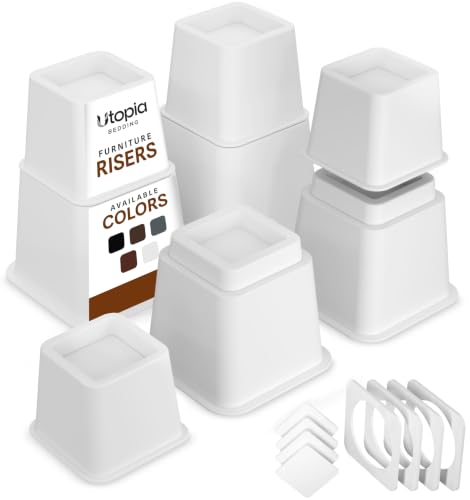
Bed Risers for Beds: Elevate Your Sleep Space
Find the perfect bed risers to add height, storage, and style to your bedroom. Expert tips and top-rated picks.
Bed risers are simple yet transformative tools that lift your bed frame to a more comfortable height. Whether you need extra under-bed storage, want to make getting in and out of bed easier, or simply prefer a taller bed, the right risers can make all the difference. This guide covers everything from weight capacity and material types to safety and style, so you can choose with confidence.
If you're looking for more storage solutions, you might also like our guides on storage queen beds or beds with storage underneath. But for now, let's focus on the versatile and affordable bed riser.
Why Use Bed Risers?
Bed risers aren't just for dorm rooms. They offer practical benefits for any bedroom:
- Extra storage: Gain 5–8 inches of clearance to stow bins, luggage, or out-of-season clothing.
- Easier access: A higher bed is gentler on knees and backs, especially for seniors or those with mobility issues.
- Improved aesthetics: Elevating your bed can create a more commanding, hotel-like presence in the room.
- Better airflow: Increased space under the bed allows for better air circulation, which can help regulate temperature.
Many people also use risers to accommodate adjustable beds or to level a bed on uneven floors. They are an affordable upgrade that can dramatically change the feel and functionality of your bedroom.
Types of Bed Risers
Not all bed risers are created equal. Here are the most common types to consider:
- Stackable risers: These come in sets that allow you to adjust height in increments (e.g., 3", 5", 8").
- Fixed height risers: Simple blocks with a set height, typically 4" or 6".
- Adjustable risers: Feature a screw or twist mechanism to fine-tune the height.
- Risers with built-in outlets: Some include USB ports or power outlets for bedside convenience.
When choosing, consider the weight of your bed frame, mattress, and sleepers. Most risers support up to 1,000–1,500 lbs per set, but always check the specifications.
What to Look For in Bed Risers
Here are the key factors to evaluate before you buy:
- Weight capacity: Ensure the risers can support your total bed weight (frame + mattress + occupants).
- Material: Plastic risers are lightweight and affordable, while metal or wood risers offer extra durability and a premium look.
- Height range: Choose a height that meets your storage and accessibility needs.
- Stability: Look for non-slip surfaces and a wide base to prevent wobbling.
- Compatibility: Make sure the risers fit your bed frame legs (round, square, or casters).
For bed frames with headboards or footboards, you may need a set that accommodates both styles. If you have a king platform bed with a headboard, check that the risers work with your specific leg design.
Safety First: Using Bed Risers Correctly
While bed risers are generally safe, improper use can lead to accidents. Follow these guidelines:
- Always check the weight limit and never exceed it.
- Ensure the risers are centered under each leg to distribute weight evenly.
- If your bed has casters, remove them or use risers designed to hold casters.
- Periodically check that the risers are secure and haven't shifted.
- For children's beds, consider using a bed step to help them get up and down safely.
A well-chosen set of bed risers will give you years of reliable service. For a complete bedroom upgrade, you might also explore beds with headboards and storage or platform beds with storage drawers.
Price Range & Value
Bed risers are one of the most budget-friendly bedroom upgrades. Most sets cost between $15–$40, depending on material, height, and features (such as built-in outlets). Premium options with metal construction or higher weight capacities may cost up to $60–$80. Given their durability and the benefits they provide, bed risers offer excellent value for money.
| Type | Height | Weight Capacity (per set) | Price Range |
|---|---|---|---|
| Plastic Stackable | 3" – 8" | 1,000 – 1,500 lbs | $15 – $30 |
| Fixed Height (Plastic) | 4" – 6" | 1,200 – 1,600 lbs | $12 – $25 |
| Adjustable (Plastic/Metal) | 2" – 8" | 1,000 – 1,500 lbs | $20 – $45 |
| With USB/Outlet | 4" – 6" | 800 – 1,200 lbs | $30 – $60 |
| Heavy-Duty Metal | 5" – 8" | 1,800 – 2,500 lbs | $40 – $80 |
* Approximate prices and capacities. Always verify with the manufacturer.
How to Choose the Right Height
The ideal bed height is one where you can sit on the edge with your feet flat on the floor and your knees at a 90-degree angle. For most people, this is around 20–23 inches from the floor to the top of the mattress.
Measure your current bed height (floor to mattress top). If it's 16 inches, you'll need about 4–6 inches of lift to reach the optimal height. This is where bed risers shine – they give you exactly the boost you need.
If you're also considering a new bed frame, check out our guides on queen platform beds with headboards or king bed frames for adjustable beds.
Frequently Asked Questions
Q: Can I use bed risers with any bed frame?
A: Most bed risers work with standard bed frames (metal, wood, or platform). However, if your frame has unusual leg shapes or very wide legs, check compatibility.
Q: Are bed risers safe for heavy people?
A: Yes, as long as you choose risers with sufficient weight capacity. Always add up the weight of the frame, mattress, and sleepers, and choose a set that exceeds that total.
Q: Do bed risers damage floors?
A: Most risers have non-slip bottoms that are floor-friendly. If you have hardwood, consider using felt pads under the risers for extra protection.
Q: Can I use risers on a bunk bed or loft bed?
A: Not recommended. Bunk beds and loft beds are already elevated, and adding risers can make them unstable. For kids' beds, stick to twin beds or loft twin beds with appropriate safety rails.
Now that you know everything about bed risers, you're ready to make a confident purchase. Browse the recommended products below – each has been selected for quality, durability, and value.