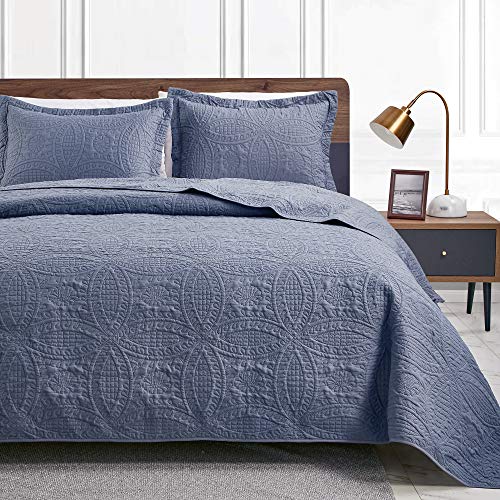
Blue Bedspreads King Size Lightweight: The Complete Buyer's Guide
Everything you need to know about choosing a breathable, lightweight blue bedspread for a king size bed — from fabric selection and color psychology to layering and care.
If you are searching for a blue bedspread king size lightweight, you are likely past the browsing stage. You already know you want a king size bedspread, you prefer blue tones, and you want something that feels airy rather than heavy. What you need now is clarity: which fabrics actually breathe, which blue shades work in a bedroom, how lightweight differs from thin, and what to check before ordering online.
This guide walks through the practical details that matter when comparing options. It covers fabric construction, fill weight, breathability, color pairing, sizing for king beds, layering strategies, and long-term care. By the end, you will have a clear framework for evaluating any lightweight blue king bedspread you encounter.
What "Lightweight" Really Means for a King Size Bedspread
Lightweight is not a standardized term in bedding. For a king size bedspread, it generally refers to two things: the fabric weight per square yard and the amount of fill (if quilted). A lightweight bedspread typically uses a thinner fabric face and a low-loft fill, or no fill at all in the case of coverlets and quilted throws.
This matters because a king bed is large. A heavy quilt that feels fine on a twin bed can become uncomfortably warm and difficult to manage on a king. Lightweight construction makes the bedspread easier to fold, wash, and layer — especially in warmer months or climates.
It is also worth distinguishing lightweight from thin. A well-made lightweight bedspread still has structure and drape. It should hang cleanly over the sides of a king mattress without clinging or looking flimsy. The goal is breathability with a finished look, not a sheet-like feel.
Fabric Types That Work Best for Lightweight Blue Bedspreads
The fabric determines how the bedspread breathes, drapes, and holds color. For a lightweight blue king bedspread, the following materials are the most common and the most reliable:
Cotton Voile & Percale
Airy, crisp, and highly breathable. Cotton voile is extremely light and works well as a summer layer. Percale has a matte finish and a cool hand feel. Both take blue dye evenly, producing clean, saturated or soft tones.
Linen & Linen Blends
Linen is naturally breathable and has a textured, relaxed appearance. It is a strong choice for a lightweight bedspread in blue because the texture adds visual interest without weight. Blends with cotton improve durability and reduce wrinkling.
Microfiber
Lightweight, smooth, and often quilted with a low-loft fill. Microfiber holds color well and resists shrinking. It is less breathable than natural fibers but remains a popular choice for an entry-level lightweight bedspread.
Quilted Cotton
A cotton face with a thin cotton or polyester fill. Quilted cotton bedspreads offer a bit more structure than voile or linen while remaining lightweight. They are a balanced choice for year-round use.
If you are comparing blue bedding across styles, the broader guide to blue bedspreads and comforters covers how these fabrics behave across different constructions. For a king bed specifically, fabric weight is the single biggest factor in how the bedspread performs in warm rooms.
Breathability, Temperature, and Sleep Comfort
A lightweight bedspread is often chosen for temperature regulation. On a king bed shared by two people, heat buildup is a common complaint. A breathable bedspread helps because it allows moisture vapor to escape rather than trapping it against the body.
Natural fibers like cotton and linen generally outperform synthetic fills in breathability. If you sleep warm or live in a climate with mild winters, a lightweight bedspread may be sufficient as a primary cover. If you sleep cold, it works better as a layering piece over a warmer duvet or quilt.
The room environment matters too. Pairing a lightweight bedspread with blackout curtains helps control morning heat gain and keeps the bedroom temperature more stable, which complements the breathable quality of the bedding.
Choosing the Right Blue Shade for Your Bedroom
Blue is one of the most common bedroom colors because it reads as calm and restful. Within that range, the shade you choose changes the mood of the room:
- Powder blue and dusty blue: Soft, muted, and easy to layer with white or cream. Best for calm, minimalist, or coastal-inspired bedrooms.
- Slate blue and gray-blue: Slightly deeper with a neutral undertone. Works well in modern and transitional rooms and hides light creasing.
- Navy and cobalt: High contrast and more dramatic. Best used as the dominant color with lighter sheets and pillows to balance the visual weight.
- Teal-leaning blues: Add warmth and work well with wood tones and natural textures.
If you prefer a patterned look over a solid, the blue and white floral bedspread guide shows how pattern scale and blue saturation interact. For a more traditional aesthetic, a blue and white toile bedspread offers a classic alternative to solid lightweight covers.
Sizing: What to Check Before Ordering a King Size Bedspread
King size is not uniform across all bedspreads. Some are designed as bedspreads with generous drop, while others are coverlets sized closer to the mattress. Before ordering, confirm the following:
- Mattress dimensions: A standard king mattress is 76 inches wide by 80 inches long. A California king is 72 by 84 inches. Confirm which size the product is cut for.
- Drop: Bedspreads usually have a longer drop than coverlets. Check the stated drop or overall dimensions to ensure the sides reach where you want them to.
- Pillow tuck: If you plan to tuck pillows under the bedspread, allow extra length at the head of the bed.
- Shrinkage: Natural fiber bedspreads may shrink slightly after washing. Account for this if the fit is borderline.
Fit is especially important on a king bed because the visual proportions are larger. A bedspread that is slightly too small looks noticeably short on the sides.
How to Layer and Style a Lightweight Blue King Bedspread
A lightweight bedspread is a strong base layer because it does not overwhelm the bed. A few practical styling approaches:
- Start with white or cream sheets. A light sheet layer keeps the bed visually airy and makes the blue bedspread stand out.
- Fold the top edge. Folding the bedspread back a third of the way adds structure and shows the sheet underneath.
- Add two to three decorative pillows. Mix sizes and tones within the blue family. A textured or patterned pillow breaks up a solid bedspread.
- Place a throw at the foot of the bed. A lightweight throw in a complementary tone adds texture without extra warmth.
- Keep the surrounding palette restrained. Blue bedspreads work best when the walls, rug, and furniture do not compete for attention.
For rooms that lean toward a softer, more eclectic look, the boho bedspread queen guide offers styling ideas that translate well to king size beds with a lightweight cover.
Care and Longevity for Lightweight Bedspreads
Lightweight bedspreads are generally easier to care for than heavy quilts or comforters. Most cotton, linen, and microfiber versions are machine washable. A few general practices help extend their life:
- Wash on a gentle or normal cycle with cold or warm water, depending on the care label.
- Avoid high heat in the dryer, which can shrink natural fibers and weaken stitching on quilted versions.
- Shake the bedspread out before drying to reduce wrinkling.
- Rotate the bedspread periodically so wear is distributed evenly across the king bed.
- Store folded in a dry place during off-season months.
Because lightweight fabrics are thinner, they can show wear sooner if washed aggressively. Following the care label is the most reliable way to keep the color and texture intact.
Lightweight Bedspread Types Compared
The table below summarizes the main categories of lightweight blue king bedspreads by construction, breathability, and best use case. Tiers reflect relative market positioning, not specific figures.
| Type | Tier | Breathability | Best For |
|---|---|---|---|
| Cotton voile coverlet | Entry-level tier | High | Warm sleepers, summer use |
| Linen blend bedspread | Mid-range tier | High | Textured, relaxed bedrooms |
| Quilted cotton bedspread | Mid-tier | Moderate to high | Year-round layering |
| Microfiber quilted bedspread | Essential tier | Moderate | Easy-care everyday use |
| Premium linen bedspread | High-end tier | High | Long-term investment, durability |
Frequently Asked Questions
What makes a king size bedspread lightweight?
A lightweight king size bedspread typically uses breathable fabrics such as cotton voile, linen, microfiber, or quilted cotton with a low fill weight. These materials allow air circulation and avoid the heavy, trapping feel of thick quilts or down comforters.
Is a lightweight blue bedspread good for summer?
Yes. Lightweight blue bedspreads are ideal for warm months because they provide a finished look without excess heat retention. Breathable weaves and lighter fills help regulate temperature while still offering a comfortable layer.
What blue shades work best for a calm bedroom?
Soft shades like powder blue, dusty blue, and muted slate blue tend to create a calming atmosphere. Deeper navy and cobalt tones add contrast and work well in modern or coastal-inspired rooms.
How do I style a lightweight king bedspread?
Layer the bedspread over white sheets, add two or three decorative pillows in complementary tones, and fold the top edge for structure. A lightweight throw at the foot of the bed adds texture without extra warmth.
Ready to Compare Lightweight Blue King Bedspreads
You now have a working framework: confirm the fabric and fill weight, check the drop and overall dimensions against your king mattress, choose a blue shade that fits the room, and plan a simple layering approach. That is the practical checklist for evaluating any lightweight blue bedspread you encounter.
The recommended products below reflect this topic and are presented for comparison. Use the criteria above to evaluate each option against your own bedroom and sleep needs.