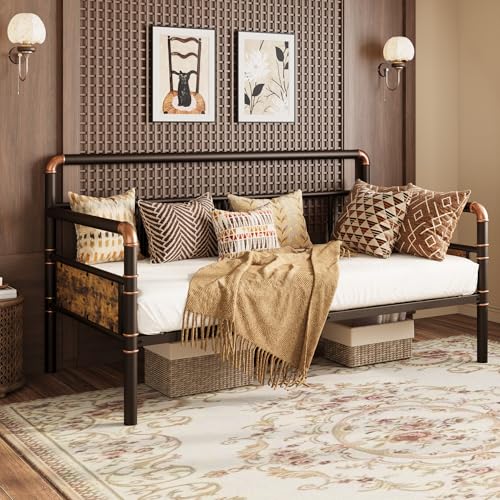
Day Beds: The Complete Buyer's Guide to Versatile Sleeping Spaces
Day beds blend seating and sleeping in one footprint. Learn how styles, trundle and storage options, sizing, and mattress pairing affect comfort, durability, and everyday usability so you can choose with confidence.
Explore Buying FactorsWhy day beds deserve a closer look: A day bed works as a sofa by day and a bed by night, making it one of the most space-efficient choices for guest rooms, home offices, studios, and small apartments. The right configuration depends on how often it is used for sleeping, who uses it, and how much storage you need.
What Exactly Is a Day Bed?
A day bed is a dual-purpose piece of furniture built on a bed frame with a backrest and typically two arms, designed to function as seating during the day and as a sleeping surface at night. Unlike a standard sofa, a day bed is constructed around a real mattress platform, so it delivers proper support for overnight sleep rather than temporary lounging.
Most day beds are sized around a twin mattress, which makes them compact enough for tight rooms while still offering a legitimate sleeping surface. Larger configurations, including queen day beds, exist for rooms that can accommodate a wider footprint. Understanding the core frame design first helps you evaluate every other decision — from trundle mechanisms to mattress thickness — with the right context.
Because the frame serves two roles, build quality matters more than on a single-purpose bed. Joints endure repeated transitions between sitting and lying, and backrests take direct pressure. A solid frame with reinforced hardware is the foundation that keeps a day bed comfortable and stable over years of use.
Who Should Consider a Day Bed?
Day beds solve specific spatial and functional problems better than almost any other furniture category. They are particularly well suited to the following situations:
- Guest rooms that double as something else. A day bed keeps a spare room usable as a reading nook, craft space, or home office while remaining ready for overnight visitors.
- Home offices. A day bed for an office provides a comfortable spot for breaks and a legitimate sleeping option for late nights or visiting family.
- Small apartments and studios. One piece of furniture covers seating and sleeping, freeing floor space for everything else.
- Teen and kids' rooms. Day beds offer a grown-up look that transitions well as children age, especially when paired with under-bed storage.
- Adults who host regularly. Configurations designed for adult use, including day beds for adults with a trundle, handle heavier use and accommodate two sleepers when needed.
If your room needs to serve more than one purpose, a day bed is usually a smarter allocation of space than a sofa plus a separate guest bed.
Day Bed Styles and Frame Types
Style affects more than appearance — it influences durability, cleaning, and how the piece integrates with the rest of the room. The major categories break down as follows:
Wood Frames
Wood day beds suit traditional, farmhouse, and transitional interiors. Solid hardwood and high-grade engineered wood hold up well to daily use, while painted finishes hide minor wear. Wood frames tend to feel warmer and blend naturally with wooden bedroom furniture.
Metal Frames
Metal day beds offer a clean, airy profile that keeps small rooms from feeling crowded. High-grade steel with a rust-proof finish delivers excellent longevity. Metal is also a strong choice when you want a lighter visual footprint without sacrificing structural rigidity.
Upholstered Frames
Upholstered day beds function most convincingly as sofas, thanks to padded backrests and arms. Fabric choice matters: performance weaves and tightly woven textiles resist pilling and stains better than loose, delicate fabrics. These frames suit living-adjacent spaces where the day bed is on display.
Convertible and Expandable Designs
Some day beds expand or reconfigure to create a larger sleeping surface. Options like extendable day beds and daybeds that convert to a double bed are useful when occasional two-person sleeping is part of the plan. For maximum flexibility, day beds that convert to king accommodate couples without permanently occupying the space of a full king bed.
Trundle and Storage Options: The Real Differentiators
Once you have settled on a frame style, the under-bed configuration becomes the most consequential decision. This is where day beds earn their reputation for flexibility.
Trundle Beds
A trundle is a second sleeping surface that rolls or pulls out from beneath the main bed. It effectively doubles sleeping capacity without increasing the room's footprint. Key variations include:
- Pop-up trundles. Day beds with a pop-up trundle raise the second mattress to the same height as the main bed, creating a larger, more uniform sleeping area — a strong choice for couples or adult guests.
- Standard pull-out trundles. Day beds with a trundle bed underneath sit lower and are ideal for children's rooms and casual guest use.
- Adult-rated trundles. Day beds with a trundle for adults use heavier frames and higher weight capacities to handle regular grown-up use.
- Full-size trundles. Daybeds with a full-size trundle provide a more generous secondary sleeping surface than twin trundles.
If you expect frequent two-person stays, a day bed with trundle is generally the most practical configuration available.
Storage Drawers and Compartments
Storage turns the space under the bed into usable room. Drawers are best for folded linens, blankets, and off-season clothing, while larger compartments suit bulkier items. Relevant options include day beds with storage drawers, day beds with storage, and daybeds with drawers underneath. For adult rooms that need both capacity and organization, daybeds for adults with storage combine a full-size sleeping surface with generous stowage.
Two practical notes: drawers require clearance to open, so measure the room's traffic paths before committing; and trundle-plus-storage combinations exist, but usually trade some drawer depth for the trundle mechanism.
Key Factors When Choosing a Day Bed
1. Sizing and Room Fit
Twin day beds fit most small rooms, but the effective footprint is larger than the mattress because of the backrest and arms. Measure both the wall space and the walking clearance around the piece. If the room can support it, a queen day bed offers noticeably more sleeping comfort for adults and couples.
2. Mattress Compatibility
Day beds use standard mattress sizes, which keeps replacement simple. Twin and full mattresses are the most common fits. Many shoppers prefer day beds with mattresses included to avoid fit issues, while others pair a frame with a chosen mattress for better control over firmness and materials. If you need a firmer or softer feel, a mattress topper is an efficient way to adjust comfort without replacing the mattress.
Pay attention to the recommended mattress thickness. Very thick mattresses can sit above the backrest on some frames, which undermines the sofa function, while very thin mattresses reduce sleeping comfort.
3. Frame Durability and Weight Capacity
Check the stated weight capacity and construction details. Reinforced slats, corner blocking, and heavy-duty hardware distinguish durable frames from lighter builds. For adult use or frequent trundle deployment, prioritize frames rated for heavier loads — this is the single most reliable predictor of long-term satisfaction.
4. Use Case and Frequency
A day bed used nightly as a primary bed has different demands than one used for occasional guests. Daily sleepers should prioritize mattress quality and frame rigidity. Occasional-use buyers can reasonably favor seating comfort and aesthetics.
Understanding Day Bed Tiers
Day beds vary widely in construction quality and feature set. Thinking in terms of tiers makes comparison clearer than trying to evaluate isolated specs. We use a consistent three-tier framework throughout this guide:
Entry-Level Construction
Simpler frames, standard hardware, and basic finishes. Suitable for light use, kids' rooms, and occasional guest sleeping. Often the best fit when the day bed is a secondary piece of furniture.
Mid-Range Build
Reinforced joints, smoother trundle mechanisms, and better upholstery or wood finishing. A solid choice for daily seating, regular guest use, and rooms where the piece is on display.
High-End Construction
Premium materials, heavy-duty hardware, and refined detailing. Designed for frequent sleeping, adult use, and long-term durability. Mid-range models usually offer smoother mechanisms than entry-level; top-tier models are built for years of daily transitions.
Within its class, a balanced-tier day bed typically delivers the most well-rounded combination of comfort, durability, and design flexibility. Entry-level options are competitive for light-duty rooms, while top-tier frames make sense when the day bed doubles as a primary sleeping surface.
Comparing Common Day Bed Configurations
The table below summarizes how the main configurations differ in function and best-fit scenarios. Use it to narrow the field before comparing individual models.
| Configuration | Tier | Best For | Key Consideration |
|---|---|---|---|
| Standard twin day bed | Essential tier | Small guest rooms, kids' rooms, reading nooks | Single sleeper only; add storage separately |
| Day bed with storage drawers | Balanced tier | Apartments, studios, rooms needing organization | Requires drawer clearance; drawer depth varies |
| Day bed with pull-out trundle | Balanced tier | Families, frequent two-person guest stays | Lower trundle height; check weight rating |
| Day bed with pop-up trundle | Top-tier | Adult guests, couples, larger sleeping area | Smoother mechanism; verify mattress thickness |
| Queen day bed | Top-tier | Primary sleeping, spacious guest rooms | Larger footprint; measure walking clearance |
| Expandable / convertible day bed | Balanced to top-tier | Flexible rooms with occasional double-bed needs | Conversion mechanism quality matters most |
For a broader comparison of day beds against related furniture, our overview of day beds and futons explains where each excels. If you are exploring the wider furniture landscape, our guide to different types of beds places day beds in context.
Pairing the Right Mattress
Mattress choice determines whether a day bed feels like a real bed or a compromise. A few principles apply across configurations:
- Match thickness to the backrest. A mattress that sits roughly level with or slightly below the backrest preserves the seating function.
- Prioritize support for regular sleeping. If the day bed is used nightly, choose a mattress with adequate support rather than a thin sofa-style pad.
- Consider a topper for adjustable comfort. A mattress topper can soften a firm surface or add pressure relief without replacing the mattress.
- Protect the investment. A mattress protector is especially useful in dual-use rooms where snacks, pets, and daily lounging are part of the routine.
- Keep trundle mattresses consistent. Trundle mattresses are often thinner by necessity; choose one rated for the trundle's weight capacity and depth limits.
Placement and Room Integration Tips
Day beds read best when placed with their backrest against a wall or a low partition, which visually anchors the piece and defines the seating zone. In narrow rooms, positioning the day bed along the longest wall preserves open floor space. In studios, using the day bed to divide living and sleeping zones works well when the backrest faces the seating area.
Lighting and side furniture complete the integration. A cute bedside table or a DIY bedside table provides a landing spot for lamps, books, and drinks. Textiles also do heavy lifting: a daybed bedspread set keeps the piece looking intentional as seating, while duvet covers make it easy to refresh the look seasonally.
Ready to Compare Day Bed Options?
Browse curated day bed configurations and evaluate features, trundle mechanisms, and storage capacity side by side before you decide.
Explore Day Bed Options