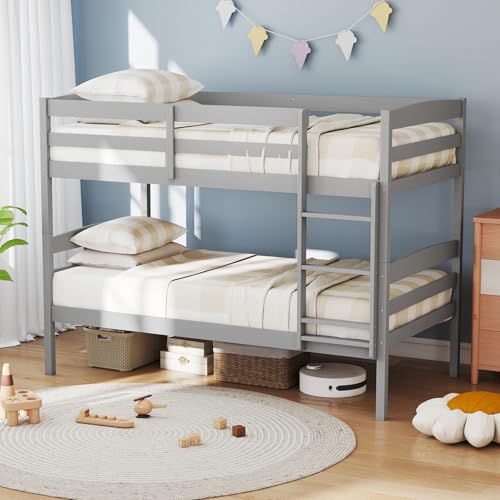
Detachable Bunk Beds Twin Over Twin: The Complete Buying Guide
Two beds today, two separate beds tomorrow. Learn how detachable twin over twin bunk beds give you flexibility, save space, and grow with your family — without compromising on safety or comfort.
Explore Recommended OptionsWhy detachable bunk beds matter: A detachable twin over twin bunk bed is a space-saving system with a modular twist. The top and bottom bunks connect through removable brackets or locking mechanisms, so you can use them as a bunk bed now and split them into two independent twin beds later. This flexibility makes them a smart choice for growing children, guest rooms, and multi-purpose bedrooms.
What Are Detachable Bunk Beds Twin Over Twin?
Detachable bunk beds twin over twin are a specific category of bunk bed where two twin-size sleeping platforms are stacked vertically but connected in a way that allows them to be separated. Unlike traditional fixed bunk beds that are welded or permanently fastened together, detachable models use bolts, brackets, or interlocking hardware that can be undone when needed.
The twin over twin configuration is the most common bunk bed setup. Each sleeping surface measures roughly 38 inches wide by 75 inches long, which fits a standard twin mattress. When assembled as a bunk, the footprint stays compact — ideal for small rooms and tight floor plans. When separated, you get two full-size twin beds you can place side by side, in separate rooms, or against different walls.
This category overlaps with detachable bunk beds for adults, but the twin over twin size is most often chosen for children and teenagers. If you need a wider option, detachable full size bunk beds offer more sleeping room per bunk.
How Detachable Bunk Beds Work
Understanding the mechanism helps you evaluate quality and safety. Most detachable twin over twin bunk beds rely on one of three connection systems:
- Bolt-and-bracket systems: The most common design. Metal brackets bolt the upper and lower frames together at the corners. Removing the bolts separates the beds. High-grade steel hardware is preferable for long-term durability.
- Interlocking post systems: The vertical posts of the bottom bed slot into receivers on the top bed. A locking pin or latch secures the connection. These are often found on metal frames and can be quicker to separate.
- Modular panel systems: Common on wooden bunk beds, where side panels and rails connect with cam locks or heavy-duty bolts. Disassembly may require more time but produces a solid, furniture-grade result.
Regardless of the system, the key safety point is that the connectors must lock firmly during bunk configuration. Look for reinforced connection points, anti-wobble features, and clear assembly instructions.
Key Benefits of a Detachable Twin Over Twin Bunk Bed
Flexible Room Layouts
Start with a bunk in a shared kids' room, then split the beds when siblings want their own space or when you move to a larger home.
Space-Saving Footprint
In bunk mode, two twin beds occupy the floor area of one — a major advantage for small bedrooms and apartments.
Long-Term Adaptability
Grows with your family. Use as a bunk for young kids, separate into two beds for teenagers, or split for guest accommodations.
Easier Moving & Relocation
Detachable frames break down into manageable sections, making them simpler to transport through doorways and up staircases than fixed bunk beds.
Design Versatility
Available in metal, wood, and upholstered styles to match different bedroom decor. Some models pair with a detachable bunk bed with trundle for extra sleeping capacity.
Resale & Reuse Potential
Separable beds remain useful across multiple life stages, making a well-constructed model a worthwhile long-term investment.
What to Look For Before You Buy
Since visitors researching this topic are already close to a purchase decision, here are the specific factors that separate a good detachable twin over twin bunk bed from a disappointing one.
1. Connection Hardware Quality
This is the most important feature. The detachable mechanism is the point of failure in any modular bunk. Look for heavy-duty bolts, reinforced steel brackets, locking pins, and anti-loosening washers. Premium and top-tier models typically use thicker gauge steel and tighter tolerances, which reduces wobble. Entry-level models may connect with thinner hardware that loosens over time.
2. Frame Material & Build
Metal frames — especially high-grade steel — are durable and resist warping. Wooden frames offer warmth and style but should use solid hardwood or high-quality engineered wood, not particleboard. For a designer look, explore designer bunk beds for adults to see how premium materials elevate the category. If you prefer to build rather than buy, DIY bunk beds are an option, though precision matters greatly with detachable designs.
3. Safety Features
Check for full-length guardrails on the top bunk, a sturdy ladder with wide steps, and a minimum rail height that keeps sleepers secure. The top bunk should also have a visible warning label about weight limits and age recommendations. Corner posts should be smooth and free of sharp edges.
4. Mattress Fit & Thickness
Standard twin mattresses fit most models, but the top bunk guardrail height limits mattress thickness. A mattress that sits too high reduces the guardrail's effectiveness. Follow the manufacturer's recommended maximum thickness. For broader mattress questions, review our complete mattress buying guide.
5. Separation & Reassembly Process
Some models separate in minutes with a few bolts; others require partial disassembly. If you plan to switch between bunk and separate modes regularly, prioritize models with tool-light or quick-release systems. Ask how many people are needed for assembly and whether the instructions are clear.
6. Weight Capacity
Weight limits vary significantly. Commercial-grade and heavy-duty frames support more weight than starter tier options. Always verify the stated capacity for both the top and bottom bunks, especially if an adult will use the upper bunk. For adult-focused options, see durable bunk beds for adults and extra long bunk beds for adults.
7. Footprint & Ceiling Height
Measure your room before buying. The bunk footprint is one twin bed's length and width, but you also need clearance for the ladder and enough ceiling height so the top sleeper can sit up comfortably. Check the assembled height of the model.
Detachable vs. Fixed Bunk Beds: Tier Comparison
The table below compares typical characteristics across quality tiers. It avoids absolute figures and focuses on relative positioning so you can judge where a model sits in the market.
| Tier | Best For | Connection Hardware | Build Character |
|---|---|---|---|
| Entry-level | Light use, young children, temporary setups | Basic bolts and brackets; may loosen with frequent separation | Lighter frames, thinner steel or engineered wood |
| Mid-range | Everyday family use, shared kids' rooms | Reinforced brackets, locking pins, anti-wobble features | Solid steel or hardwood construction; good stability |
| Premium | Long-term use, teens and adults, frequent reconfiguration | Heavy-duty connectors, precision tolerances, quick-release options | High-grade steel or premium hardwood; minimal wobble |
| Luxury / Commercial-grade | High-traffic use, guest houses, adult primary bedrooms | Professional-grade locking systems, robust fasteners | Flagship materials, furniture-grade finish, maximum durability |
Who Should Choose a Detachable Twin Over Twin Bunk Bed?
This configuration suits several buyer profiles:
- Families with two children sharing a room: The bunk saves floor space now, and the beds can separate as children grow.
- Parents planning ahead: A detachable model adapts when you move, renovate, or convert a playroom into a bedroom.
- Guest room and vacation home owners: Bunk mode for groups, separate mode for couples or single guests.
- Renters and frequent movers: Detachable frames break down more easily for transport.
- Adults with compact living spaces: Explore custom made bunk beds for adults if standard sizes feel too small.
If you need a single bunk with extra storage underneath, consider detachable bunk beds with trundle. For a broader look at bunk bed variations, browse our custom bunk beds collection.
Assembly, Care, and Reconfiguration Tips
Assembly
Follow the manufacturer's instructions precisely, especially the order of tightening bolts. Hand-tighten first, then use the provided tools to secure the frame. Have two people available for lifting and alignment. Check that the frame is level and square before final tightening.
Reconfiguration
Before separating the beds, remove mattresses and any attached accessories. Store the connection hardware in a labeled bag so nothing gets lost. Re-check all bolts when reassembling in either mode. If the beds will sit apart for a long period, inspect the connection points for wear before converting back to bunk mode.
Ongoing Care
Inspect bolts and brackets every few months, particularly if the bunk sees daily use. Tighten any loosened fasteners. Clean metal frames with a damp cloth and mild detergent; avoid abrasive cleaners. For wooden frames, check for splinters or cracks and treat scratches according to the manufacturer's guidance. A mattress protector helps keep both twin mattresses in good condition.
Frequently Asked Questions
What are detachable bunk beds twin over twin?
They are bunk bed systems where two twin-size beds are stacked and connected with removable hardware. When needed, the top and bottom beds can be separated into two independent twin beds.
Are detachable bunk beds safe for kids?
Yes, when correctly assembled and used as intended. Choose models that meet recognized safety standards, include full guardrails on the top bunk, a sturdy ladder, and secure locking mechanisms. Regularly inspect the connectors and fasteners.
Can detachable bunk beds be separated permanently?
Most detachable bunk beds are designed to be separated and used as two standalone twin beds. This is ideal for growing children, guest rooms, or when you move to a larger space. Always follow the manufacturer's instructions for separation and reassembly.
What mattress size fits a twin over twin detachable bunk bed?
Standard twin mattresses, typically 38 by 75 inches, fit most twin over twin detachable bunk beds. Check the specific model's recommended mattress thickness, as overly thick mattresses can compromise guardrail safety on the top bunk.
How much weight can a detachable bunk bed support?
Weight capacity varies by model and material. High-end tier and commercial-grade steel frames generally support more weight than entry-level wooden frames. Always check the manufacturer's stated weight limits for both the top and bottom bunks before purchase.
Ready to Compare Detachable Twin Over Twin Bunk Beds?
Browse our curated selection of detachable bunk beds and check availability, features, and customer feedback before you decide.
View Recommended Products