Family Camping Tents: Complete Buying Guide
Everything you need to know before choosing a family camping tent. From size and season ratings to weather protection and setup, make an informed decision for your next outdoor adventure.
Explore Top PicksWhy the right family camping tent matters: A family camping tent is more than just shelter—it's your home away from home. It needs to accommodate everyone comfortably, withstand unpredictable weather, and be easy enough to set up after a long day of travel. This guide walks you through every decision point so you can choose with confidence.
Understanding Tent Capacity and Sizing
The Two-Person Rule
When shopping for a family camping tent, the most important sizing guideline is to add two to your family count. A family of four should look at six-person tents, while a family of five should consider a seven- or eight-person model. This buffer accounts for sleeping pads, duffel bags, and the natural need for personal space when spending multiple nights together.
Tent capacity ratings assume people sleeping side by side with no gear. In reality, families bring coolers, clothing, lanterns, and other essentials. Choosing a larger capacity ensures everyone can stretch out and store belongings without feeling cramped.
If you are exploring options for larger families or groups, consider browsing family XL beds for inspiration on comfortable sleeping arrangements at home, which often translates to better camping experiences too.
Floor Dimensions and Peak Height
Capacity ratings only tell part of the story. Pay attention to the actual floor dimensions and peak height. A tent rated for six people may have a narrow footprint that forces everyone to sleep shoulder-to-shoulder. Look for tents with generous floor space—ideally at least 30 square feet per person—and a peak height of 60 inches or more so adults can stand or kneel comfortably.
Vestibules and gear lofts are also worth considering. A large vestibule provides covered storage for boots, backpacks, and cooking gear, keeping the sleeping area clean and dry.
Types of Family Camping Tents
Cabin Tents
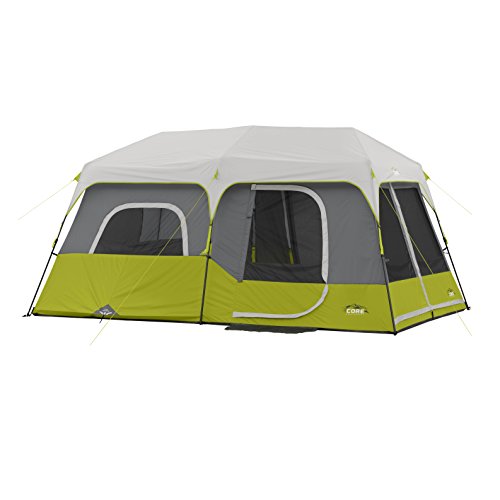
Cabin tents feature near-vertical walls and a boxy shape, maximizing interior space. They are easy to set up and often come with room dividers and multiple doors. Best suited for fair-weather camping and families who prioritize space over weight.
Dome Tents
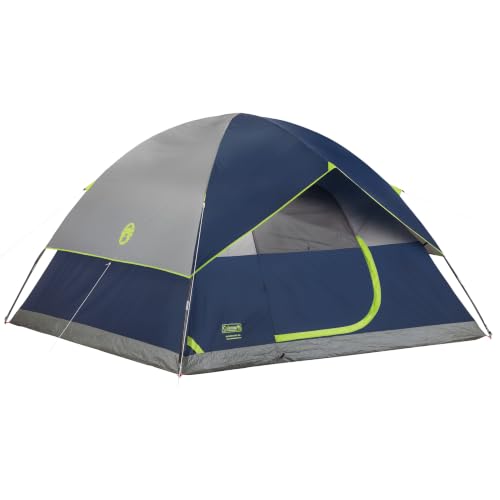
Dome tents use crossing poles to create a rounded structure that sheds wind and rain effectively. They are more stable than cabin tents in breezy conditions and pack down smaller, making them a versatile choice for weekend trips.
Tunnel Tents
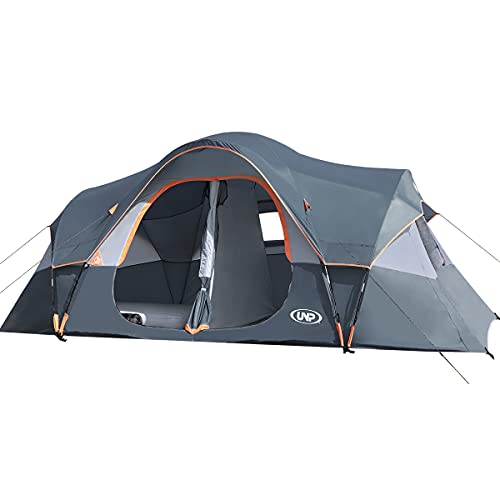
Tunnel tents offer a long, corridor-like shape with multiple sleeping compartments. They provide excellent headroom and separate living areas, making them ideal for extended family trips where privacy and organization matter.
Instant Setup Tents
Instant tents use pre-attached poles and a pop-up mechanism that can be fully assembled in under two minutes. These are the top-tier choice for families who want to minimize setup time and maximize relaxation at the campsite.
Season Ratings Explained
Three-Season Tents: The Family Standard
Three-season tents are designed for spring, summer, and fall camping. They offer a balance of ventilation and weather protection, with mesh panels for airflow and a rainfly for moderate rain. Most family camping trips fall into this category, making three-season tents the most versatile choice.
These tents handle light snow and rain but are not built for heavy winter conditions. If your family camps primarily in mild weather, a three-season tent is the practical choice.
Four-Season Tents: For Extreme Conditions
Four-season tents use stronger poles, fewer mesh panels, and heavier fabrics to withstand snow loads and high winds. They are designed for winter camping and alpine environments. However, the reduced ventilation can make them uncomfortably warm in summer.
Unless your family regularly camps in harsh winter conditions, a four-season tent is likely overkill. For most families, a well-ventilated three-season tent with a full rainfly provides the best balance.
Extended Season and Cabin-Style Options
Some manufacturers offer extended-season tents that bridge the gap between three- and four-season models. These feature reinforced poles and partial mesh panels, making them suitable for late-fall and early-spring camping without sacrificing too much airflow.
If you are considering a camping trailer setup instead of a tent, you might explore fold-down beds for enclosed trailers as an alternative sleeping solution that offers similar family-friendly convenience.
Key Features to Look For
Weather Protection
Rainfly coverage is the single most important weather-protection feature. A full-coverage rainfly extends all the way to the ground, protecting the tent body from wind-driven rain. Partial rainflies leave the lower walls exposed and are only suitable for light showers.
- Full-coverage rainfly with taped seams
- Bathtub-style floor with raised edges to prevent water intrusion
- Waterproof coating rated for at least 1,500mm hydrostatic head
- Reinforced stress points at pole intersections
- Weather-resistant zippers with storm flaps
Ventilation
Condensation is a common problem in family tents because multiple people exhale moisture overnight. Look for tents with large mesh panels, roof vents, and adjustable ground vents. Cross-ventilation keeps the interior dry and comfortable, especially in humid climates.
Some premium tents include built-in ventilation systems that channel airflow even when the rainfly is fully deployed. These are particularly valuable for summer camping in warm, muggy regions.
Setup and Portability
Family tents are larger and heavier than solo tents, so setup ease and packed size matter. Color-coded poles, pole sleeves, and clip attachments simplify assembly. Instant-setup tents eliminate pole threading entirely, though they tend to be bulkier when packed.
Consider the packed weight and dimensions relative to your vehicle. A tent that fits easily in your trunk is more practical than one that requires a roof rack, especially for families with limited cargo space.
Interior Organization
Storage pockets, gear lofts, and room dividers transform a basic tent into a comfortable family space. Mesh pockets keep small items off the floor, while a gear loft provides a place to hang lanterns or store lightweight clothing. Room dividers create separate sleeping zones, which can be invaluable for families with children of different ages.
Electrical cord ports are another family-friendly feature, allowing you to run an extension cord into the tent for lighting or charging devices. If you are setting up a more permanent family sleeping arrangement at home, our family camping guide offers additional tips for creating comfortable outdoor sleeping spaces.
Tent Type Comparison
| Tent Type | Best For | Setup Difficulty | Weather Resistance | Interior Space |
|---|---|---|---|---|
| Cabin Tent | Fair-weather family camping | Easy | Moderate | Excellent |
| Dome Tent | Versatile weekend trips | Moderate | Good | Good |
| Tunnel Tent | Extended family trips | Moderate to Hard | Excellent | Excellent |
| Instant Setup Tent | Quick weekend getaways | Very Easy | Good | Good |
Materials and Durability
Fabric Quality
Most family tents use polyester or nylon fabric. Polyester is more UV-resistant and less prone to stretching when wet, making it a solid choice for extended sun exposure. Nylon is lighter and stronger for its weight but can sag when wet unless treated.
Ripstop fabrics include a grid of reinforcing threads that prevent small tears from spreading. This is a valuable feature for family tents that see heavy use and occasional rough handling.
Pole Materials
Aluminum poles are lightweight, durable, and resistant to bending. Fiberglass poles are heavier and more prone to splintering but generally sit in the entry-level tier. For a long-term investment, aluminum poles are the better choice, especially for tents that will be set up and taken down frequently.
Pole diameter also matters. Thicker poles (11mm and above) provide greater stability in wind, which is important for large family tents that catch more wind than compact models.
Setup and Maintenance Tips
Site Selection
Choose a level, well-drained spot away from dead trees and low-lying areas that collect water. Clear the ground of rocks, sticks, and debris before pitching the tent to protect the floor and ensure comfortable sleep. Orient the tent so the lowest point faces downhill and the doors face away from prevailing winds.
Seam Sealing and Waterproofing
Even factory-sealed tents benefit from periodic seam sealing, especially after several seasons of use. Apply a seam sealer to all exposed seams on the rainfly and floor. Reapply water-repellent treatment to the fabric when water stops beading on the surface.
Always dry the tent thoroughly before storing it. Storing a damp tent promotes mildew growth, which damages the fabric and creates unpleasant odors. Set up the tent in a sunny area after each trip and allow it to air dry completely before packing.
Storage Best Practices
Store tents loosely rolled or folded rather than compressed in their stuff sacks. This prevents permanent creases in the fabric and extends the lifespan of the waterproof coating. Keep the tent in a cool, dry place away from direct sunlight, which degrades synthetic fabrics over time.
Frequently Asked Questions
Ready to Choose Your Family Camping Tent?
Browse our recommended family camping tents below and find the perfect shelter for your next outdoor adventure.
View Recommended TentsPro Tip: Before your first camping trip with a new tent, practice setting it up in your backyard. This helps you identify missing parts, learn the pole configuration, and build confidence for the real campsite. It also gives you a chance to check for any manufacturing defects while you still have easy access to customer support.