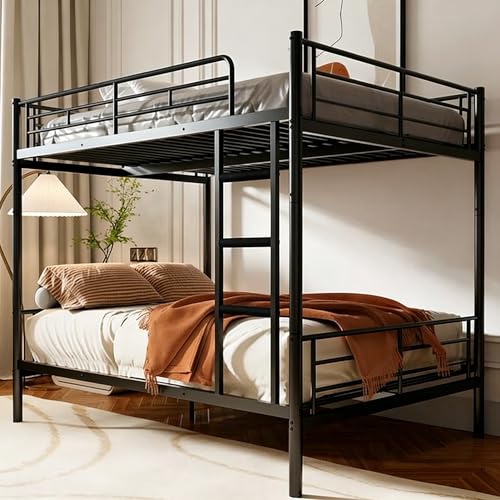
Full on Top of Full Bunk Beds: The Complete Guide
Everything you need to know about full over full bunk beds — sizing, safety, mattress fit, room planning, and how to choose the right setup for adults, teens, and growing families.
Start ExploringWhy full on top of full bunk beds? A full over full bunk bed gives two sleepers a generous full-size sleeping surface in a single footprint. It is a practical solution for shared bedrooms, guest rooms, vacation homes, and multi-generational households. This guide walks you through the key decisions so you can buy with confidence.
What You Will Learn
What Is a Full on Top of Full Bunk Bed?
A full on top of full bunk bed — often written as full over full — is a stacked bed frame that holds two full-size mattresses, one above the other. Each sleeping surface measures roughly 54 inches wide by 75 inches long, which is noticeably wider than a twin bunk. This extra width is the main reason full over full models are popular among adults, older teenagers, and families who want a shared bedroom without sacrificing comfort.
Unlike a twin over full arrangement, where the top sleeper gets a narrower mattress, a full over full setup treats both sleepers equally. That symmetry matters in households where two adults share a room, or where siblings close in age want comparable space. Many models are also convertible: the upper and lower sections can often be separated into two freestanding full beds if your needs change later.
If you are comparing bunk styles, it helps to look at the broader category of full bunk beds to understand how full over full fits alongside twin over full and full over twin configurations. For adult-focused setups, the dedicated full over full bunk beds for adults guide covers weight ratings and frame reinforcement in more detail.
Dimensions and Room Planning
Because a full mattress is wider than a twin, a full over full bunk bed occupies more floor space than a twin bunk. Typical footprints fall in the range of 58 to 62 inches wide and 80 to 84 inches long, though exact dimensions vary by manufacturer and frame style. Before ordering, measure your room and map out door swings, closet clearance, and window placement.
Vertical space is just as important as floor space. You need comfortable headroom for the person on the top bunk and enough clearance below so the lower sleeper does not feel cramped. As a practical guideline, aim for at least 30 to 36 inches between the top of the lower mattress and the underside of the upper bunk, and roughly 30 inches above the top mattress to the ceiling.
| Measurement | Typical Range | Why It Matters |
|---|---|---|
| Overall width | 58–62 inches | Must fit your wall space with room for a ladder |
| Overall length | 80–84 inches | Full mattresses are 75 inches long; frames add a few inches |
| Bottom bunk clearance | 30–36 inches | Prevents a cramped feeling for the lower sleeper |
| Top bunk to ceiling | 30+ inches | Allows sitting up and safe movement |
| Guardrail height above top mattress | 5+ inches | Keeps sleepers secure on the upper level |
If your room is tight, consider placement along a long wall and leave at least 24 inches of walking space beside the ladder. For unusually narrow rooms, low-profile and custom options may be worth exploring. Our guide to custom bunk beds for small rooms explains how to tailor dimensions to awkward floor plans.
Mattress Fit and Thickness Guidelines
Mattress selection is one of the most overlooked parts of bunk bed planning. A full over full frame is built for two standard full-size mattresses, but thickness matters — especially on the top bunk. An overly thick upper mattress can reduce the effective height of the guardrail, which is a safety concern.
Top Bunk Mattress
For the upper level, a mattress around 6 to 8 inches thick is a common recommendation. This keeps the guardrail functional while still providing adequate comfort. Memory foam and hybrid options in this thickness range are widely available. If you prefer a thicker mattress, confirm that the frame's rail height still meets safety guidance.
Bottom Bunk Mattress
The lower bunk is less constrained. Any standard full-size mattress works, and you can choose firmness based on the sleeper's preference. Medium-firm tends to suit most adults, while side sleepers may prefer something slightly softer. If you are outfitting a full bunk from scratch, our full size mattress bunk beds guide covers compatibility and fit in more depth.
Avoid mattresses that are significantly thicker than the frame was designed for. Beyond guardrail concerns, an oversized mattress can make the ladder harder to use and may interfere with the upper frame's structural bracing. Always check the manufacturer's stated maximum mattress height.
Safety Features That Matter
Safety should be the first filter when comparing full over full bunk beds. The upper bunk carries the most risk, so the guardrail system deserves close attention. Look for full-length guardrails on both sides of the top bunk, not just one. The rails should be firmly attached with reinforced hardware, not friction-fit or decorative pieces.
The ladder is the second critical component. It should be wide enough for comfortable foot placement, securely hooked or bolted to the frame, and positioned so it does not block a doorway or walkway. Some models offer angled ladders that are easier to climb; others use vertical ladders that save space. Either style is acceptable if it is stable.
Safety Checklist Before You Buy
✔ Full-length guardrails on both sides of the upper bunk
✔ Weight capacity clearly stated and appropriate for intended sleepers
✔ Ladder securely attached with a weight rating
✔ Slat spacing narrow enough to support the mattress without sagging
✔ No sharp edges or exposed hardware at head height
✔ Assembly instructions include wall-anchoring guidance where applicable
For households with younger children, consider a lower-profile bunk or a full over full model with a shorter upper deck. Adults should verify the weight rating for each level independently, since some frames rate the bottom and top bunks differently. The full size over full size bunk beds overview includes additional notes on structural ratings and frame design.
Frame Materials and Build Quality
Full over full bunk beds are available in metal, wood, and mixed-material constructions. Each has trade-offs in stability, aesthetics, and maintenance.
Metal Frames
Metal bunk beds are common in the entry-level and mid-range tiers. High-grade steel frames with reinforced joints offer strong weight capacity and a relatively slim profile. Look for powder-coated or rust-proof finishes, especially in humid climates. Metal frames tend to have a more utilitarian look, though modern designs have softened the aesthetic considerably.
Wood Frames
Solid wood and engineered wood frames suit bedrooms where style matters as much as function. Hardwood constructions — pine, oak, or rubberwood — tend to be more durable than particle board. Check that the slats are thick and closely spaced, and that the corner joints are reinforced with bolts rather than staples. Wood frames in the premium tier often include convertible designs that split into two beds.
Mixed-Material Frames
Some models combine a metal internal frame with wood panels or upholstered accents. These can be a good middle ground, but inspect the connection points carefully. Where metal meets wood, hardware quality determines long-term stability.
Regardless of material, heavier frames generally feel more stable. If the bed will be used by adults, prioritize frames described as heavy-duty or reinforced. Our bunk beds for adults for sale guide highlights the construction details that separate robust frames from lighter-duty ones.
Who Should Choose Full Over Full?
Full on top of full bunk beds are not a one-size-fits-all solution. They work best in specific situations:
- Two adults sharing a room: The full-size surface on both levels provides comfortable width for adult sleepers.
- Teen siblings: Older children and teenagers often outgrow twin bunks quickly; full over full extends the usable life of the bed.
- Guest and vacation homes: A single footprint that sleeps two adults comfortably is ideal for short-term hosting.
- Multi-generational households: Grandparents or extended family members may prefer the wider sleeping surface.
- Convertible room planning: Models that split into two full beds offer flexibility as needs change.
Full over full is less ideal for very small rooms, low ceilings, or households with toddlers who are not ready for an upper bunk. In those cases, a low bunk bed twin over twin or a low-profile twin over full bunk bed may be a safer starting point. Families with young children often begin with a metal frame bunk bed twin over full and upgrade to full over full as children grow.
Full Over Full vs. Other Bunk Configurations
Understanding how full over full compares to other layouts helps you choose the right fit for your household.
| Configuration | Top Mattress | Bottom Mattress | Best For |
|---|---|---|---|
| Full over full | Full | Full | Two adults or teens; equal comfort on both levels |
| Twin over full | Twin | Full | Child and adult; mixed-age siblings |
| Twin over twin | Twin | Twin | Young children; compact rooms |
| Full over queen | Full | Queen | Couples or adults wanting extra lower-bunk width |
| Queen over queen | Queen | Queen | Maximum sleeping surface; large rooms |
Twin over full remains the most common family configuration because it balances space and functionality. Full over full is the upgrade path when both sleepers need adult-sized comfort. For households considering even larger layouts, full over queen bunk beds for adults and queen bed bunk beds offer additional width, though they demand more floor space. If your room is generous, a triple bunk bed with mattresses included can sleep three in a similar footprint.
Setup and Assembly Tips
Proper assembly is essential for stability and safety. Most full over full bunk beds ship with detailed instructions, but a few practical steps improve the outcome:
- Assemble on a level surface: Build the frame in the room where it will live, or move it carefully afterward. An uneven floor can cause rocking.
- Use the included hardware: Avoid substituting bolts or screws, since mismatched hardware can weaken joints.
- Tighten in stages: Snug all bolts first, then fully tighten once the frame is square. This prevents twisting.
- Anchor where recommended: Some frames include wall-anchoring kits. Use them, especially in homes with children.
- Check slat spacing: Slats should be evenly spaced and firmly seated. Add a bunkie board if the mattress feels unsupported.
- Test stability before use: Gently push the frame from multiple sides. Any excessive sway suggests loose hardware or an assembly error.
If you are converting a full over full model into two separate beds later, keep the original hardware and instructions. Conversion kits and replacement parts are easier to source when you have the model number on hand. For additional layout inspiration, our full double beds guide covers freestanding alternatives once the bunk is separated.
Frequently Asked Questions
Are full on top of full bunk beds safe for adults?
Yes, many full over full bunk beds are engineered with high-grade steel or solid wood frames rated for adult use. However, adults should confirm the manufacturer's weight capacity, verify the upper bunk has a full guardrail, and ensure the ladder is securely attached. Sturdier frames in the top-tier category generally provide better stability for adult sleepers.
What mattress thickness works best for a full on top of full bunk bed?
For the top bunk, a mattress between 6 and 8 inches thick is typically recommended to keep the guardrail effective. For the bottom bunk, any standard full-size mattress works, though a medium-firm option suits most adults. Always check the manufacturer's maximum mattress height guidance to maintain safe rail clearance.
How much ceiling height do I need for a full over full bunk bed?
You need enough clearance for the person on the top bunk to sit up without hitting the ceiling, plus comfortable space on the bottom. A common guideline is at least 30 to 36 inches between the top of the lower mattress and the underside of the upper bunk, and roughly 30 inches of headroom above the top mattress. Measure your ceiling before ordering.
Can full on top of full bunk beds be separated into two beds?
Many full over full bunk beds are designed as convertible units that can split into two independent full-size beds. This is a practical feature for growing families or guest rooms. Check the product specifications to confirm whether a specific model supports the conversion.
What is the difference between full over full and twin over full bunk beds?
A full over full bunk bed places two full-size mattresses in a stacked configuration, giving both sleepers generous width. A twin over full uses a narrower twin mattress on top and a full mattress below. Full over full setups suit two adults or older teens, while twin over full is common for a child and an adult or for mixed-age siblings.
Ready to Compare Models?
Now that you understand the dimensions, safety features, and mattress requirements, you are in a good position to evaluate specific full over full bunk beds. Browse the recommended options below and check availability for the configuration that fits your room and household.