
Thread Count in Bedsheets: What It Really Means for Sleep Quality
The ultimate guide to understanding thread count and choosing sheets that feel amazing, last longer, and help you sleep better.
When you're shopping for new bedsheets, one number seems to dominate every product description: thread count. It's the metric that marketers love to highlight and shoppers have been trained to look for. But what does thread count actually mean? Does a higher number always equal better quality? And how do you know which sheets are truly worth your money?
In this comprehensive guide, we'll break down everything you need to know about thread count—from what it measures to why it matters, and how to choose the perfect sheets for your sleep sanctuary.
What Is Thread Count Exactly?
Thread count refers to the number of threads woven into one square inch of fabric. This includes both the vertical (warp) and horizontal (weft) threads. For example, if a sheet has 200 warp threads and 200 weft threads per square inch, the thread count would be 400.
While this sounds straightforward, the reality is a bit more nuanced. Higher thread counts mean more threads packed into every inch, which generally results in a denser, softer, and more durable fabric. However, thread count alone tells only part of the story—the quality of those threads matters just as much.
How Thread Count Is Calculated
In theory, thread count is a simple calculation. But in practice, there are some important details to understand:
- Single-ply vs. Multi-ply: Single-ply threads are made from one continuous strand of cotton. Multi-ply threads are created by twisting two or more strands together. Some manufacturers use multi-ply threads to boost thread count numbers artificially.
- Counting methods: Some brands count only the warp threads, while others count both warp and weft. Always check how the thread count was measured.
- Quality over quantity: A sheet with 400 single-ply threads will almost always feel superior to a sheet with 800 multi-ply threads made from lower-quality cotton.
By understanding these distinctions, you'll be better equipped to compare sheets beyond just the headline numbers. If you're looking to upgrade your entire sleeping setup, start with the complete mattress buying guide for your foundation, then perfect your bedding with the right sheets.
The Sweet Spot: What Thread Count Should You Look For?
One of the most common questions we hear is: "What's the best thread count for bedsheets?" The answer depends on your preferences, but there's a general consensus among textile experts.
| Thread Count Range | Quality Level | Best For | What to Expect |
|---|---|---|---|
| 200–300 | Basic | Guest rooms, kids' beds | Durable but can feel coarse; budget-friendly |
| 300–500 | Good | Everyday use, most sleepers | Soft, breathable, and durable—excellent value |
| 500–800 | Premium | Luxury sleepers, master bedrooms | Exceptionally soft, luxurious feel, long-lasting |
| 800–1,000+ | Ultra-Premium | Luxury hotels, discerning buyers | Incredibly soft but often overpriced; diminishing returns |
Research shows that the ideal thread count range for most people is between 300 and 500. Within this range, you'll find sheets that are soft, breathable, durable, and reasonably priced. Beyond 800, the quality difference becomes minimal while the price tag increases significantly.
For a truly exceptional sleep experience, look for sheets in the 400–600 thread count range made from long-staple cotton like Egyptian or Pima. These sheets offer the perfect balance of comfort, durability, and value.
Why Thread Count Matters for Sleep Quality
Thread count affects your sleep in several important ways:
- Breathability: Higher thread count sheets are typically softer but can be less breathable if the weave is too tight. This is why many luxury percale weaves have thread counts around 300–400—they strike the perfect balance between softness and airflow.
- Temperature Regulation: Sheets with proper thread counts help regulate your body temperature throughout the night, preventing you from waking up hot or cold.
- Skin Sensitivity: Higher-quality sheets with smooth, dense weaves are gentler on sensitive skin and cause less irritation.
- Durability: Sheets in the 400–600 range offer excellent longevity, retaining their softness and appearance wash after wash.
When you combine quality sheets with the right bed pillows for your sleeping position, you create a sleep environment that supports both comfort and health.
Thread Count Myths—Busted
There's a lot of confusion and misinformation about thread count. Let's clear up the most common misconceptions:
Myth #1: Higher Thread Count Always Means Better Quality
❌ Myth: "1,000 thread count sheets are the best you can buy."
✅ Fact: A high thread count often indicates multi-ply threads—meaning the manufacturer twisted several fibers together to inflate the number. The best sheets are usually in the 300–600 range with single-ply, long-staple cotton.
Myth #2: Egyptian Cotton Is the Only High-Quality Option
❌ Myth: "Only Egyptian cotton sheets are worth buying."
✅ Fact: While Egyptian cotton is excellent, Pima cotton and Supima cotton (American-grown Pima) offer comparable quality. Organic cotton and certain types of linen also provide exceptional comfort and durability.
Myth #3: You Should Never Buy Sheets Below 400 Thread Count
❌ Myth: "Anything under 400 thread count isn't worth your money."
✅ Fact: Many of the best hotel-quality sheets have thread counts between 250 and 400. A crisp, cool percale weave with 300 threads made from long-staple cotton can be superior to a 600-thread sateen made from shorter fibers.
Understanding these myths helps you make better purchasing decisions. Instead of being swayed by impressive thread counts, you'll focus on the factors that truly matter for your comfort and sleep quality.
Beyond Thread Count: What Else Matters?
To choose the perfect sheets, consider these factors alongside thread count:
1. Cotton Type
The type of cotton used dramatically affects how sheets feel and perform. Here's what to look for:
- Egyptian Cotton: Extra-long-staple fibers create exceptionally soft, durable sheets. Best thread count: 400–600.
- Pima/Supima Cotton: Long-staple cotton grown in the US with excellent softness and durability. Best thread count: 300–500.
- Organic Cotton: Grown without pesticides and harsh chemicals. Often feels crisp and cool. Best thread count: 300–500.
- Upland Cotton: Standard, short-staple cotton. Can feel rougher and pill more easily. Best avoided for luxury sheets.
2. Weave Type
The weave determines how the sheets feel against your skin:
- Percale: A crisp, matte finish with a cool feel. Breathable and lightweight. Perfect for hot sleepers. Usually found in 200–400 thread counts.
- Sateen: A soft, silky feel with a subtle sheen. Warmer and more luxurious-feeling. Typically found in 300–600 thread counts.
- Jersey: A knit fabric that feels like a soft T-shirt. Stretchy and cozy. Thread count is less relevant here.
- Linen: Not measured by thread count; valued for breathability and texture. Gets softer with each wash.
3. Finishing Process
How the fabric is finished affects its final feel:
- Mercerization: A chemical treatment that strengthens fibers, increases luster, and improves dye retention.
- Singeing: Burning away tiny fuzzy fibers to create a smoother surface.
- Calendering: A pressing process that gives the fabric a smooth, polished finish.
How to Choose the Best Sheets for Your Bed
Armed with knowledge about thread count and other quality indicators, here's a step-by-step approach to finding the perfect sheets:
- Determine your budget: Quality sheets are an investment. Expect to spend $80–$150 for a good queen set and $150–$300 for premium options.
- Consider your sleeping temperature: Hot sleepers should choose lightweight percale or linen. Cool sleepers may prefer cozy flannel or sateen.
- Check the fiber quality: Look for "long-staple" or "extra-long-staple" cotton. Egyptian, Pima, and Supima are your best bets.
- Look beyond the number: A 400 thread count percale from long-staple cotton often beats an 800 thread count sateen from short-staple cotton.
- Read reviews: Real user experiences about softness, durability, and shrink resistance are invaluable.
- Consider the whole package: If you're setting up a complete bedroom, think about how your sheets coordinate with bedroom decor and other accessories.
What About Bamboo and Alternative Fibers?
Bamboo and other alternative fibers have gained popularity in recent years. Here's how thread count applies:
- Bamboo/Modal/Lyocell: These fibers are measured differently than cotton. They're naturally soft and moisture-wicking, and thread count matters less. Look for quality manufacturing processes instead.
- Microfiber: Synthetic microfiber sheets are measured by weight (GSM) rather than thread count. While affordable, they're less breathable than natural fibers.
- Tencel/Lyocell: Made from eucalyptus wood pulp, these sheets are soft, sustainable, and excellent for temperature regulation.
Alternative fibers can be excellent choices, particularly for those with skin sensitivities or who prioritize sustainability. Just understand that "thread count" isn't an apples-to-apples comparison with cotton sheets.
Making Your Sheets Last: Care Tips
Quality sheets are an investment. Protect your investment with proper care:
- Wash before first use: This removes manufacturing residues and softens the fabric.
- Use gentle detergent: Avoid bleach and harsh chemicals that can damage fibers.
- Wash in cool or warm water: Hot water can weaken fibers and cause shrinkage.
- Air dry when possible: High heat damages fibers over time. If using a dryer, use low heat and remove promptly.
- Rotate between multiple sets: Giving sheets time between uses extends their lifespan.
With proper care, quality sheets can last 5–10 years or more, making them a worthwhile investment in your sleep comfort.
Final Verdict: How to Shop for Sheets
When you're shopping for bedsheets, keep these final tips in mind:
✅ Smart Sheet Shopping Checklist
- Choose 400–600 thread count for the best balance of softness, durability, and value
- Prioritize long-staple cotton (Egyptian, Pima, or Supima) over high thread count alone
- Match the weave to your sleep style—percale for hot sleepers, sateen for those who love luxury
- Ignore inflated thread counts over 800—these often indicate gimmicky marketing
- Invest in quality: A $100 set of quality sheets will outlast and outperform a $50 set of high-thread-count sheets made from poor materials
- Consider buying from reputable brands known for consistency and quality control
Ready to upgrade your sleep? The right sheets can transform your bed into a sanctuary of comfort. Start with quality sheets in the 400–600 thread count range made from long-staple cotton, and you'll notice the difference the very first night.
Remember: great sleep is about more than just sheets. For a truly complete sleep experience, consider exploring mattress options and finding the right pillows to support your body. And if you're creating a bedroom that promotes deep rest, our bedroom design guides offer plenty of inspiration.
Sleep well, live well.
Premium Bedsheets & Bedding Sets
⚠️ AFFILIATE DISCLOSURE: This website contains affiliate links. As an Amazon Associate, we earn from qualifying purchases. If you make a purchase through these links, we may receive a small commission at no additional cost to you. Read our full affiliate policy.

Queen Size Sheet Set, Linen - 400 Thread Count Bed Sheets Queen Size

Madison Park 1000 TC Cotton Blend Sheet Set, Queen Size Bed Set Blue 4Psc
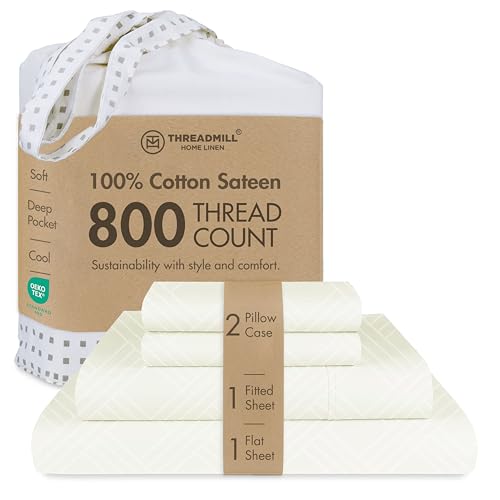
Threadmill Luxury 100% Cotton Queen Bed-Sheets - 800 Thread Count Jacquard Celine Ivory, Better Than Egyptian Cotton,4 Pc Striped Bed Set, Damask Sheets with Elasticized Deep Pocket

Threadmill 500 Thread Count Cotton Queen Sheet Set, Damask Stripe, White

THREAD SPREAD Egyptian Cotton Sheets Queen Size - 800 Series High Thread Count Bed Sheets Queen Size (4 PC, Ivory) 16" Deep Pocket, Cooling, Sateen Weave Euphoria Collection Luxury Hotel Bedding

Lanest Housing Queen Sheet Set, 2400 Thread Count Soft Deep Pocket Microfiber Sheets, 4 Pieces Taupe Bedding Sheets & Pillowcases
