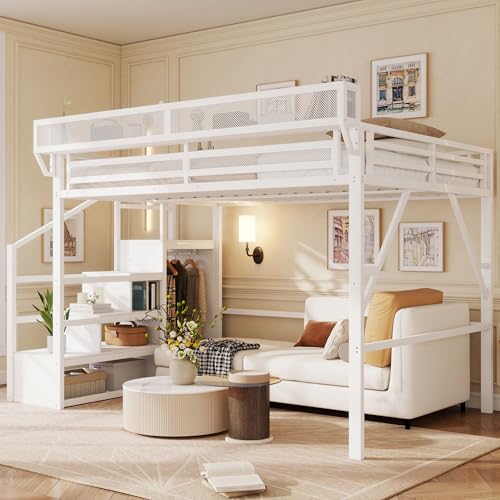
Queen Size Bunk Beds with Stairs: Complete Buying Guide
Two full queen sleeping surfaces, a built-in staircase, and a footprint that actually works in shared rooms. Here is everything you should verify before choosing a queen bunk bed with stairs for your home.
Explore Recommended OptionsWhy this guide exists: A queen-over-queen bunk with stairs is a serious piece of furniture. It holds two adults, anchors to a wall in most designs, and changes the traffic flow of an entire room. Shoppers who reach this page usually know they want a queen bunk configuration but still need clarity on staircase placement, ceiling clearance, mattress sizing, and adult weight ratings. The sections below answer those questions in order.
What Makes a Queen Bunk Bed with Stairs Different
Most bunk beds on the market are twin-over-twin or full-over-full. A queen-over-queen configuration is a larger category with a different set of engineering requirements. Each sleeping platform has to carry the load of an adult, so the frame is typically built from heavier-gauge steel or thicker solid hardwood than a kids' bunk. The staircase adds a second structural element: it must be anchored to the frame and, in many designs, to the wall as well.
The result is a piece of furniture closer to a small loft than to a traditional bunk. That is why buyers researching queen size bunk beds for adults usually also need to confirm ceiling height, wall anchoring, and floor clearance before ordering. If your room cannot support a staircase footprint, a queen loft bunk bed with a ladder is a lighter alternative worth comparing.
Stairs vs. Ladder: What the Staircase Actually Changes
A staircase is the single most requested upgrade on adult bunk beds, and it is easy to understand why. Flat treads are easier on the feet, safer in the dark, and far more comfortable for anyone with knee, hip, or balance concerns. The trade-off is floor space and assembly complexity.
- Safety: Stairs with a handrail give a continuous grip point, which matters more on a tall queen bunk than on a low twin bunk.
- Space: A staircase projects outward from the side or end of the bed. Measure this projection carefully against door swings and closet doors.
- Storage: Many staircase units are built as storage stairs, with drawers or open cubbies inside each step. This offsets the footprint by replacing a separate dresser.
- Assembly: Stairs arrive in more pieces and require more careful anchoring. Budget a longer setup session or professional assembly.
If storage is the priority, compare a queen size bunk bed with storage alongside the staircase models. Some frames combine both features, with drawers under the lower bunk and storage inside the stairs.
Ceiling Height, Room Layout, and Clearance
Ceiling height is the most common reason a queen bunk purchase gets returned. A bunk that fits a twin configuration may not fit a queen configuration, because the larger mattress platform usually raises the overall stack. Treat these numbers as planning checkpoints:
| Checkpoint | What to Verify | Why It Matters |
|---|---|---|
| Assembled height | Manufacturer's total height spec | Determines whether the top bunk fits your ceiling |
| Headroom above top bunk | Gap between top mattress and ceiling | Prevents a cramped, unsafe sleep surface |
| Staircase projection | Depth the stairs extend from the frame | Affects door swings, walking paths, and closet access |
| Wall anchoring | Whether the frame includes a wall bracket | Stability for a tall, heavy frame |
| Floor clearance | Space under the lower bunk | Room for storage bins or under-bed airflow |
Room layout matters just as much as raw height. A staircase placed at the foot of the bed keeps the side wall clear for windows and nightstands. A side-entry staircase works better when the bed sits against a long wall. Sketch the footprint on the floor with painter's tape before ordering, including the full stair projection.
Frame Materials and Build Quality
Queen bunk beds carry two adult sleepers, so construction quality is not a cosmetic detail. The frame categories below describe market positioning and build approach rather than any specific product:
- Entry-level tier: Lighter steel frames with thinner rails and a basic staircase. Fine for occasional guest use, but check the weight rating carefully.
- Mid-range tier: Heavier-gauge steel or solid hardwood, reinforced corner joints, and a staircase with a proper handrail. The most common choice for daily adult use.
- Premium tier: Thick solid wood construction, dovetailed storage drawers in the stairs, and a more polished finish. Built to be a long-term investment.
- Commercial-grade: Designed for rental properties, guest houses, or high-turnover use, with heavier hardware and stricter weight ratings.
Look for descriptors such as heavy-duty, reinforced, solid build, and high-grade steel in the specification sheet. A rust-proof finish matters if the room runs humid. If you want to compare overall bed categories before narrowing down, the broader queen beds hub covers standard frames, platform options, and storage configurations.
Mattress Sizing and Thickness for Queen Bunks
Queen bunk beds use standard queen mattresses, but the top bunk has a thickness limit that many buyers overlook. The guardrail only protects a sleeper if it sits well above the mattress surface. Thinner mattresses, generally in the 6 to 8 inch range, keep the rail effective on the upper level.
On the lower level you have more freedom. A standard queen mattress or a medium-firm model works well. If the lower bunk sits close to the floor, a thinner mattress also keeps getting in and out comfortable. Avoid extra-thick pillow-top designs on the top bunk unless the manufacturer explicitly allows them.
Firmness is a personal decision, but for shared bunk rooms a medium or medium-firm mattress tends to suit the widest range of sleepers. Side sleepers usually want more cushioning, while back and stomach sleepers benefit from a firmer surface. If the top bunk is mostly used by guests, a medium-firm model is a safe default.
Safety Features to Confirm Before Ordering
The staircase is the headline feature, but it is not the only safety element that matters. Check each of these in the product specification:
- Full-length guardrails on the top bunk, with no gap wider than a few inches at any point.
- Anchored staircase that attaches to the frame, not a freestanding step stool.
- Handrail running the full length of the stairs.
- Weight rating stated per bunk, not just as a combined total.
- Wall anchor kit included or explicitly recommended.
- Rounded edges and non-slip treads on the stairs.
If children will ever use the room, verify that the staircase has a gap small enough to prevent a child from slipping through, and that the top rail extends high enough above the mattress. Adult-oriented queen bunks are not automatically child-safe, so read the manufacturer's age guidance.
Storage Stairs and Space Planning
Storage stairs are the most practical upgrade for most buyers. Each step doubles as a drawer or an open cubby, which removes the need for a separate dresser in a shared room. The trade-off is weight and assembly time, plus the drawers need clearance to open.
Plan the drawer swing direction before you commit to a wall placement. A staircase with drawers that open toward a doorway will block traffic. If the room is tight, an open-cubby staircase is more forgiving than a drawer staircase. For buyers weighing different configurations, queen size bunk beds with trundle add a third sleeping surface but consume a different kind of floor space, so compare the two layouts side by side.
Who Should Choose a Queen Bunk with Stairs
This configuration suits a specific set of situations. It is a strong fit for:
- Adult siblings or roommates sharing a large bedroom.
- Guest rooms that need to sleep four adults comfortably.
- Vacation rentals and guest houses where two couples share a space.
- Multi-generational homes where grandparents need easier access than a ladder provides.
It is a weaker fit for low-ceiling rooms, narrow bedrooms where the staircase would block a door, or households with very young children who need a child-specific bunk with tighter rail spacing. If the room is small, a queen over queen size bunk bed with a ladder may be the more realistic option.
Assembly, Anchoring, and Long-Term Care
Plan for a two-person assembly. Queen bunk frames are heavy, and lifting the upper platform into place is much easier with a second set of hands. Follow the manufacturer's anchoring instructions exactly, and use the wall bracket if one is supplied.
Once assembled, re-tighten the hardware after the first month of use, then check it every few months. Staircase treads and handrail bolts take the most stress. Keep the frame dry, wipe spills promptly, and avoid dragging the bed across the floor when rearranging the room. A well-maintained heavy-duty frame is a long-term investment that can outlast several mattress changes.
Frequently Asked Questions
Are queen size bunk beds with stairs safe for adults?
Yes, when the frame is rated for adult weight and installed correctly. Look for reinforced steel or solid hardwood construction, full-length guardrails on the top bunk, and a staircase that is firmly anchored to the frame.
What ceiling height do I need for a queen bunk bed with stairs?
Most designs need at least 8 feet of ceiling height to give a comfortable gap above the top bunk. Always check the manufacturer's assembled height and add a few inches of headroom for sitting up.
Do stairs take up more floor space than a ladder?
Yes. A staircase projects outward from the side of the bed, so it needs extra clearance. Storage stairs offset this by replacing a separate dresser or shelving unit in the room.
What mattress thickness works best on a queen bunk bed?
Thinner mattresses, generally in the 6 to 8 inch range, keep the guardrail effective on the top bunk. Follow the frame's maximum mattress height specification to keep the rail above the sleep surface.
Final Checklist Before You Order
Run through this list once more before checkout: confirmed assembled height against your ceiling, measured staircase projection against door swings, verified per-bunk weight rating, confirmed mattress thickness limit for the top bunk, and a plan for wall anchoring. If all five are clear, a queen bunk bed with stairs is a practical, space-efficient choice that serves adults and guests well for years.