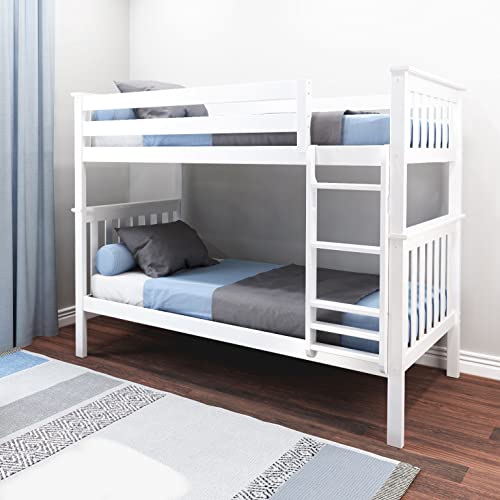
What Are Solid Wood Bunk Beds That Separate?
Solid wood bunk beds that separate are engineered as two standalone bed frames connected by removable hardware. The upper unit includes guardrails and typically a ladder or stair system, while the lower unit functions as a full bed on its own. When you remove the connecting brackets, guardrails, and ladder, each section stands independently as a complete solid wood bed.
This design is especially valuable for families planning ahead. A shared children's room today can become two separate rooms tomorrow, and the same furniture adapts with you. It is also a smart choice for guest rooms, vacation homes, and multi-use spaces where flexibility matters more than a fixed layout.
How the Separation Mechanism Works
Most separable bunk beds use one of two approaches. The first is a post-and-bracket system where the upper bed's legs rest on or bolt into the lower bed's corner posts. The second uses side rails and keyhole brackets that lock the two units together. In both cases, the connection points are designed to be disassembled with basic tools, and the resulting single beds retain their full structural integrity.
Because the hardware is the critical safety component, always confirm that replacement parts are available and that the manufacturer provides clear separation instructions. A well-built separable bunk bed should feel rock-solid when assembled and just as stable when split.
Two Beds in One
Stacked for shared rooms, separated for independent use. One purchase covers multiple life stages.
Solid Wood Durability
Hardwood frames resist wobble and wear far better than particleboard or thin metal alternatives.
Space-Saving Layout
Vertical stacking frees floor space for play, study, or storage in compact bedrooms.
Long-Term Adaptability
Separate the units as children grow or when guests need their own sleeping space.
Key Features to Evaluate Before You Buy
Not every bunk bed marketed as "convertible" separates cleanly. Use the checklist below to separate genuine flexibility from marketing language.
1. Wood Species and Joint Construction
Solid hardwood — pine, oak, maple, or birch — offers the best balance of strength and longevity. Look for mortise-and-tenon joints, doweled corners, and reinforced corner blocks rather than staples or glue-only assembly. Heavier frames are generally more stable, but they also require more effort to move and separate, so factor in your space and mobility needs.
2. Weight Ratings and Adult Suitability
Separable bunk beds range from children's models to adult-rated frames. If adults or teenagers will use the upper bunk, confirm that both tiers carry an adult weight rating. The connection hardware must also be rated for the combined load when assembled. If you need adult-sized options, explore solid wood bunk beds for adults for frames built to higher load standards.
3. Guardrails, Ladders, and Stairs
Guardrails should extend at least five inches above the mattress surface and run along both sides of the upper bunk. Ladders are standard, but stairs are safer for younger children and easier for adults. If stairs are a priority, compare solid wood bunk beds with stairs before deciding on a ladder-based model.
4. Storage and Layout Options
Many separable bunk beds include under-bed drawers, shelving, or trundle space. Storage adds convenience but can complicate separation if the lower unit's drawers are integrated into the connecting frame. Choose storage that belongs clearly to one unit so both beds remain functional after separation. For more ideas, see solid wood bunk beds with storage.
5. Mattress Compatibility
The upper bunk usually requires a thinner mattress so sleepers stay below the guardrail line. Standard twin mattresses fit most models, but confirm the maximum mattress height for the top tier. Separated beds can then use standard mattresses without restriction.
Quick Tip: Test the Separation Design
Before purchasing, read the assembly manual or product description for the phrase "converts to two beds" or "separates into two freestanding beds." If the listing only says "convertible," verify the exact configuration with the manufacturer.
Popular Configurations Compared
Separable bunk beds come in several standard layouts. The table below compares common configurations by tier, best use case, and separation behavior — without reference to pricing.
| Configuration | Tier | Best For | Separation Behavior |
|---|---|---|---|
| Twin-over-twin separable bunk | Entry-level to mid-range | Children's rooms, guest rooms | Splits into two twin beds |
| Full-over-full separable bunk | Mid-range to premium | Teens, adults, larger rooms | Splits into two full beds |
| Twin-over-full separable bunk | Mid-range | Mixed-age siblings | Splits into one twin and one full bed |
| Bunk with stairs and storage | Premium to high-end tier | Families prioritizing safety and organization | Splits into two beds; stairs remain with one unit |
| Staggered separable bunk | Premium | Low ceilings, design-forward rooms | Splits into two beds with offset heights |
For twin-over-twin layouts specifically, see solid wood bunk beds twin over twin. If you prefer a staggered look that still separates, compare staggered bunk beds with storage.
Safety and Assembly Checklist
Separable bunk beds introduce an extra variable — the connection hardware — so safety checks matter more than with fixed frames. Use this checklist before and after assembly.
- Confirm the bed meets current bunk bed safety standards, including guardrail height and ladder specifications.
- Check that all connecting bolts, brackets, and pins are included and undamaged.
- Assemble on a level floor and re-tighten hardware after the first week of use.
- Keep the separation instructions in a safe place; you will need them when converting the bed.
- Use the recommended mattress thickness on the upper bunk to maintain guardrail clearance.
- Never place the upper bunk against a wall without a guardrail on the open side.
Related Reading
If floor space is your main constraint, pair this guide with our overview of space-saving bunk beds for small rooms and small space bunk beds. For younger sleepers, teenage bunk beds with storage covers layouts that grow with the room.
Who Should Choose a Separable Bunk Bed?
Separable bunk beds suit households that expect change. Families with children of different ages benefit from the twin-over-full configuration, while adult roommates or guest rooms often prefer full-over-full or staggered designs. If you are furnishing a studio or a multi-purpose room, the ability to split the bunk into two beds later can save you from replacing furniture when your layout changes.
They are less ideal for households that need a permanently stacked layout with zero maintenance. Every separation adds assembly steps, and repeated disassembly can loosen hardware over time if not done carefully. For most buyers, though, the trade-off favors flexibility.
Frequently Asked Questions
What does it mean when a bunk bed can separate?
A separable bunk bed is engineered so the top and bottom units detach and stand alone as two independent beds. This gives you the option of a stacked configuration for shared rooms or two separate beds when needs change.
Are solid wood bunk beds that separate safe for adults?
Yes, provided the bed is rated for adult weight and built with reinforced joinery, a sturdy ladder or stairs, and full-length guardrails. Always check the manufacturer's weight rating and assembly instructions before use.
Do separable bunk beds require special mattresses?
Most solid wood bunk beds that separate use standard twin, full, or queen mattresses. However, the upper bunk typically needs a thinner mattress that stays below the guardrail line, so check the recommended mattress height for each tier.
How hard is it to separate a bunk bed?
Separating a bunk bed is usually a two-person job that involves removing the guardrails, ladder, and connecting hardware. Many models are designed for tool-light disassembly, but you should always follow the manufacturer's instructions and keep all hardware organized.
Bottom Line
Solid wood bunk beds that separate combine the space efficiency of a bunk with the long-term value of two standalone beds. Focus on hardwood construction, adult-rated load capacity when relevant, and connection hardware that is serviceable and well-documented.
If you are still comparing options, start with solid wood bunk beds for the full category overview, then narrow down by configuration and safety features. A well-chosen separable bunk bed is a worthwhile investment that adapts as your household evolves.