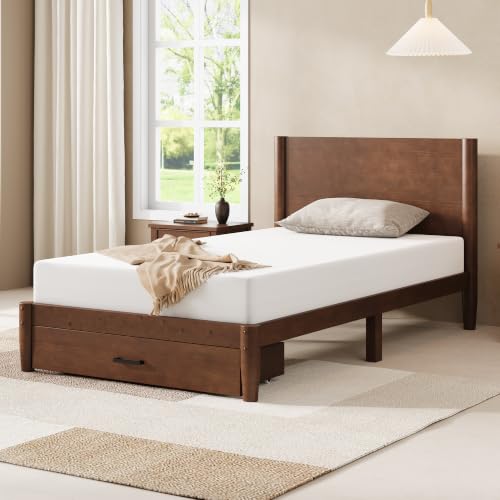
Solid Wood Twin Beds: The Complete Buying Guide
Everything you need to know about choosing a durable, timeless solid wood twin bed — from wood species and frame construction to size planning and long-term care.
Explore Recommended PicksWhy solid wood twin beds deserve your attention: If you have narrowed your search to a twin bed, you already know the size works for guest rooms, kids' rooms, dorms, and compact apartments. The real decision is the material. A solid wood twin bed frame is one of the few furniture purchases that can genuinely last for decades, be repaired instead of replaced, and grow with your needs. This guide walks you through the wood species, joinery methods, support systems, and practical checks that separate a well-built frame from a decorative one.
What Makes a Twin Bed "Solid Wood"?
Not every wooden-looking bed is solid wood. Manufacturers use the term loosely, so it helps to know the distinctions before you compare listings. A genuine solid wood twin bed uses lumber milled from a single log or from glued planks of the same species — oak, pine, maple, cherry, walnut, or birch are common. You may see knots, grain variation, and subtle color shifts across the frame, and that is a sign of authenticity rather than a defect.
By contrast, engineered or composite frames use particleboard, MDF, or plywood wrapped in veneer. These can look convincing in photos but behave differently over time: they resist humidity warping better in some cases, yet they cannot be sanded down or refinished once the surface layer is damaged. For a twin bed that will be handed down or moved between rooms, solid lumber remains the more repairable option. If you want to browse related compact options, our twin size storage beds guide covers space-saving designs that pair well with solid wood construction.
Solid Wood vs. Engineered Wood: A Quick Comparison
| Factor | Solid Wood | Engineered Wood |
|---|---|---|
| Durability | High; repairable and refinishable | Moderate; surface damage is permanent |
| Weight & density | Heavier, feels substantial | Lighter, easier to move alone |
| Humidity response | Expands and contracts naturally | More dimensionally stable |
| Longevity | Decades with basic care | Shorter service life |
| Repairability | Sand, stain, and refinish | Replace panels or whole unit |
Choosing the Right Wood Species
The species affects hardness, grain character, and how the frame ages. Rather than ranking them by numbers, think in tiers based on expected use. The descriptors below are relative market positions, not absolute judgments — a well-made pine frame can outperform a poorly made oak one.
Pine & Spruce
Soft grain, lighter weight, and an accessible starting point. Ideal for kids' rooms and guest spaces where the bed is not subjected to daily roughhousing. Look for knot-free heartwood and reinforced corner blocks.
Birch & Rubberwood
Denser than pine with a tighter, more uniform grain. Rubberwood in particular is a practical choice for solid construction at a balanced tier. Takes stain evenly and holds screws well.
Oak & Maple
Hard, heavy, and highly resistant to wear. Oak's open grain and maple's closed grain both finish beautifully. These species suit adult use and high-traffic guest rooms.
Cherry & Walnut
Fine-grained hardwoods that darken and deepen with age. Typically reserved for flagship designs with hand-finished joinery. A long-term investment for a primary or guest bedroom.
Practical tip: Ask whether the frame uses solid wood throughout or only on visible surfaces. A "solid wood" listing may still hide plywood in the slats or side rails. Reputable sellers disclose this — and a frame with solid rails plus plywood slats is perfectly acceptable when the slats are thick and closely spaced.
Frame Construction and Joinery: Where Quality Lives
The species gets the attention, but joinery determines whether the bed stays tight after years of use. Here is what to inspect in person or in close-up product photos.
Joinery Methods to Look For
- Mortise-and-tenon joints: The gold standard for bed frames. A tenon cut into one piece fits a mortise in another, often secured with dowels or glue. These resist racking and creaking far better than butt joints.
- Dovetail joints: Common on drawer boxes in storage beds. Interlocking wedge shapes distribute load and resist pulling apart.
- Corner blocks and brackets: Reinforced corners with glued and screwed blocks add rigidity. On a twin bed, which is often moved and leaned against walls, this matters.
- Bolted rail connections: Heavy-duty bolts with metal inserts are preferable to wood screws alone, because they can be tightened over time.
Support System Essentials
A twin bed's slat system carries the mattress and distributes weight to the rails. Look for slats that are at least 2.5 inches wide and no more than 3 inches apart, with a center support rail and at least one center leg for anything heavier than a child's mattress. Solid wood slats outperform thin plywood slats over time. If you are pairing the frame with a foam mattress, closer slat spacing protects the foam from sagging between gaps. Our guide to platform beds without headboards explores minimalist support designs that use this same slat principle.
Weight Capacity and Intended Use
A well-built solid wood twin bed with reinforced rails and center support typically handles adult weight comfortably, often in the 300-pound range or higher. Entry-level frames may be rated lower. If the bed will serve an adult or a growing teenager, confirm the capacity and check that the side rails are at least 1 inch thick. For children's rooms, a lower profile and rounded edges matter as much as raw strength. Our children's beds with trundle overview covers safety-focused designs for younger sleepers.
Twin Bed Dimensions and Room Planning
A standard twin mattress measures 38 by 75 inches. The frame adds roughly 2 to 4 inches on each side, so plan for a footprint of about 42 to 46 inches wide and 79 to 82 inches long. That is compact enough for a 10-by-10-foot bedroom, a dorm, or a shared kids' room — but you still need clearance for a nightstand and walking space.
Before ordering, measure the doorway and stairwell. Solid wood frames are heavier and less forgiving than metal ones, and a fully assembled twin frame may not fit through a narrow hallway. Many solid wood beds ship with bolt-together rails precisely for this reason. If you are comparing size options across the range, our twin over twin bunk beds page shows how two twin footprints can be stacked in the same floor area.
Room-planning checklist: Leave at least 24 inches of walking space beside the bed, 30 inches at the foot if it is a primary sleeping spot, and confirm the mattress depth — a deep pillow-top may hide the frame's headboard or footboard detailing.
Style, Placement, and Coordinating Your Room
Solid wood twin beds come in profiles that range from clean platform lines to traditional panel and sleigh shapes. A low platform frame keeps sightlines open in a small room, while a taller headboard anchors a guest bedroom. The wood tone sets the palette: light pine and birch read airy and Scandinavian, medium oak warms a neutral room, and dark walnut or cherry adds formality.
For a cohesive look, coordinate the frame with bedside storage in a matching or complementary wood. A compact nightstand keeps the twin footprint efficient — our small white bedside table with drawers guide is useful if you want contrast rather than a matched set. In shared rooms, stacking two twins as bunks is the classic space solution; the short bunk beds for small rooms article covers low-ceiling-friendly options.
Matching the Bed to the Sleeper
- Kids and teens: Prioritize rounded corners, low clearance under the frame, and a finish that resists spills. Pine and rubberwood sit naturally in this tier.
- Guest rooms: A mid-range oak or birch frame with a straightforward slat system balances durability and visual warmth.
- Adults in compact homes: Choose a premium hardwood frame with center support and consider under-bed storage to reclaim floor space.
- Collectors and long-term owners: Cherry and walnut frames with hand-finished joinery are the flagship tier — the kind of bed that outlives a mortgage.
Care and Maintenance for a Long Service Life
Solid wood is forgiving but not maintenance-free. Keep the bed out of direct sunlight to slow color shift and finish degradation, and maintain indoor humidity in a moderate range so the wood does not over-expand in summer or crack in winter. Dust with a dry cloth weekly, and use a wood-safe conditioner a few times a year rather than harsh spray polishes.
Check the bolts and rail connections every few months, especially after moving the bed. A quarter-turn on a loose bolt prevents the creaking that makes people think a frame is failing. If the finish dulls, a light sanding and re-oil restores it — something engineered wood cannot offer. This repairability is the quiet argument for solid lumber: the bed can be refreshed instead of discarded.
A Final Buying Checklist
Before you commit, confirm:
1. The species and whether it is solid throughout or solid-faced.
2. Joinery type — mortise-and-tenon or reinforced corner blocks preferred.
3. Slat width, spacing, and presence of a center support rail and leg.
4. Weight capacity relative to the intended sleeper.
5. Assembly method and whether the packaged frame fits your doorway.
6. Finish warranty and whether refinishing is supported.
With those six checks, you can compare listings on substance rather than appearance. The right solid wood twin bed is the one whose construction matches how the room will actually be used — and that is a decision you can now make with confidence.
Frequently Asked Questions
What is the advantage of a solid wood twin bed over engineered wood?
Solid wood twin beds offer superior durability, can be sanded and refinished, and develop a natural patina over time. Engineered wood may be more resistant to warping in humid conditions but cannot be repaired as easily.
Which wood species is best for a twin bed?
Oak, maple, and cherry are excellent for heavy-duty use. Pine is a more accessible entry-level option that still offers solid construction. Walnut and mahogany sit in the premium tier.
Can a solid wood twin bed support an adult?
Yes. A well-constructed solid wood twin bed with a reinforced slat system and center support typically supports up to 300 pounds or more, making it suitable for adults and children alike.