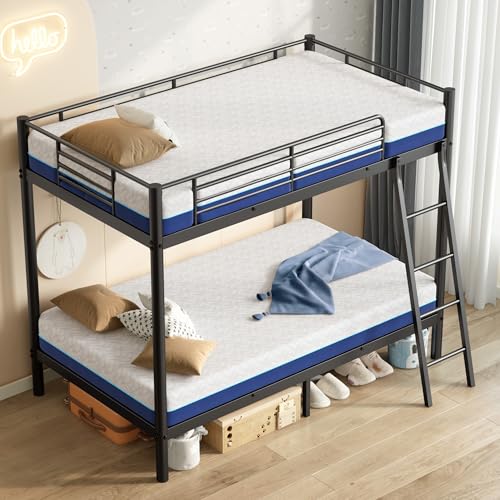
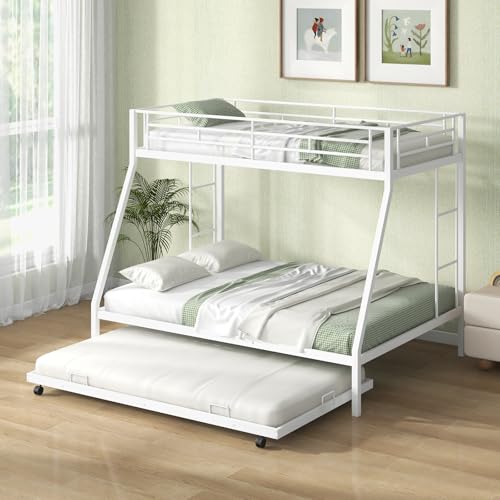
2 Sets of Bunk Beds in One Room: The Complete Setup Guide
Fitting two bunk bed sets into a single bedroom is one of the smartest ways to sleep four people without sacrificing floor space. This guide covers safe layouts, frame and mattress choices, storage tricks, and the small details that turn a crowded room into a calm, well-organized shared space.
Why Two Bunk Sets Make Sense
When a household grows, the first instinct is often to convert a study or den into another bedroom. Two sets of bunk beds in one room offer a more practical alternative: four sleeping spots in the footprint of roughly two. That makes the layout a strong fit for shared kids' rooms, sibling bedrooms, guest rooms that double as playrooms, vacation cabins, and foster or multi-generational homes.
The approach is not just about saving floor area. A well-planned double bunk room keeps each sleeper with a defined personal zone, leaves a clear walking path, and preserves storage for clothing, books, and toys. The trade-off is that bunk rooms demand more planning than a single bed — ceiling height, ladder placement, guardrails, and ventilation all matter more when two frames share the same walls.
Measuring the Room Before You Buy
Two bunk sets consume more space than most buyers expect once ladders, guardrails, and swing room are counted. Measure the room in three dimensions before choosing a frame.
Floor space
A standard twin-over-twin bunk footprint is roughly 42 inches wide by 80 inches long. Two of them placed side by side need about 84 inches of wall length plus a gap. Write down the usable wall runs, then subtract door swings, closet doors, and radiator or vent clearance.
Ceiling height
Most bunk frames need at least 30 inches between the top mattress and the ceiling for a comfortable sit-up zone. If your ceiling is lower than about 8 feet, look for low-profile frames or a twin-over-full set where the lower sleeper has more headroom.
Window and vent placement
Never block a window with a tall bunk. Keep at least a foot of clearance around vents and radiators so air circulates between the two frames — bunk rooms trap warm air near the ceiling, and the top sleeper will notice first.
Layout Options for Two Bunk Sets
There is no single correct arrangement. The best layout depends on door position, window walls, and how much floor space you want to keep open for play or study.
Parallel layout
Place both bunk sets against opposite walls, facing each other. This creates a central corridor that works well for narrow rooms and gives every sleeper a clear route to the door. It also makes bed-making easier because you can reach both frames from the middle.
L-shaped layout
Set one bunk along a long wall and the second along the adjoining short wall. This frees up a corner for a desk, dresser, or reading chair and works nicely in square rooms. Watch the corner where the two frames meet — leave a small gap so ladders and guardrails do not collide.
Side-by-side against one wall
Pushing both sets against the same long wall keeps the opposite side of the room completely open. This is the best choice when you want a shared study zone or a play area, but it limits access to the outer sides of the frames. Choose frames with ladders on the inward-facing side.
| Layout | Best For | Watch Out For |
|---|---|---|
| Parallel (facing walls) | Narrow rooms, easy access to both beds | Central corridor must stay clear |
| L-shaped | Square rooms, freeing a corner for furniture | Corner collision between ladders and rails |
| Side-by-side (one wall) | Keeping the opposite wall open for study or play | Access to outer bed sides is limited |
Choosing the Right Bunk Frames
Not every bunk frame is built for a shared room with heavy daily use. Two sets in one room double the wear, so prioritize stability and safety hardware over decorative detail.
Frame material
Solid wood and reinforced metal frames hold up best to the constant climbing and shifting that bunk rooms see. Entry-level particleboard frames can work for light use, but mid-range and premium solid wood frames resist wobble far better over time. If you expect adults or teenagers to use the top bunks, look for frames rated for higher weight capacity.
Twin-over-twin vs. twin-over-full
Twin-over-twin keeps the footprint smallest and is the classic choice for two matching sets. Twin-over-full adds a larger lower sleeping surface and slightly more headroom for the bottom sleeper, but it needs more wall length. Mixing one of each can break up the visual repetition in a room with two frames.
Stair vs. ladder access
Stairs are safer and easier for younger children, while ladders take up less floor space. If both sets use ladders, angle them into open floor rather than toward each other so two children can climb at the same time without crowding.
Guardrails and hardware
Check that every top bunk has guardrails on both long sides and that the rail height is at least 5 inches above the mattress top. Reinforced corner brackets and metal-to-metal connections are the mark of a durable frame. Avoid any set with loose or plastic-only joints.
For more frame comparisons and sizing details, see our bed frame comparison guide and the bunk bed frames overview.
Mattress Selection for Bunk Rooms
Bunk mattresses are not the same as standard mattresses. They need to be thinner, firmer at the edge, and sized precisely to the frame so guardrails stay effective.
Thickness matters
Most bunk frames are designed for mattresses between 6 and 8 inches thick. A mattress that is too thick raises the sleeper above the guardrail, which defeats its purpose. A mattress that is too thin can leave gaps at the frame edge and feel unstable.
Firmness and support
Growing children generally do well on a medium-firm bunk mattress that supports the spine without feeling rigid. Memory foam can work, but it tends to sleep warmer and may compress more on a slatted bunk base. Innerspring and hybrid bunk mattresses tend to hold their shape better under daily use.
Matching all four beds
Using the same mattress model across all four sleeping positions keeps the room visually consistent and simplifies bedding. If the lower bunks are used by adults or guests, consider a slightly thicker mattress for the bottom frames only, provided the guardrail height still meets safety guidance.
If you are still narrowing down firmness and materials, our mattress buying guide walks through the key decisions step by step.
Storage That Works in a Double Bunk Room
Four sleepers generate a lot of clothing, books, and clutter. In a room with two bunk sets, storage has to be built into the layout rather than added later.
- Under-bed drawers: The bottom bunk of each set can hide two deep drawers. Choose frames with built-in drawer banks rather than adding loose bins that slide out into the walking path.
- Stair storage: Staircase bunks often include drawers or cubbies inside each step. In a room with two sets, stair storage can replace an entire dresser.
- Wall-mounted shelves: A narrow shelf above each pillow gives every sleeper a personal spot for a book, glasses, and a small lamp without eating floor space.
- Bedside tables: A slim shared table between the two frames can serve both lower bunks. Look for models with a drawer and a lower shelf to keep the surface clear.
- Vertical storage: A tall, narrow bookcase in the corner uses otherwise wasted space and keeps the center of the room open.
Our guide to matching bedside tables and drawer sets is a useful starting point if you want the two sides of the room to feel coordinated.
Lighting, Ventilation, and Comfort
Bunk rooms have their own microclimate. Warm air rises, so the top sleepers are usually the warmest, while the lower bunks can feel stuffy if air does not move.
Lighting
Clip-on reading lights attached to each bunk rail give every sleeper control over their own light without illuminating the whole room. Avoid floor lamps that can be knocked over near ladders, and keep cords routed along the frame rather than across the floor.
Air circulation
A small oscillating fan placed near the door or window helps move air between the two frames. If the room has a ceiling fan, confirm it sits at least 7 feet above the floor and is not directly over a top bunk.
Temperature and bedding
Layered bedding lets each sleeper adjust without changing the whole room. Breathable cotton sheets and a lightweight quilt work well for most bunk rooms, with an extra blanket available for the lower bunks, which tend to stay cooler. Our guides to cotton chenille bedspreads and cotton matelassé bedspreads cover options that hold up well to frequent washing.
Safety Checklist for Two Bunk Sets
Before the first night of sleep, run through this checklist with every frame in the room.
- Every top bunk has guardrails on both long sides, with at least 5 inches of rail above the mattress.
- Ladders or stairs are firmly attached and positioned away from doorways and windows.
- Frames are assembled with all supplied hardware and checked for wobble after the first week.
- No bunk is placed under a ceiling fan, hanging light, or outward-opening window.
- Mattresses match the frame size and do not exceed the recommended thickness.
- Nightlights are installed near the ladder for middle-of-the-night trips.
- Heavy items are stored on lower shelves, not on top-bunk rails or headboards.
Frequently Asked Questions
Can two bunk bed sets fit in a standard 10x10 bedroom?
Yes, in most cases. Two twin-over-twin sets placed against opposite walls leave a central corridor of roughly 30 to 36 inches, which is enough for safe walking. Measure door swings and closet clearance first, and consider an L-shaped layout if the room has limited wall length.
Is it safe to put two bunk beds next to each other?
It is safe as long as there is a clear gap between the frames and both sets have their own ladders or stairs. Do not push the frames so close that a child has to climb over one bed to reach the other. Keep at least 30 inches of space between the two sets.
What mattress thickness is best for bunk beds?
Most bunk frames are designed for mattresses between 6 and 8 inches thick. This keeps the sleeper below the guardrail and ensures the mattress sits properly on the frame. Always check the manufacturer's recommended range for your specific frame.
How do I stop the top bunk from feeling wobbly?
Recheck all hardware after the first week of use, place the frame on a level floor, and add anti-slip pads under the legs if needed. Solid wood or reinforced metal frames wobble far less than lightweight particleboard models, especially when two sets share a room with active sleepers.
Should both bunk sets match?
Matching sets create a tidy, symmetrical look and simplify bedding shopping. Mixing a twin-over-twin with a twin-over-full can work well when one side of the room needs a larger lower bed, but keep the frame finish consistent so the room still feels cohesive.