Adjustable Beds With Height Adjustment: The Complete Guide
Discover how vertical lift technology transforms comfort, accessibility, and everyday independence. Learn what to check before you choose a height-adjustable bed.
EXPLORE THE BUYING CHECKLISTWhy this guide matters: Most shoppers researching adjustable beds already know they want powered articulation. The missing piece is vertical height adjustment — the feature that lets the entire sleeping surface rise and lower. This guide explains how it works, who benefits most, and which specifications actually matter before you commit.
What Is an Adjustable Bed With Height Adjustment?
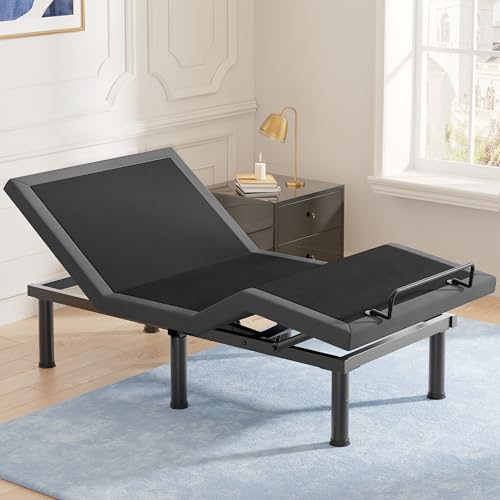
An adjustable bed with height adjustment is a powered bed base that combines two independent motions. First, the articulating sections raise the head and foot of the mattress into reclined or elevated positions. Second, the entire platform moves vertically — up and down — so the sleeping surface can be set at a standing-friendly height or lowered for a conventional sleep position.
This dual capability distinguishes height-adjustable models from standard adjustable bases, which only articulate. If you are comparing base types, our overview of adjustable bed frames explains the mechanical differences, while this page focuses specifically on vertical lift.
Height adjustment is sometimes marketed as a "lift bed" or "hi-low bed" function. The terminology varies by brand, but the outcome is the same: the user controls the bed's elevation with a remote, usually through a quiet motorized actuator system.
How Height Adjustment Works
Most height-adjustable bases use electric linear actuators mounted at the corners or center of the frame. When you press the up or down command on the remote, the actuators extend or retract, raising or lowering the entire platform. A few design details determine how well this works in practice:
- Vertical travel range: The distance between the lowest and highest positions. Entry-level models typically offer a modest range, while mid-range and premium models extend further.
- Motor type: Dual or quad motor systems move more smoothly and support heavier loads. Single-motor designs are simpler but less capable.
- Weight capacity: The rated load for the base, including mattress and user. Heavy-duty models are built for higher capacities.
- Stability at height: A well-engineered base stays rigid and wobble-free even when fully raised.
- Noise level: Quiet motors matter in shared bedrooms and for light sleepers.
Quick Tip: Measure Your Standing Height First
Before shopping, measure the height at which you can sit on the edge of the bed with your feet flat on the floor and knees at roughly a right angle. Then confirm the bed's raised position can reach near that height — this is the single most useful specification for accessibility.
Who Benefits Most From a Height-Adjustable Bed?
Vertical lift is not a niche feature. It solves practical problems for a wide range of sleepers:
Seniors and People With Limited Mobility
The raised position reduces strain on knees, hips, and the lower back when getting in and out of bed. This is why height adjustment is a core feature of adjustable beds for seniors and adjustable beds for the elderly. Caregivers also benefit: a raised bed brings the user closer to a comfortable working height during assistance.
People With Back Pain
Combining articulation with vertical positioning allows users to find a supported reclined angle while keeping the bed at a height that avoids twisting or overreaching. Our guide to adjustable beds for back pain covers positioning strategies in more detail.
Heavier Sleepers
Height-adjustable bases with reinforced frames and higher weight ratings are a practical option for users who need extra structural support. See adjustable beds for heavy people for capacity-focused recommendations.
Shared Bedrooms and Care Settings
In care environments and multi-user households, the ability to set the bed at a safe working height for one person and a comfortable sleep height for another is a meaningful advantage. Quiet motors and smooth motion are especially important here.
Height Adjustment vs. Standard Articulation
The table below summarizes the practical difference between the two functions so you can decide which features your household actually needs.
| Feature | Standard Articulation | Height Adjustment (Vertical Lift) |
|---|---|---|
| Primary function | Raises head and foot sections into reclined positions | Raises and lowers the entire sleeping surface |
| Best for | Reading, watching TV, reflux relief, snoring support | Getting in and out of bed, caregiver access, standing height needs |
| Typical users | General sleepers, back-sleepers, entertainment users | Seniors, people with limited mobility, heavy sleepers, care settings |
| Complexity | Moderate — articulating joints and hinges | Higher — adds vertical actuators and reinforced frame |
| Typical tier range | Entry-level to premium | Mid-range to commercial-grade |
The Height-Adjustable Bed Buying Checklist
Use the checklist below to narrow your options quickly. Each item maps to a specification you can verify in product listings or by contacting the manufacturer.
1. Confirm the Vertical Travel Range
Ask for the lowest and highest platform heights, not just a single "lift range" figure. The low position should suit standard sleep use; the high position should support safe sitting and standing. Entry-level bases usually offer a modest range, while mid-range models typically provide smoother, wider travel.
2. Match the Mattress to the Mechanism
Height-adjustable bases require a flexible mattress. Memory foam, latex, and hybrid constructions are the safest choices. If you already own a mattress, confirm with the base manufacturer that it is approved for articulated use. For pairings, see adjustable beds with mattress.
3. Verify Frame Compatibility
Some height-adjustable bases are freestanding and include their own legs or support platform. Others are designed to sit inside a compatible decorative frame. If you plan to keep an existing frame, check bed frames for adjustable beds and bed frames for electric beds to confirm fit.
4. Check the Weight Capacity
Weight capacity is the rated load for the base, including the mattress and the user. Heavier users should prioritize reinforced frames and higher ratings. Models in the heavy-duty category are built for this purpose.
5. Prioritize Safety Features
Look for emergency battery backup (so the bed can be lowered during a power cut), a locking or child-safe remote, overload protection, and a stable base at full height. These features matter most in households with seniors or limited-mobility users.
6. Decide on Size and Configuration
Height-adjustable bases are available in twin, full, queen, and split configurations. Split options allow independent adjustment for two sleepers. Browse split queen adjustable beds and split king adjustable beds if you need dual control. For single sleepers, adjustable twin beds for adults are a common choice.
7. Plan for Bedding
Split and articulated bases work best with flexible, fitted bedding. Deep-pocket sheets and stretch-friendly fabrics reduce bunching. If you choose a split setup, confirm the base accepts standard split sheet sets.
Height-Adjustable Bed Tiers Explained
To keep comparisons useful without quoting figures, we classify height-adjustable beds by market position. Use these tiers to set expectations for build quality and features.
| Tier | Typical Characteristics | Best For |
|---|---|---|
| Entry-level | Modest vertical range, single motor, simpler remote, basic frame | Occasional use, lighter sleepers, first-time buyers |
| Mid-range | Wider travel range, dual motors, quieter operation, reinforced frame | Daily use, seniors, shared bedrooms, back-pain users |
| Premium | Extended lift range, quad motors, smooth motion, advanced safety features | Heavier users, long-term care, households needing maximum flexibility |
| Commercial-grade | Heavy-duty construction, high weight capacity, serviceable components | Care facilities, professional caregiving, institutional use |
As a general rule, moving up a tier tends to deliver smoother motion, quieter motors, and sturdier frames rather than fundamentally different articulation. The mid-range tier is where most households find the best balance of capability and durability.
Common Mistakes to Avoid
- Ignoring the low position: A high lift range is useless if the bed cannot also lower to a comfortable sleep height.
- Skipping mattress checks: A rigid innerspring mattress can stress the articulating joints and reduce the bed's lifespan.
- Forgetting frame compatibility: Buying a base that will not fit your existing frame forces an avoidable return.
- Overlooking power backup: Without battery backup, a power outage can leave the bed stuck in a raised position.
- Underestimating weight needs: Always match the base's rated capacity to the user plus mattress weight, with a safety margin.
Frequently Asked Questions
What is an adjustable bed with height adjustment?
It is a powered bed base that can raise or lower its entire sleeping surface vertically, in addition to articulating the head and foot sections. This lets users set a comfortable standing height for getting in and out, then lower it for sleep.
How much height range do height-adjustable beds offer?
Most models offer a vertical travel range of roughly 6 to 12 inches, though premium and commercial-grade models can exceed this. The low position typically sits close to a standard bed height, while the raised position helps users stand more easily.
Can any mattress be used on a height-adjustable bed?
No. The mattress must be flexible enough to bend with the articulating sections. Memory foam, latex, and hybrid mattresses designed for adjustable bases work well, while traditional innerspring mattresses with rigid coil units are usually not recommended.
Do height-adjustable beds require a special bed frame?
Not always. Many height-adjustable bases are freestanding and include their own support structure, while others are designed to drop into a compatible bed frame. Always confirm compatibility with the manufacturer before pairing a base with an existing frame.
Are height-adjustable beds suitable for seniors?
Yes. The vertical lift feature is especially helpful for seniors and anyone with limited mobility, as it reduces strain on the knees, hips, and back when getting in and out of bed. Caregivers also benefit from the raised position during assistance.
What safety features should I look for?
Look for emergency battery backup, a locking or child-safe remote, smooth motorized operation with overload protection, and a sturdy frame with a high weight capacity. Emergency lowering functions and quiet motors are also valuable for shared bedrooms.
Ready to Compare Height-Adjustable Models?
Review our curated selection of adjustable beds with height adjustment and filter by your household's needs.
VIEW RECOMMENDED MODELSRelated Reading
Deepen your research with these focused guides: