Adjustable Bedside Table on Wheels: The Complete Buying Guide
Learn how a mobile, height-adjustable overbed table can bring meals, medication, reading, and work closer to bed — safely and comfortably.
Quick Summary: An adjustable bedside table on wheels is a rolling overbed table with height and tilt adjustment. It is designed for people who spend extended time in bed, including seniors, post-surgery patients, and adjustable bed users. The most important features are stable wheel locks, a wide height range, a sturdy tabletop, and a base that slides under the bed frame.
What Is an Adjustable Bedside Table on Wheels?
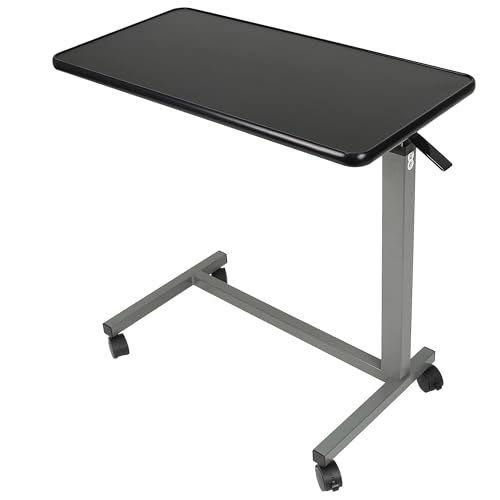
An adjustable bedside table on wheels — often called a mobile overbed table — is a freestanding piece of furniture with a tabletop that can be raised, lowered, and sometimes tilted. Unlike a fixed nightstand, it rolls on casters so it can be positioned directly over the bed or tucked away when not in use. This makes it especially useful alongside adjustable beds, where the user's seating position changes throughout the day.
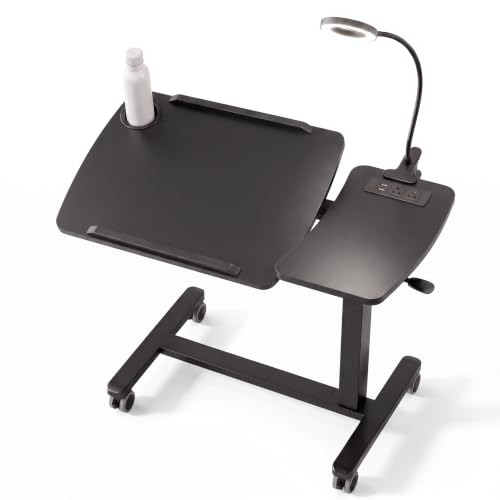
Most models use a C-shaped or U-shaped base that slides under the bed, allowing the tabletop to extend across the mattress. Height adjustment is usually controlled by a hand crank, a gas spring, or a simple pin-and-lock mechanism. Some premium designs add a tilting tabletop for reading, drawing, or using a laptop.
Who Should Consider a Mobile Overbed Table?
This type of table is not limited to medical settings. It solves everyday problems for a wide range of users:
- Seniors and elderly users who want to eat breakfast, read, or take medication without leaving bed.
- People recovering from surgery or injury who need to keep weight off their feet while staying occupied.
- Adjustable bed owners who frequently change between flat, reclined, and seated positions.
- Caregivers who need a stable surface close to the bed for supplies, meals, or personal items.
- Small-space dwellers who want a multi-purpose surface that can be moved out of the way.
If you are comparing mobility options for a loved one, our guide to adjustable beds for senior citizens pairs well with this article.
Key Features to Evaluate Before Buying
1. Height Adjustment Range
The table should adjust high enough to clear your mattress and low enough to use while seated on the edge of the bed. A wider range gives more flexibility, especially if multiple people share the table. Models with gas-spring adjustment are smoother to operate, while crank models tend to be simpler and more durable.
2. Tabletop Size and Tilt
A tabletop of roughly 24 to 32 inches wide is typical for overbed use. Tilt functions are useful for reading or typing, but a flat, non-tilting surface is often more stable for meals and drinks. Check whether the tabletop has a raised edge or lip to prevent items from rolling off.
3. Wheel Type and Locking System
Castors should roll smoothly on carpet and hard floors. Look for dual-lock casters that lock both the wheel and the swivel, which keeps the table steady while in use. Larger wheels roll more easily over thresholds and rugs. This is a critical safety feature if the user leans on the table when standing up.
4. Base Clearance and Bed Compatibility
The base must slide under the bed without hitting the frame, legs, or adjustable bed mechanism. Measure the gap between the floor and the underside of your bed before choosing a model. If you use a powered base, our article on bed frames compatible with adjustable beds explains how frame clearance affects accessory fit.
5. Weight Capacity and Build Quality
Check the stated weight capacity and compare it with what you plan to place on the table. A reinforced steel frame with a powder-coated finish resists scratches and rust. Entry-level models often use lighter tubing, while mid-range and premium tiers add thicker steel, smoother casters, and better locking hardware.
| Tier | Typical Build | Best For |
|---|---|---|
| Entry-level | Basic steel frame, pin-lock height adjustment, simple casters | Occasional use, light items, short-term recovery |
| Mid-range | Thicker steel, gas-spring or crank adjustment, dual-lock casters | Daily use, seniors, adjustable bed owners |
| Premium | Reinforced frame, smooth gas lift, tilting top, premium casters | Long-term care, heavy daily use, caregiver-assisted settings |
How to Use an Overbed Table Safely
- Lock the wheels before placing food, medication, or a laptop on the table.
- Keep heavy items centered over the base to reduce tipping risk.
- Adjust height before loading the table, not while items are on it.
- Avoid leaning your full body weight on the tabletop when standing up.
- Check caster locks periodically and clean hair or lint from the wheels.
For users with limited reach or grip strength, a table with a large adjustment handle or a gas-lift lever is easier to operate than a small crank.
Adjustable Bedside Table vs. Traditional Nightstand
A traditional nightstand stays in one place and usually sits below mattress height. An adjustable bedside table on wheels moves to where it is needed and rises above the mattress, making it accessible to someone lying down or reclined. For households where the bed is used for long periods, the mobile table often replaces the nightstand entirely. If you prefer a fixed surface plus storage, a 3-drawer wooden bedside table can complement a rolling table by holding items that do not need to move.
Maintenance and Long-Term Care
Wipe the tabletop with a mild household cleaner and dry it immediately to prevent moisture damage. Lubricate the height-adjustment column sparingly if it begins to squeak. Remove tangled hair and debris from caster axles every few months. Tighten any bolts that loosen with regular rolling. With basic care, a well-built mobile table can last for many years of daily use.
Ready to compare models? Browse our curated selection of adjustable bedside tables on wheels and find the setup that fits your bed and daily routine.
Explore OptionsFrequently Asked Questions
Can an adjustable bedside table on wheels be used with a hospital bed?
Yes. Many models are designed to fit over hospital beds and home care beds as long as the base clearance matches the bed frame. Check the height range and base width before buying.
Do the wheels damage hardwood floors?
Most casters are made of soft rubber or polyurethane, which are gentle on hard floors. Avoid models with hard plastic casters if you have wood or laminate flooring, and consider caster cups for extra protection.
How much weight can an overbed table hold?
Entry-level models typically support lighter loads, while mid-range and premium models support substantially more. Always follow the manufacturer's stated weight limit and keep heavy items centered over the base.
Is assembly difficult?
Most adjustable overbed tables assemble in 15 to 30 minutes with basic tools. Models with pre-assembled frames or tool-free locking pins are the easiest to set up.
Final Thoughts
An adjustable bedside table on wheels is a small upgrade that delivers daily convenience, especially for anyone who spends extended time in bed or uses an adjustable bed frame. Focus on height range, wheel locks, base clearance, and build quality rather than cosmetic details. If you are still deciding on the bed itself, our adjustable bed frames guide covers the base options that pair best with a mobile table.