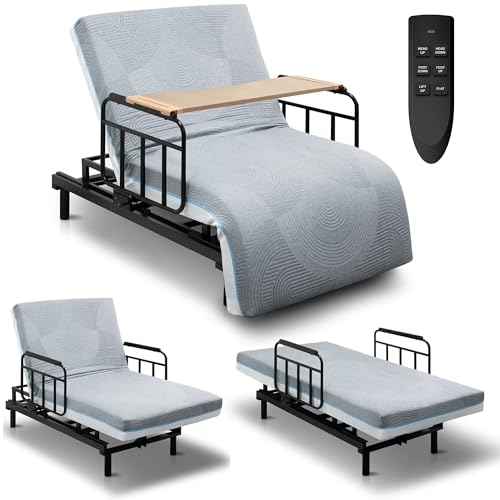
Adjustable Hospital Beds for Seniors: The Complete Guide
Everything families need to know about choosing a safe, comfortable, and supportive adjustable hospital bed for an aging loved one.
EXPLORE TOP OPTIONSWhy this guide matters: As mobility and comfort needs change with age, an adjustable hospital bed can dramatically improve sleep quality, reduce caregiver strain, and support safer daily routines. This guide explains the key features, sizing considerations, safety essentials, and product tiers so you can make a confident, well-informed decision.
What Is an Adjustable Hospital Bed for Seniors?
An adjustable hospital bed is a motorized or manual bed designed to change position — head elevation, foot elevation, and often overall height — to support comfort, circulation, breathing, and caregiving. Unlike standard adjustable beds focused purely on comfort, hospital-style beds for seniors usually add safety side rails, locking casters, and a reinforced frame suitable for daily care routines.
These beds are commonly used at home after surgery, during recovery, or for long-term care of seniors who need extra support getting in and out of bed or who spend extended periods lying down. For families comparing options, our broader guide on adjustable beds for seniors provides useful context on comfort-focused models versus full hospital-style beds.
Key Features to Evaluate Before Buying
Choosing the right bed is less about brand names and more about matching features to the user's physical needs and the caregiver's daily routine. Below are the features that matter most.
1. Head and Foot Articulation
Independent head and foot adjustment supports better breathing, digestion, and leg circulation. A bed that can raise the head to a near-upright position is especially helpful for seniors with respiratory issues or reflux. Look for smooth motorized controls with a backup manual override in case of a power outage.
2. Height Adjustment
Height-adjustable beds reduce fall risk by lowering the bed close to the floor when the user is getting in or out, and raising it to a comfortable working height for caregivers. For households where caregiving is frequent, this is one of the most valuable features. Explore models with height adjustment if caregiver comfort is a priority.
3. Side Rails and Safety
Adjustable side rails help prevent rolling out of bed and provide a stable handhold when repositioning. Choose rails that can be lowered easily and that comply with current safety standards. For seniors with cognitive decline, consult a healthcare professional about the most appropriate rail configuration.
4. Frame Strength and Weight Capacity
Look for a reinforced steel frame with a weight capacity matched to the user. A bed rated well above the user's weight will feel more stable and last longer. For larger users, our guide to adjustable beds for heavy people covers reinforced and bariatric options in more detail.
5. Mattress Compatibility
Adjustable hospital beds work best with flexible mattresses designed for articulation. Innerspring, hybrid, and specialty foam mattresses are common choices. Some beds ship with a compatible mattress included — compare adjustable beds with mattress bundles to simplify setup.
Quick Feature Checklist
- Independent head and foot articulation with smooth motor control
- Height adjustment for safe transfers and caregiver comfort
- Locking casters and adjustable side rails
- Emergency manual override for power outages
- Reinforced frame with weight capacity headroom
- Easy-clean, wipeable surfaces for hygiene
Types of Adjustable Hospital Beds for Seniors
Understanding the main categories helps narrow down the right tier for your situation.
Manual Hospital Beds
Manual beds use hand cranks to adjust position. They are reliable, require no electricity, and are typically entry-level in the category. They can be tiring for frequent adjustments but remain a solid choice for users who mostly stay in one comfortable position.
Semi-Electric Hospital Beds
Semi-electric models power the head and foot articulation, while height adjustment remains manual. These are a balanced tier — convenient for daily use, with fewer electronic components than full-electric models.
Full-Electric Hospital Beds
Full-electric beds motorize head, foot, and height adjustment, often with a handheld remote. They are the most convenient for caregivers and are widely chosen for long-term home care. Many full-electric models also offer optional heat and massage features, similar to adjustable beds with heat and massage.
Bariatric and Heavy-Duty Models
For larger users, bariatric hospital beds offer wider sleeping surfaces and heavily reinforced frames. These are typically professional-grade or commercial-grade in construction and should be selected with guidance from a healthcare provider.
At-a-Glance Comparison by Tier
Use this table to compare the main categories. Tiers reflect relative market positioning and feature depth, not specific figures.
| Tier | Best For | Typical Adjustments | Caregiver Convenience |
|---|---|---|---|
| Entry-level (manual) | Occasional position changes; backup use | Head and foot via hand crank | Moderate — requires physical effort |
| Mid-range (semi-electric) | Daily comfort and moderate care needs | Head and foot motorized; height manual | Good — motorized comfort adjustments |
| Premium (full-electric) | Long-term home care and frequent transfers | Head, foot, and height all motorized | High — remote-controlled operation |
| Professional-grade / bariatric | Higher weight capacity and clinical needs | Full articulation plus reinforced frame | High — designed for regular caregiving |
Sizing and Room Planning
Hospital beds are larger than standard beds, so measure the room and doorway before ordering. Twin-size hospital beds are the most common for single sleepers, while full and queen sizes suit couples or users who want more space. If a couple wants independent positioning, split models are worth considering — see split queen adjustable beds and split king adjustable beds.
Also plan for clearance around the bed for a walker, wheelchair, or caregiver access. A minimum of 30 inches on the access side is a common recommendation, with more room if a hoist or transfer aid is used.
Safety Checklist for Families
Before and After Purchase
- Confirm the bed's weight capacity exceeds the user's weight with margin
- Test the emergency manual override and remote controls
- Verify side rails lock securely and lower smoothly
- Place the bed away from cords, loose rugs, and trip hazards
- Add a bedside lamp or touch light for nighttime visibility
- Keep a phone or call button within reach at all times
- Review the setup with a caregiver or home health professional
Mattresses and Accessories That Pair Well
The right mattress makes an adjustable bed far more comfortable. Flexible foam, hybrid, and innerspring mattresses designed for articulation are the usual choices. For users who need extra pressure relief, a topper can help — browse options in our mattress toppers category. Bedside tables with wheels are also useful for keeping medications, water, and remotes within reach; see adjustable bedside tables with wheels.
For couples or users who want a broader comparison of comfort-focused models, our guide to adjustable beds covers the wider market, while adjustable beds for the elderly focuses specifically on senior-friendly features.
Funding and Coverage Considerations
Some families explore whether a hospital bed may be partially covered by insurance or Medicare, depending on medical necessity and documentation. Coverage rules vary widely, so confirm eligibility with your provider before ordering. Our articles on adjustable beds covered by Medicare and adjustable beds for seniors and Medicare explain the general process and documentation typically required.
Setup, Maintenance, and Daily Care
Most semi-electric and manual beds can be assembled by a capable caregiver with the included instructions, while full-electric and bariatric models often benefit from professional installation. Once set up, wipe down surfaces regularly, check the motor and remote function monthly, and inspect rails and casters for looseness. Keep the user manual in a known location for quick reference.
Frequently Asked Questions
What is the difference between a hospital bed and an adjustable bed?
Hospital beds typically include side rails, height adjustment, and a medical-grade frame designed for caregiving. Adjustable beds focus on comfort with head and foot articulation but often lack full height adjustment and rails.
Do adjustable hospital beds for seniors require professional installation?
Many models ship partially assembled and can be set up by a caregiver, but full-electric and bariatric models often benefit from professional installation to ensure safety and warranty compliance.
What safety features should I look for in a senior hospital bed?
Look for adjustable side rails, a locking wheel system, a low-height setting to reduce fall risk, emergency manual override, and a sturdy frame with a weight capacity suited to the user.
Can I use a regular mattress on an adjustable hospital bed?
Only flexible mattresses designed for articulation should be used. Rigid mattresses can damage the mechanism and reduce comfort. Check the bed's mattress compatibility guidance before pairing.
Is a split model better for couples?
Split models let each sleeper adjust their side independently. They are popular for couples where one partner needs more elevation or firmness, but they require compatible bedding and a wider room footprint.
Final Buying Summary
Adjustable hospital beds for seniors are a meaningful long-term investment in comfort, safety, and caregiver ease. Start by confirming the user's mobility, weight, and care needs, then match those needs to a tier — entry-level manual, mid-range semi-electric, premium full-electric, or professional-grade bariatric. Prioritize height adjustment if caregiving is frequent, and always verify side rail security and a manual override. With the right bed and a compatible mattress, families can create a safer, more restful care environment at home.