Bed Frame Buying Guide: The Right Foundation for Better Sleep
Your mattress gets all the attention, but the bed frame underneath decides how well it performs. This guide breaks down frame types, materials, support systems, and size choices so you can match the right foundation to your mattress and sleep style.
Why the Bed Frame Matters More Than You Think
A bed frame is not just furniture. It is the structural system that holds your mattress flat, distributes weight, and determines how long your mattress keeps its shape. A well-built frame supports the mattress evenly, reduces sagging, and keeps the sleep surface stable during movement. A weak or mismatched frame can shorten the life of even a premium mattress and introduce squeaks, wobbles, and uneven support.
The frame also shapes the bedroom. Its height affects how easy it is to get in and out of bed, its footprint determines how much floor space remains, and its style sets the tone for the room. Whether you are furnishing a compact apartment or upgrading a primary bedroom, the frame deserves the same research as the mattress itself. If you are still at an earlier stage of planning, the broader bed buying guide walks through the full decision from frame to bedding.
Bed Frame Types Explained
Most frames fall into a handful of structural families. Each solves a different problem, from saving space to adding storage to supporting an adjustable base.
Platform Beds
Platform beds use a slatted or solid deck to support the mattress directly, usually without a box spring. They sit lower to the ground and give a clean, modern look. Because the deck is continuous, platform beds work well with foam and hybrid mattresses that benefit from even, firm support. Many models include under-bed clearance for storage. For a deeper look at how this style performs with different mattresses, see the bed frames for memory foam beds guide.
Panel and Sleigh Beds
Panel beds use a simple headboard and footboard with a rigid frame between them. Sleigh beds curve the headboard and footboard outward for a traditional silhouette. Both typically accept a box spring and a standard innerspring mattress. They are sturdy and classic, but the footboard can make a room feel enclosed in tight spaces.
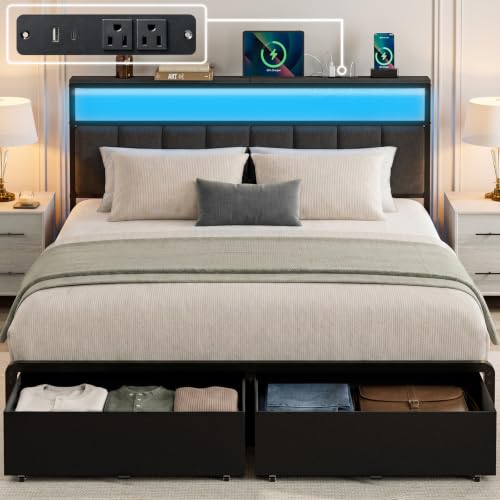
Upholstered Beds
Upholstered frames wrap the headboard and sometimes the whole frame in fabric, linen, or faux leather. They soften the bedroom visually and provide a comfortable surface to lean against while reading. The trade-off is that fabric needs periodic cleaning, and the padding can compress over time on lighter builds. Premium upholstered frames use denser foam and reinforced corner joints that hold their shape far longer.
Metal Bed Frames
Metal frames are the workhorses of the category. A well-made steel frame is strong, ventilates the mattress well, and lasts for years. Entry-level models often use thinner tubing and simple bolt-together joints, while high-end tier frames use thicker gauge steel, welded corners, and center support legs. If durability and airflow are priorities, metal is a reliable route. The metal bed frames overview compares common constructions.
Wooden Bed Frames
Wooden frames range from solid hardwood to engineered wood with veneers. Hardwood frames with reinforced joinery are the most durable and resist wobble best. Softwoods and particle-board builds are lighter and suit occasional-use rooms, but they may loosen over time. Wood pairs naturally with traditional and rustic interiors and can be refinished later.
Adjustable and Specialty Frames
Adjustable bed frames articulate the head and foot sections to support reclining, reading, and health-related positioning. They require a compatible mattress and often a specific base design. If you are considering this route, the adjustable bed frames guide explains compatibility, and the bed frames for adjustable beds article covers how to pair an articulating base with a surrounding frame. For split configurations, see bed frames for split king adjustable beds.
Storage, Bunk, and Space-Saving Frames
Storage beds integrate drawers or lift-up compartments beneath the mattress. Bunk and loft frames stack sleep surfaces vertically for shared or small rooms. These designs trade some simplicity for utility, so check weight ratings and clearance carefully. The storage beds and bunk bed frames pages cover the structural details.
Frame Materials Compared
Material choice drives strength, weight, maintenance, and how the frame feels in the room. The table below summarizes the practical differences.
| Material | Strengths | Considerations | Best For |
|---|---|---|---|
| Steel and metal | High strength-to-weight ratio, excellent airflow, long service life, easy to clean | Can squeak if joints loosen; thinner tubing flexes under heavy loads | Durable everyday frames, foam and hybrid mattresses, warm climates |
| Solid hardwood | Very stable, repairable, warm appearance, holds joinery well | Heavier; sensitive to humidity swings if not sealed | Long-term investment frames, traditional and rustic bedrooms |
| Engineered wood and veneer | Consistent finish, lighter weight, broad style range | Less resistant to repeated disassembly; edges can chip | Guest rooms, style-led designs, lighter-use settings |
| Upholstered over wood or metal | Soft visual texture, comfortable leaning surface, sound-dampening | Fabric cleaning required; padding quality varies widely | Primary bedrooms, reading in bed, softer interior styles |
| Rattan, bamboo, and woven | Lightweight, breathable, distinctive look | Lower load ratings; needs protection from damp | Guest and seasonal rooms, breezy or coastal interiors |
Whichever material you choose, look for reinforced corner joints, a center support rail on larger sizes, and hardware that is plated or coated against corrosion. Those three details separate a frame that lasts from one that loosens within a year.
Support Systems and Slats
The support deck is where the frame meets the mattress. There are three common approaches:
- Slatted decks use evenly spaced wooden or metal slats. They ventilate the mattress and provide flexible support. Slat spacing matters: foam mattresses generally need closer spacing (around 2 to 3 inches) to prevent sinking between slats, while innerspring mattresses tolerate wider gaps.
- Solid decks offer continuous, firm support and suit foam mattresses that need a flat base. They reduce airflow, so moisture management matters more.
- Box spring compatibility matters for innerspring mattresses that rely on a sprung base. Many modern frames are designed to work with or without a box spring; check the manufacturer's guidance before pairing.
Center support is non-negotiable on queen, king, and California king frames. A center rail with at least one support leg prevents the middle of the mattress from sagging and keeps the frame rigid under two sleepers. If you sleep with a partner or move frequently during the night, prioritize frames with a center rail and reinforced side rails.
Choosing the Right Bed Frame Size
Frame dimensions should follow the mattress, not the other way around. A frame that is too small leaves the mattress unsupported at the edges; one that is too large lets the mattress shift. Standard mattress sizes give you the baseline, and the frame should match the nominal size with a small tolerance for the headboard and side rails.
| Size | Typical Dimensions (W x L) | Sleepers | Room Fit Notes |
|---|---|---|---|
| Twin | 38" x 75" | 1 | Compact rooms, kids' bedrooms, guest spaces |
| Twin XL | 38" x 80" | 1 | Taller sleepers, dorm and apartment layouts |
| Full | 54" x 75" | 1 adult or 2 small sleepers | Small primary bedrooms, first apartments |
| Queen | 60" x 80" | 2 | The most common couple's size; fits most bedrooms |
| King | 76" x 80" | 2 | Spacious primary bedrooms; needs room for nightstands |
| California King | 72" x 84" | 2 | Longer sleepers; benefits from a longer room layout |
Measure the room before you commit. Leave at least 24 inches of walking space on the sides you use most, and account for the headboard depth and any footboard overhang. If the room is tight, a platform frame with minimal rails and no footboard preserves the most floor space. For a detailed size comparison, see the bed frame comparison.
Matching the Frame to Your Mattress
The frame and mattress are a system. Pairing them correctly prevents sagging, squeaking, and premature wear.
- Memory foam and hybrid mattresses: use a platform frame with closely spaced slats or a solid deck. Foam needs even, firm support so it does not sink between slats. The memory foam frame guide covers spacing recommendations.
- Innerspring mattresses: work well with slatted frames and box springs. If the mattress was designed for a box spring, confirm the frame height accommodates one without making the bed too tall.
- Adjustable bases: require a frame designed to house an articulating base, or the base can stand alone. Check clearance and retention brackets. The frames compatible with adjustable beds article lists the key compatibility points.
- Heavy sleepers: look for reinforced side rails, a center support leg, and a stated weight capacity above the combined sleeper and mattress weight. The bed frames for heavy people guide discusses structural requirements.
Quality Tiers Without the Guesswork
Frames vary enormously in construction quality. Instead of comparing prices, compare where each model sits in the market using these tier descriptors.
Entry-Level / Essential Tier
Simple bolt-together construction, thinner tubing or lighter wood, basic slat decks. Suitable for guest rooms, light use, and temporary setups. Fine for a first apartment, but expect more frequent tightening.
Mid-Range / Balanced Tier
Reinforced joints, a center support rail on larger sizes, and better hardware. A solid choice for daily use in a primary bedroom. Usually the best balance of durability and features for most households.
Premium / High-End Tier
Thicker gauge steel or solid hardwood, welded or mortise-and-tenon joinery, dense upholstery foam, and thoughtful details like adjustable leveling feet. Built for long-term daily use.
Luxury / Flagship Tier
Commercial-grade construction, premium materials, and refined finishes. These frames are intended as long-term investments and often carry extended structural warranties.
A mid-range frame with a center rail is usually a smarter choice than an entry-level frame in a larger size. The extra structure is what prevents sagging and wobble over years of use.
Features Worth Prioritizing
- Center support rail and leg on queen and larger frames: essential for preventing sag and keeping the frame rigid.
- Adjustable leveling feet: small glides that compensate for uneven floors and reduce rocking.
- Under-bed clearance: measure for storage bins if floor space is limited.
- Headboard attachment hardware: if you plan to add a headboard later, confirm the frame has pre-drilled mounting points.
- Weight capacity: check the stated limit and compare it to the combined sleeper and mattress weight with a comfortable margin.
- Noise control: rubber or felt pads at the slat contact points reduce squeaks on metal frames.
- Tool-free or simplified assembly: helpful for renters who disassemble and move frequently.
If you prefer a coordinated bedroom, some frames ship with matching bedside tables, which simplifies styling and keeps the proportions consistent.
Assembly and Care Tips
- Assemble on a soft surface to protect flooring and frame finishes, and keep all hardware in a single tray so nothing is lost.
- Hand-tighten bolts first, then fully tighten in a diagonal pattern once the frame is square. This prevents racking.
- Re-check fasteners after the first two weeks of use, then every few months. Loose bolts are the main cause of squeaks.
- Keep wooden frames away from direct heat and damp walls, and dust regularly. Upholstered frames benefit from periodic vacuuming with a soft brush attachment.
- Rotate or flip the mattress according to its care instructions to distribute wear evenly across the support deck.
- If the frame wobbles, check that all feet are in contact with the floor and adjust levelers before assuming the frame is faulty.
Frequently Asked Questions
Do I need a box spring with a platform bed?
Usually no. Platform beds are designed to support the mattress directly with a slatted or solid deck. Adding a box spring can raise the bed too high and may reduce the benefit of the platform's ventilation. Check the mattress manufacturer's guidance before pairing.
How much slat spacing is safe for a foam mattress?
Closer spacing is safer for foam. Aim for gaps of roughly 2 to 3 inches. Wider gaps let soft foam sink between slats, which can create uneven support and accelerate sagging.
What size bed frame should two adults choose?
Queen is the most common choice for couples and fits most bedrooms. King and California king suit larger rooms and sleepers who want more personal space. Measure the room and walking clearance before sizing up.
Why does my metal frame squeak?
Squeaks usually come from loose bolts, metal-on-metal contact at the slats, or a frame that is not square. Re-tighten the hardware in a diagonal pattern, add felt pads at contact points, and check that all feet sit flat on the floor.
Can I use an adjustable base inside a standard frame?
Only if the frame is designed to house an articulating base. Standard decorative frames often lack the clearance and retention brackets. Look for frames explicitly rated for adjustable bases, or use the base as a standalone foundation.
How often should I replace a bed frame?
There is no fixed schedule. Replace the frame when joints loosen repeatedly, the deck sags, the frame rocks despite leveling, or the weight capacity no longer suits the sleepers. A well-built mid-range or premium frame can serve for many years with occasional tightening.
Ready to Choose Your Bed Frame?
Use the guide above to shortlist the frame type, material, and support system that match your mattress and room. Then compare specific models on construction quality rather than surface features.
Explore Beds & Frames