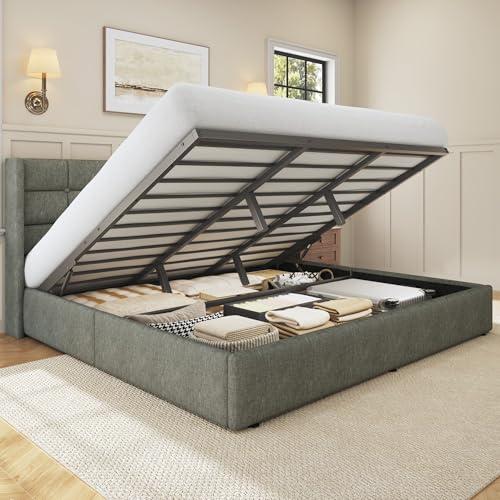
Beds with Lift-Up Storage: The Complete Guide
Turn the space beneath your mattress into a hidden storage compartment. Learn how lift-up bed frames work, which mechanism suits your mattress, and what to check before you buy.
1. What Are Beds with Lift-Up Storage?
A bed with lift-up storage is a bed frame that uses a hinged mechanism to raise the entire mattress and base panel, revealing a large compartment underneath. Instead of drawers that pull out from the side, the whole sleeping surface lifts upward, usually assisted by gas struts or hydraulic pistons. This design turns the footprint of the bed into usable storage without adding extra furniture to the room.
These beds are especially useful in small bedrooms, guest rooms, and apartments where floor space is limited. They are closely related to other space-saving designs such as beds with storage drawers, but they typically offer a larger, uninterrupted storage area because the compartment spans the full interior of the frame rather than being split into drawer boxes.
Most lift-up storage beds are available in standard mattress sizes, including twin, full, queen, and king. Many buyers who are upgrading a small room start with a full or queen frame and pair it with a compatible mattress, similar to how shoppers approach modern full size beds when balancing room layout and sleeping space.
2. How the Lift-Up Mechanism Works
The lifting mechanism is the defining feature of these beds. Two main systems dominate the market: gas-lift (gas strut) and hydraulic. Both allow the sleeper to raise the mattress with modest effort, but they behave differently and suit different mattress weights.
Gas-Lift (Gas Strut) Mechanism
Gas-lift beds use compressed gas cylinders to assist the upward motion. They feel smooth and controlled, and many models are designed to hold the mattress in the raised position without additional support. Gas struts are common in entry-level and mid-range lift-up frames because they are relatively simple to install and replace.
Hydraulic Mechanism
Hydraulic beds use fluid-filled pistons that provide strong, steady lifting force. They are often found in premium and heavy-duty models because they handle heavier mattresses and larger frame sizes more comfortably. The motion can feel slightly firmer than gas struts, and the mechanism tends to hold its position firmly once raised.
Quick comparison: Gas-lift models are generally lighter and smoother for average mattresses, while hydraulic models are favored for heavier mattresses and larger bed sizes. Both are reliable when the hardware is high-grade and the frame is properly reinforced.
Regardless of mechanism, quality matters. Look for high-grade steel hardware, reinforced mounting plates, and a frame that distributes the mattress load evenly. Cheaper mechanisms can lose tension over time, so the durability of the lifting hardware is one of the most important factors in the long-term experience of the bed.
3. Main Types of Lift-Up Storage Beds
Lift-up storage is available across several frame styles. The right choice depends on your bedroom aesthetic, the size of the compartment you need, and how much weight the frame must support.
Upholstered Lift-Up Beds
Upholstered frames wrap the base in fabric, giving a soft, finished look that works well in modern and transitional bedrooms. They often pair nicely with modern upholstered beds and can be coordinated with headboards and bedside furniture. The upholstery adds a layer of padding but also adds weight, so check that the mechanism is rated for the combined mattress and frame load.
Wooden Lift-Up Beds
Wood frames offer a warmer, more traditional feel. Solid wood or engineered wood construction with reinforced slats can support significant stored weight. Buyers furnishing a classic room often compare these with modern storage beds when deciding between a clean-lined look and a more traditional finish.
Platform and Ottoman-Style Frames
Platform lift-up beds use a solid or slatted base that raises as one unit. Ottoman-style frames are similar but often emphasize a low-profile silhouette and a fabric-wrapped base. If you prefer a low bed height, a low profile platform bed with lift-up storage can keep the room visually open while still adding hidden storage.
Storage-Forward Designs
Some frames combine lift-up storage with additional features such as drawers or a bookcase headboard. If you need maximum organization, compare these with modern storage beds with drawers to see whether a hybrid design fits your room better than a pure lift-up model.
| Frame Type | Best For | Tier Positioning | Key Consideration |
|---|---|---|---|
| Upholstered lift-up | Soft, finished bedroom look | Mid-range to premium | Fabric adds weight; check mechanism rating |
| Wooden lift-up | Traditional or warm interiors | Entry-level to high-end tier | Solid slats and reinforced base are essential |
| Platform lift-up | Low-profile modern rooms | Mid-range | Solid base suits foam mattresses |
| Hydraulic heavy-duty | Large mattresses and heavy loads | Premium to luxury | Confirm load rating and piston quality |
4. Mattress Compatibility and Weight
Lift-up storage beds work with most mattress types, but the combination of mattress weight and mechanism strength determines how easy the bed is to lift day to day.
Foam and Hybrid Mattresses
Memory foam and hybrid mattresses are generally good matches for lift-up frames because they distribute weight evenly and work well on solid or closely spaced slat bases. If you are pairing a lift-up frame with a foam mattress, a platform-style base with reinforced slats is usually the most supportive setup.
Innerspring Mattresses
Innerspring mattresses can be heavier, especially in larger sizes. On a lift-up frame, check that the slat spacing and base panel are designed for the mattress type. A firmer base helps prevent sagging and protects the spring unit over time.
Mattress Thickness and Lift Effort
A very thick mattress adds height and weight, which can make lifting harder and reduce the clearance between the raised mattress and the wall. Before choosing a frame, measure the mattress depth and compare it with the frame's recommended mattress height range. This is especially important in rooms with low ceilings or close side walls.
Practical tip: If you sleep on a heavy king or queen mattress, prioritize a hydraulic or heavy-duty gas-lift model with a high load rating. Lighter twin and full mattresses are usually comfortable on standard gas-lift mechanisms.
5. What to Store (and What to Avoid)
The compartment under a lift-up bed is large, but it is not suitable for everything. Understanding what belongs there helps you protect both your belongings and the mechanism.
Good Candidates for Lift-Up Storage
- Seasonal bedding such as extra duvets, quilts, and blankets
- Off-season clothing stored in breathable bags or bins
- Extra pillows and pillow protectors
- Linens and towels in vacuum-sealed or labeled containers
- Lightweight luggage and travel bags
Items to Avoid
- Heavy tools, gym weights, or dense equipment that strain the base panel
- Items that need constant ventilation, such as damp clothing
- Food or anything that could attract pests
- Fragile glass or ceramics without protective padding
Keeping the stored load balanced and within the frame's rating protects the lifting mechanism and keeps the mattress base flat. If you need frequent access to smaller items, a frame with side drawers or a combination design may be more practical than a pure lift-up compartment.
6. Buying Checklist: What to Verify
Before committing to a lift-up storage bed, run through the following checks. These points separate a well-specified frame from one that may disappoint after a few months of use.
- Mechanism quality and rating: Confirm the type of lift (gas or hydraulic) and the stated load rating. Heavy-duty hardware and reinforced mounting points are signs of durable construction.
- Frame material and slats: Solid wood or high-grade engineered wood with reinforced slats supports both the mattress and the stored load better than thin panels.
- Mattress compatibility: Match the base design to your mattress type and check the recommended mattress height range.
- Storage clearance: Measure the interior depth and height of the compartment to make sure your storage bins fit.
- Room layout: Account for the space needed to raise the mattress. The bed should not be too close to the wall or ceiling for comfortable lifting.
- Assembly requirements: Check whether the mechanism arrives pre-installed and whether two people are recommended for setup.
- Warranty and hardware support: A clear warranty on the lifting mechanism and accessible replacement parts add long-term confidence.
If you are also updating the surrounding room, consider how the frame fits with other pieces such as a modern dresser or a mid-century bedside table. A consistent furniture style makes the storage feature feel integrated rather than an afterthought.
7. Assembly and Daily Safety
Most lift-up storage beds are delivered flat-packed and require assembly. The lifting mechanism is usually the most sensitive part of the build, so follow the manufacturer's sequence carefully and keep the hardware organized.
Assembly Tips
- Assemble the frame on a clean, flat surface to keep the base square.
- Have a second person help with the mattress and base panel.
- Do not fully tighten all bolts until the frame is squared and aligned.
- Test the lift mechanism before placing the mattress on the frame.
Daily Use and Safety
- Keep hands and fingers clear of the hinge area when lowering the mattress.
- Do not overload the compartment beyond the stated rating.
- Check the struts or pistons periodically for smooth operation.
- Keep the compartment dry and ventilated to protect stored items.
With proper assembly and sensible loading, a lift-up storage bed can serve as a reliable long-term investment for a compact bedroom. The combination of a supportive sleeping surface and a large hidden compartment is difficult to match with conventional frame designs.
8. Frequently Asked Questions
How much weight can a lift-up storage bed hold?
Most hydraulic and gas-lift mechanisms are rated to hold the mattress plus bedding comfortably, but the usable storage weight depends on the base panel and frame construction. Heavy-duty models with reinforced slats and high-grade steel hardware generally support more stored weight than entry-level frames. Always check the manufacturer's stated load rating for the specific model.
Can I use any mattress on a lift-up storage bed?
In most cases yes, but the mattress should match the frame's slat or platform design. Memory foam and hybrid mattresses work well on solid platform bases, while innerspring models may need closer slat spacing. Very thick or heavy mattresses can make lifting harder, so consider the mechanism strength and mattress weight together.
Do lift-up storage beds need assembly?
Yes, nearly all lift-up storage beds arrive flat-packed and require assembly. The lifting mechanism is usually pre-installed or partially assembled, but you will need to attach side rails, slats, and the footboard or headboard. Two people are recommended for safety, especially on larger sizes.
What is the difference between a gas-lift and a hydraulic storage bed?
Gas-lift beds use compressed gas struts to assist the lifting motion, offering a smooth, controlled rise. Hydraulic beds use fluid-filled pistons that provide strong, steady support and tend to hold heavier mattresses. Both are reliable; the choice often comes down to mattress weight and personal preference for the lifting feel.
Are lift-up storage beds suitable for small bedrooms?
Yes. They are one of the most effective space-saving solutions because they add a large hidden compartment without increasing the bed's footprint. They pair especially well with small rooms where a separate dresser or storage chest would take up valuable floor space.
Ready to Compare Lift-Up Storage Beds?
Explore recommended models, check availability, and compare features like mechanism type, frame material, and storage capacity before you decide.
Explore Recommended Options