
Bedspreads for Queen Size Beds: The Complete Guide
Everything you need to choose a queen bedspread that fits properly, drapes beautifully, and suits your sleep style — from sizing and fabrics to drop length and layering.
START WITH SIZINGWhy this guide matters: A queen size bed is the most popular mattress size in many households, yet bedspreads labeled "queen" vary widely in finished dimensions. The right bedspread should cover the mattress fully, drape evenly on both sides, and match how you actually use your bed. This guide breaks down the measurements, materials, and styling decisions so you can buy with confidence.
If you already know you want a queen bedspread and are simply comparing options, you can jump straight to the recommended bedspreads section. If you are still researching, read on — the sections below explain exactly what to look for before you commit.
Queen Bedspread Sizing: What the Numbers Actually Mean
A standard queen mattress measures 60 inches wide by 80 inches long, with a depth typically between 8 and 14 inches. The confusion begins with the word "bedspread." Some brands use it to describe a coverlet that stops at the mattress edge; others use it for a full-length cover that reaches near the floor and folds over the pillows. The label alone tells you very little — the finished dimensions tell you everything.
Here is a practical reference for how queen bedspread dimensions translate into real coverage:
| Coverage Style | Typical Finished Width | Typical Finished Length | Drop per Side | Best For |
|---|---|---|---|---|
| Coverlet / bed topper | 90–94 in | 90–96 in | 12–15 in | Layered looks, platform beds, year-round use |
| Standard queen bedspread | 94–100 in | 100–108 in | 15–18 in | Traditional bedrooms, tidy hotel-style finish |
| Full-drop bedspread | 100–104 in | 108–116 in | 18–22 in | Beds with thicker mattresses, near-floor drape |
| Pillow-covering bedspread | 96–102 in | 112–120 in | 15–18 in | Formal styling where the cover folds over pillows |
To measure for yourself, start with the mattress dimensions, then decide your target drop. A simple formula: finished width = mattress width + (2 × drop). For a queen with a 16-inch drop, that is 60 + 32 = 92 inches minimum. Add a few inches of allowance if you want the cover to tuck around the mattress or account for a thick mattress topper. For length, add your drop once at the foot, plus extra if you want pillow coverage.
Fit tip: Beds with an adjustable base or a very deep mattress often need a full-drop bedspread rather than a standard one. If you use a thick mattress topper, measure the combined depth before choosing — a cover that fit your bare mattress may no longer reach the frame.
Bedspread vs. Comforter vs. Quilt: Choosing the Right Cover
Queen bed coverings fall into a few broad categories, and understanding the differences helps you avoid a purchase that looks wrong once it is on the bed.
Bedspreads
A bedspread is a single, relatively thin cover that drapes over the whole bed, often reaching toward the floor. Traditional bedspreads are long enough to fold over the pillows, which creates a clean, uniform look with minimal layering. They are the easiest way to make a bed look finished in seconds, which is why they remain popular in guest rooms and primary bedrooms alike. If you prefer a streamlined, hotel-inspired finish, a queen bedspread set is a strong starting point.
Comforters
Comforters are thicker and puffier, usually stopping at or just below the mattress edge. They are warmer and more casual in appearance. Many people layer a comforter with a quilt or throw for texture. If warmth is your priority, a comforter may suit you better than a thin bedspread — but it will not give you the full drape that defines a classic bedspread.
Quilts and Coverlets
Quilts are lightweight, often quilted or pieced, and sit somewhere between a bedspread and a throw. They are excellent for warm sleepers and for beds that are styled with layered textiles. A queen quilt or bedspread in a breathable cotton can work year-round, especially in warmer climates.
The table below summarizes the practical differences:
| Feature | Bedspread | Comforter | Quilt / Coverlet |
|---|---|---|---|
| Thickness | Thin to medium | Thick and lofty | Thin |
| Drape | Full, often near floor | Stops near mattress edge | Short to medium |
| Pillow coverage | Often yes | Rarely | No |
| Layering needed | Minimal | Moderate | High |
| Best for | Tidy, formal finish | Warmth and casual comfort | Warm sleepers, layered style |
Fabrics: Matching Material to Sleep Style
The fabric you choose affects breathability, durability, and how the bedspread feels against your skin. For a queen bed that is used every night, comfort and easy care matter more than decorative detail.
Cotton and Cotton Blends
Cotton is the most versatile choice. It breathes, washes well, and works across seasons. Quilted cotton bedspreads add texture without much weight. Cotton blends with a small amount of polyester resist wrinkling and hold their shape through repeated washing, which is useful in busy households.
Linen and Linen Blends
Linen is highly breathable and gets softer with each wash. It suits warm sleepers and relaxed, natural interiors. Pure linen wrinkles easily, so many buyers choose a linen-cotton blend for a smoother look. A linen bedspread pairs particularly well with a white queen bedspread aesthetic and minimalist bedrooms.
Microfiber and Polyester
Microfiber is durable, wrinkle-resistant, and holds color well. It is a practical choice for guest rooms and for anyone who wants a low-maintenance cover. The trade-off is breathability: microfiber traps heat more than natural fibers, so hot sleepers may prefer cotton or linen.
Quilted and Textured Finishes
Quilting adds loft and visual interest without much weight. Paisley, geometric, plaid, and floral quilted patterns are classic choices for queen bedspreads. If you want pattern without overwhelming the room, a geometric black and white bedspread or a paisley design can anchor the bed while staying easy to coordinate.
Style and Color: Making the Bedspread Work in Your Room
Because a bedspread covers so much of the bed, its color and pattern set the tone for the whole bedroom. A few practical guidelines:
- Start with the largest surface. The bedspread is usually the biggest block of color in the room. Choose it before accent pillows and throws, not after.
- Match the drop to the bed frame. A full-drop bedspread looks intentional on a platform bed or a bed with a visible frame. On a bed with a tall footboard, a shorter coverlet may sit better.
- Use pattern to hide wear. Busy patterns and textured quilting conceal minor creases and everyday use better than flat, solid fabrics.
- Coordinate with window treatments. If your bedroom has strong curtains, keep the bedspread quieter. If the room is neutral, a patterned bedspread can carry the visual interest.
Popular directions for queen bedspreads include:
- Black and white queen bedspread — graphic and easy to accessorize
- Beige queen bedspread — warm, neutral, and forgiving
- Black queen bedspread — dramatic and modern
- Striped bedspread — classic and crisp
- Floral bedspread — soft and traditional
If you are furnishing a guest room or a primary suite from scratch, browsing bedspreads and comforter sets can help you coordinate the cover with shams and accent pieces in one decision.
Quality Tiers: What to Expect at Each Level
Rather than focusing on numbers, it helps to understand how bedspreads are positioned in the market. The tiers below describe relative construction and material quality, not specific figures.
Essential Tier
Basic polyester or microfiber construction, simpler quilting, and standard stitching. Suitable for guest rooms, rentals, or occasional use. Expect a lighter hand and fewer decorative details.
Balanced Tier
Cotton-rich blends, denser quilting, and more consistent finishing. A solid choice for everyday use, with better breathability and a longer service life than entry-level covers.
High-End Tier
Long-staple cotton, linen blends, reinforced seams, and detailed quilting or embroidery. These bedspreads are designed for daily use over many years and tend to hold their shape and color better.
Across all tiers, check the stitching density, the quality of the hem, and whether the finished dimensions match your bed. A well-made mid-range bedspread that fits correctly will usually look better than a poorly sized premium one.
Layering and Care: Getting More From Your Queen Bedspread
A bedspread does not have to be the only layer. Folding the top back over a duvet or quilt adds depth and lets you adjust warmth through the year. Decorative pillows in front of the folded edge complete the look without hiding the bedspread itself.
Care depends on the fabric. Most cotton and cotton-blend bedspreads are machine washable in cold or warm water and can be tumble-dried on low. Linen benefits from line drying or a low-heat cycle to reduce shrinkage. Microfiber is usually the easiest to maintain but should be washed separately from lint-shedding items. Always follow the care label, and check the queen size bedspread listing for specific washing instructions before the first wash.
Practical note: If your bedspread is sized generously for pillow coverage, wash it before measuring the final drape. Natural-fiber covers can relax slightly after the first wash, and knowing the settled dimensions helps you decide whether to keep or adjust your layering.
Common Mistakes to Avoid When Buying a Queen Bedspread
- Trusting the label over the measurements. "Queen" is not a standardized finished size. Always read the dimensions.
- Ignoring mattress depth. A thick mattress or topper changes the required drop significantly.
- Buying for looks only. A bedspread you use every night should suit your sleep temperature and washing habits.
- Skipping the footboard check. A full-drop bedspread can bunch against a tall footboard. Measure the clearance.
- Forgetting the pillow plan. Decide up front whether the bedspread will cover the pillows or fold back beneath them.
Frequently Asked Questions
What size bedspread fits a queen size bed?
A queen mattress measures 60 by 80 inches. A bedspread designed for a queen bed typically measures around 90 to 100 inches wide and 95 to 110 inches long, giving a generous drop of 15 to 20 inches on each side and at the foot. Always check the finished dimensions rather than relying on the label alone, since sizing varies between brands.
How is a bedspread different from a comforter or duvet?
A bedspread is a single, relatively thin cover that drapes over the entire bed, often reaching close to the floor and sometimes covering the pillows. A comforter is thicker and more puffy, usually stopping at the mattress edge. A duvet is a removable cover filled with down or synthetic fill and requires a separate duvet cover. Bedspreads offer a tidy, hotel-like look with minimal layering.
What is the best fabric for a queen bedspread?
Cotton and cotton blends are the most versatile choices because they breathe well, wash easily, and suit year-round use. Quilted cotton offers texture and lightweight warmth. Linen and linen blends bring a relaxed, breathable feel for warm sleepers. Microfiber and polyester blends are durable and wrinkle-resistant, making them a practical option for guest rooms and high-traffic households.
Should a bedspread cover the pillows?
Traditional bedspreads are long enough to pull up over the pillows, creating a clean, uniform look that hides bedding during the day. Contemporary styling often folds the top of the bedspread back and layers decorative pillows on top instead. Both approaches work well; the choice depends on whether you prefer a formal, streamlined finish or a layered, inviting look.
How do I measure my queen bed for a bedspread?
Measure the mattress width, length, and depth. For a queen, expect roughly 60 by 80 inches with a depth of 8 to 14 inches. Then decide your desired drop. Add twice the drop to the width and once to the length, plus a few inches for tuck or pillow coverage. A 15-inch drop is a common target for a bedspread that reaches toward the floor.
Ready to Choose Your Queen Bedspread?
Compare styles, fabrics, and coverage levels in our recommended selection below. Each option is chosen for fit, construction, and everyday usability.
VIEW RECOMMENDED BEDSPREADSRecommended Bedspreads for Queen Size Beds
⚠️ AFFILIATE DISCLOSURE: This website contains affiliate links. As an Amazon Associate, we earn from qualifying purchases. If you make a purchase through these links, we may receive a small commission at no additional cost to you. Read our full affiliate policy.
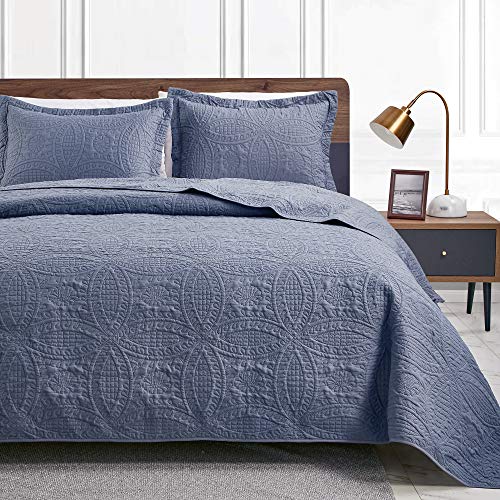
Love's cabin Quilts for Queen Bed Blue Bedspreads - Soft Bed Summer Lightweight Bedspread Comforter - Modern Style Coin Pattern Coverlet for All Season - 3 Pieces (1 Quilt, 2 Pillow Shams)
Check price on Amazon
FLYMME Quilts Queen Size - Ultra Soft Navy Blue Quilt Lightweight Microfiber Bedspreads, Classic Basket Weave Pattern Bedspread Bed Coverlet 3 Pieces for All-Season (1 Quilt, 2 Pillow Shams)
Check price on Amazon
Dinjoy Boho Queen Quilt Set, Striped Fall Soft Bedspreads, Brown | Fall Bedding Sets, 3 Pieces Micofiber Lightweight Quilts with 2 Pillow Shams, Coverlet Bed Sets for Women Men 96''x90''
Check price on Amazon
CozyLux Queen Comforter Set 88"x88" Dark Grey - 7 Piece Bed in a Bag | Fits Mattresses up to 14in, Sheets & Shams Included, OEKO-TEX Certified, 240GSM All-Season Fill, Couples & Guest Rooms
Check price on Amazon
Bedsure Quilts Queen Size - Grey Bedspreads Queen Size with Basket Weave Pattern, Soft Quilt Bedding Set, Lightweight Comforter Set Coverlet for All Seasons with 2 Pillow Shams (90" x 96")
Check price on Amazon
BEDELITE Fleece Queen Comforter Set, Fluffy Bed Set, Cream White | Super Soft & Warm Bedding, Luxury Fuzzy Faux Fur Comforter for Winter, Heavy Plush Bedding, with 2 Pillowcases
Check price on Amazon