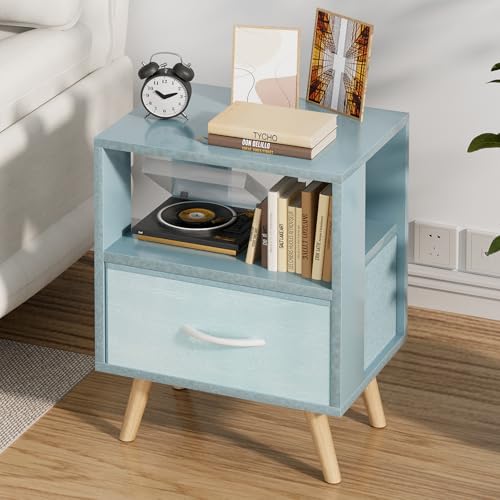
Blue Bedside Table: The Complete Buying & Styling Guide
Everything you need to choose the right blue nightstand for your bedroom — shades, sizes, materials, storage layouts, and styling tips that make your bedside corner both practical and beautiful.
Explore Blue Bedside TablesWhy a blue bedside table? Blue is one of the most calming colors in the spectrum, which makes it a natural fit for a bedroom. A blue nightstand anchors the bedside area, ties together your bedding and wall tones, and adds a quiet pop of color without overwhelming a restful space. This guide walks you through the practical decisions — shade, height, storage, and material — so you can buy with confidence instead of guesswork.
Why Choose a Blue Bedside Table?
Blue sits at the cool end of the color spectrum, and that has real consequences for how a bedroom feels. Cool tones tend to lower the perceived energy of a room, which is exactly what you want in the space where you wind down. A blue bedside table works as a low-commitment way to introduce that calm — it is a single piece of furniture rather than a full repaint, and it is easy to swap if your taste shifts.
The versatility of blue is another practical advantage. Navy and midnight blue read as classic and slightly formal, pairing naturally with gold or brass accents and dark wood bed frames. Mid-tone blues like dusty blue and slate sit comfortably in modern and transitional rooms. Soft blues — powder, sky, and pale coastal tones — feel light and airy, and they work especially well in smaller bedrooms where you want the furniture to recede rather than dominate.
If you are building a coordinated bedroom set, a blue nightstand can also bridge mismatched pieces. Because blue is a neutral-leaning accent in many palettes, it can sit between a dark wood narrow bedside table on one side of the bed and a lighter piece on the other without looking accidental.
Choosing the Right Shade of Blue
The shade you pick matters more than the shape of the table for the overall feel of the room. Use this as a quick reference before you start shopping.
Navy and Midnight Blue
Deep blues are the most dramatic option. They absorb light, so they work best in bedrooms with good natural light or layered artificial lighting. Navy pairs beautifully with white bedding, brass hardware, and warm wood floors. If your bed frame is black or dark, a navy table blends in; if your frame is light wood, navy creates a deliberate, high-contrast look.
Mid-Tone Blues: Slate, Denim, and Dusty Blue
These shades are the safest middle ground. They have enough color to read as intentional but are muted enough to sit beside almost any bedding. A dusty blue table is a natural companion to blue and white chenille bedding and works with both painted and wood furniture.
Soft Blues: Powder, Sky, and Pale Coastal Tones
Light blues reflect more light and make a room feel larger. They are the best choice for compact bedrooms, attic rooms, and spaces with limited windows. Pair a powder blue table with white walls and a white bedspread for a clean, airy result. These shades also age well — they rarely feel dated.
Statement Blues: Turquoise and Teal
If you want the bedside table to be the focal point, a turquoise or teal piece delivers. Keep the rest of the room quiet — neutral bedding, simple lamp, uncluttered surfaces — so the color has room to breathe. A turquoise accent is especially effective against warm wood tones.
Blue Bedside Table Comparison by Tier
Rather than chasing a specific figure, think about where a table sits in the market. The tier tells you what to expect from construction, finish, and hardware.
| Tier | Typical Construction | Finish & Hardware | Best For |
|---|---|---|---|
| Entry-Level | Engineered wood panels, simple assembly, basic drawer runners | Painted or laminated blue finish, plastic or basic metal knobs | Guest rooms, first apartments, temporary setups, kids' rooms |
| Mid-Range | Engineered wood with reinforced joints or mixed wood-and-metal frames | Smooth lacquer or veneer finish, metal drawer glides, solid knobs or pulls | Primary bedrooms, daily-use nightstands, coordinated bedroom sets |
| Premium | Solid wood or heavy-duty metal frame, dovetailed or soft-close drawers | Hand-finished paint or stained blue, high-grade metal hardware | Long-term primary bedroom use, design-led interiors, heavier lamps and decor |
| Luxury | Solid hardwood, upholstered panels, custom joinery | Multi-layer painted or lacquered finish, designer hardware, fine detailing | Statement bedrooms, matched furniture suites, collectors of design pieces |
As a rule, moving up a tier buys you smoother drawer action, tighter joinery, and a finish that holds up better to daily handling. For a bedside table that will hold a lamp, a book, and a glass every night for years, the mid-range tier is usually the sweet spot — it is well-specified for the category without pushing into decorative-only territory.
Sizing Your Blue Bedside Table
Size is the most common source of buyer regret with nightstands. A table that is too tall forces you to reach up; one that is too short leaves your lamp below eye level and your book out of easy reach.
Height Relative to the Bed
The top of the table should sit within roughly 2 to 5 cm of the top of your mattress once bedding is on. Measure from the floor to the mattress surface, then compare that number to the table height. Platform beds and low-profile frames often pair well with mid-height tables, while taller beds suit taller nightstands. If you use a thick mattress topper, factor that extra height in.
Width and Depth
A single nightstand typically occupies 40 to 60 cm of width. Check the gap between your bed and the wall or wardrobe before ordering — you want a little breathing room on each side so the table does not look wedged in. Depth matters for walkways: in narrow rooms, a shallower table (around 35 cm deep) keeps the floor clear.
Small-Room Solutions
If floor space is tight, consider a floating bedside shelf with drawer or a floating bedside table with light. These wall-mounted options free up the floor and often come in blue finishes. A small white bedside table with drawers is another compact reference point if you want to compare footprints before choosing a blue version.
Storage Layouts: Drawers, Shelves, and Open Frames
What you keep at your bedside should drive the storage layout. Think about your actual nightly routine: do you need a drawer for chargers and reading glasses, or do you mostly want a surface for a lamp and a book?
- Single drawer plus open shelf: The most flexible layout. The drawer hides clutter; the shelf holds a stack of books or a small basket. Good for most primary bedrooms.
- Two or three drawers: Best if you like a completely clear top surface. Deeper drawer stacks suit people who store medications, journals, or tech accessories at the bedside.
- Open shelving only: Lightest visual footprint and easiest to style, but requires discipline to keep tidy. Works well in minimalist and coastal bedrooms.
- Single drawer with tall legs: The raised design makes the floor look more open, which helps in smaller rooms. It also makes cleaning underneath easier.
If you are coordinating a full bedroom, a chest of drawer and bedside table set can lock in a consistent blue finish across the room. For rooms that need extra bedside storage, a small bedside chest of drawers offers more capacity than a standard nightstand.
Materials and Finishes for Blue Nightstands
The material affects weight, durability, and how the blue finish reads in person. Painted blue on solid wood has depth and subtle texture; lacquered engineered wood looks smoother and more uniform; powder-coated metal gives a crisp, modern line.
- Solid wood with painted finish: Durable construction that can be repainted or touched up. The paint may show wood grain slightly, which adds character. Premium and luxury tiers most often use this approach.
- Engineered wood with lacquer or veneer: A smooth, even blue surface at a lower weight. Quality lacquer resists everyday scuffs better than basic paint. This is the typical mid-range construction.
- Metal with powder-coated blue finish: Rust-proof finish options and a slim profile suit modern and industrial bedrooms. Metal frames are often lighter and easier to move than solid wood.
- Upholstered or wrapped panels: Softer visual texture that suits plush, layered bedrooms. These designs often pair well with fabric headboards.
Whichever material you choose, check that the drawer runners are smooth and that the table does not wobble when you press on a corner. Small build-quality signals tell you more than the finish alone.
Which Tier Fits Your Bedroom?
Starter Tier
A good value for its tier. Ideal for guest rooms, rentals, or a first bedroom setup where the table needs to be functional and easy to assemble.
- Engineered wood panels
- Basic drawer runners
- Painted or laminated blue finish
Balanced Tier
The most common choice for a primary bedroom. Well-specified for the category, with smoother hardware and a finish that holds up to daily use.
- Reinforced joints
- Metal drawer glides
- Smooth lacquer or veneer finish
High-End Tier
A long-term investment piece. Solid construction and fine detailing that reward daily handling and anchor a design-led bedroom.
- Solid wood or heavy-duty frame
- Soft-close or dovetailed drawers
- Hand-finished blue paint
If you are furnishing a guest room that gets occasional use, the entry-level tier is efficient in the long run. For a bedside table you will open and close every night, stepping up to mid-range or premium pays off in smoother operation and better durability.
Styling a Blue Bedside Table
Once the table is in place, a few deliberate styling choices make the bedside corner feel finished rather than improvised.
Layer the bedding to echo the blue
Pick up the table's tone in a throw, a pillow, or a blue bedspread set. A single repeated color reads as intentional; three or more matching blues can feel heavy, so aim for one or two echoes.
Keep the lamp proportional
A lamp shade should sit roughly at eye level when you are sitting up in bed. On a lower table, choose a taller lamp; on a taller table, a compact lamp keeps the proportions balanced.
Use negative space
Leave at least half the tabletop clear. A small tray for a glass and a book, plus one decorative object, is usually enough. Clutter undermines the calm that blue is meant to create.
Mix warm and cool tones
Blue is cool; wood, brass, and woven textures are warm. Pairing them prevents the bedside from feeling cold. A wood-framed mirror or a brass lamp base works well beside a navy table.
If you want a fully coordinated look, browse country-style bedside tables for reference on how painted finishes pair with rustic bedding, or compare with a black bedside table with marble top if you are weighing blue against a darker statement finish.
Coordinating the Rest of the Bedroom
A blue bedside table rarely lives alone. It sits next to a bed frame, a dresser, and bedding — and those relationships decide whether the room feels cohesive.
If your bed frame is upholstered or painted, a blue table in a contrasting shade adds depth. If your frame is natural wood, a blue table introduces a cool note that balances the warmth. For a full suite approach, a white bedside table and dresser pairing shows how matched finishes create a clean line — the same logic applies when both pieces are blue.
Pay attention to hardware consistency. Brass pulls on a navy table look deliberate; mixed metals can work but need a reason. And if your room already has a strong accent color, choose a muted blue so the two do not compete.
Frequently Asked Questions
What shade of blue bedside table works best for a small bedroom?
Lighter shades such as powder blue, sky blue, or pale dusty blue reflect more light and make small bedrooms feel more open. Pair them with white or cream walls and a light wood floor for an airy feel. Navy and midnight blue tend to absorb light and suit larger rooms better.
How tall should a blue bedside table be relative to the bed?
The top of your bedside table should sit within 2 to 5 cm of the top of your mattress once bedding is on. This keeps a lamp, book, and glass within easy reach while lying down and prevents awkward reaching. Taller platform beds often pair well with mid-height tables, while low futon-style beds suit shorter tables.
What materials are used for blue bedside tables?
Common materials include solid wood with a painted or stained blue finish, engineered wood with a blue lacquer or veneer, metal with a powder-coated blue finish, and upholstered or wrapped panels. Solid wood and metal options generally offer the most durable construction, while engineered wood with a quality lacquer finish delivers a smooth, uniform look at an entry-level to mid-range position.
Can a blue bedside table match a wooden bed frame?
Yes. Blue is a versatile cool tone that complements warm wood tones. A navy table beside an oak frame creates a classic contrast, while a soft blue table beside a light wood frame feels coastal and relaxed. If the wood is very dark, choose a mid-tone blue so the two pieces do not merge into one dark mass.
Does a blue bedside table need drawers or open shelving?
It depends on your clutter habits. A drawer unit keeps remotes, chargers, and reading glasses out of sight, which suits minimalist bedrooms. Open shelves or a single drawer plus an open shelf offer a balance of hidden and display space. For very small rooms, a single-drawer table with a lower shelf is often the most practical layout.
Ready to Pick Your Blue Bedside Table?
Browse a curated selection of blue nightstands and compare features, storage layouts, and styles side by side. Find the piece that fits your bed height and your bedroom's palette.
View Blue Bedside Tables