Full White Bedspread: The Complete Buying & Styling Guide
Everything you need to know about choosing a crisp, comfortable full-size white bedspread — from fabric and fit to care and styling.
Explore Top PicksWhy a White Bedspread? A full white bedspread is one of the most versatile bedroom investments you can make. It brightens the room, pairs effortlessly with any decor style, and gives your bed a clean, hotel-inspired look. But not all white bedspreads are created equal — fabric, weave, and fit all matter. This guide walks you through every decision point so you can choose with confidence.
What Exactly Is a Full White Bedspread?
A full white bedspread is a decorative bed covering sized for a full-size mattress (also called a double bed), typically measuring around 54 inches wide by 75 inches long. Unlike a duvet or comforter, a bedspread is usually a single-layer or lightly quilted cover that drapes over the entire bed — often reaching toward the floor or covering the bed rails. The white colorway makes it a timeless, adaptable choice that works in guest rooms, master bedrooms, and kids' rooms alike.
The term "full" refers to the mattress size, not the coverage style. A well-made full white bedspread will account for mattress depth and provide enough drop to cover the sides and foot of the bed. If you are still deciding on bed size, our guide to full-size beds can help you confirm whether a full mattress suits your room.
White bedspreads come in several constructions: quilted, matelassé, chenille, seersucker, waffle weave, and simple flat-weave cotton. Each brings a different texture and level of warmth, which is why understanding the fabric is the first step toward a smart purchase.
Types of Full White Bedspreads and What They Offer
Not every white bedspread is built the same way. Below are the most common constructions you will encounter, along with who each one suits best.
Quilted White Bedspreads
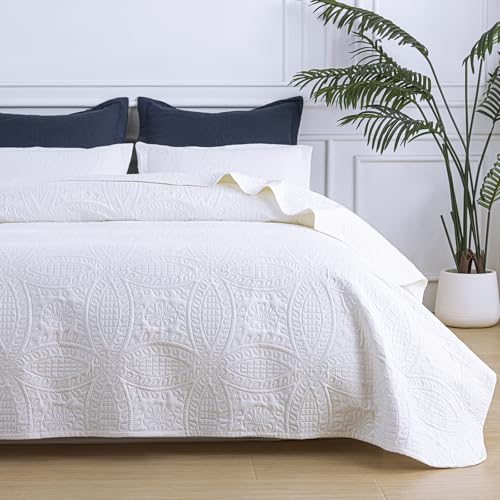
Quilted bedspreads feature a layer of batting stitched between two fabric layers, creating a soft, structured feel. They add light warmth, hold their shape well, and resist wrinkling. This is a solid choice for year-round use and for households that want a bed that always looks tidy. If you like the quilted look but prefer a more textured finish, a white chenille bedspread offers a similar structure with a raised, tactile weave.
Matelassé and Chenille White Bedspreads
Matelassé and chenille are woven to create raised patterns and a plush surface. They feel more substantial than plain cotton and add visual depth to a white bed. Chenille in particular is known for its soft hand and vintage charm. These bedspreads are best for people who want a decorative layer that still feels comfortable to the touch. Explore the broader range of chenille bedspreads if this texture appeals to you.
Seersucker and Waffle Weave
Seersucker uses a puckered weave that lifts the fabric away from the body, improving airflow — ideal for warm sleepers and summer months. Waffle weave works on a similar principle, trapping air in its grid pattern while feeling light and breathable. If you sleep hot, look for a white bedspread in one of these constructions. Our guide to summer-weight bedspreads explains the breathability factors in more detail.
Flat-Weave Cotton and Linen Blends
Simple flat-weave cotton bedspreads are the most minimalist option. They are lightweight, easy to launder, and drape cleanly. Linen blends add texture and a relaxed, slightly rumpled look. These are best for modern, minimalist, or Scandinavian-style bedrooms where clean lines matter.
| Type | Warmth | Texture | Best For |
|---|---|---|---|
| Quilted | Light to medium | Smooth with stitching | Year-round, tidy look |
| Chenille / Matelassé | Medium | Raised, plush | Decorative charm, cozy feel |
| Seersucker / Waffle | Light | Puckered, breathable | Hot sleepers, summer |
| Flat-weave cotton | Very light | Smooth, relaxed | Minimalist, layered styling |
Getting the Fit Right: Full Size and Coverage
A full-size mattress is approximately 54 by 75 inches. However, the right bedspread size depends on how much drape you want. Here is how to think about fit:
- Standard full bedspread: Sized to cover the mattress top with a moderate drop on the sides and foot. Best for platform beds and frames where the mattress sits high.
- Full/queen bedspread: A flexible size that covers a full mattress with extra drape. Useful if you want more coverage or plan to tuck the edges.
- Oversized options: If you have a thick mattress or an adjustable base, you may need extra length. Our overview of oversized bedspreads explains how to measure for generous coverage (the principles apply to full sizes too).
Measure your mattress depth before buying. A mattress that is 12 inches deep needs a bedspread with a longer drop than a 7-inch mattress. Also consider whether your bed frame has a footboard — if it does, the bedspread needs to be long enough to fold over or tuck without pulling.
If you are still choosing between full and larger sizes, comparing dimensions in our bed size guides can clarify how full compares to queen and king options.
Fabric Quality: What Separates Good From Great
White shows every detail, so fabric quality matters more than with darker colors. Here is what to look for:
Thread Count and Weave
Higher thread count does not automatically mean better quality, but a tighter, more even weave generally feels smoother and resists pilling. For cotton bedspreads, a percale or sateen weave both work well — percale feels crisp and breathable, while sateen feels smoother and slightly heavier.
Colorfastness and Bleaching
Whites can yellow over time if the fabric is not properly finished. Look for bedspreads described as colorfast or pre-shrunk. Avoid untreated fabrics that may dull after washing. A quality white bedspread should stay bright after repeated laundering.
Stitching and Construction
Check the stitching density on quilted and chenille bedspreads. Tight, even stitching prevents batting from shifting and helps the bedspread keep its shape. Reinforced edges and double-stitched hems are signs of durable construction. These details separate entry-level bedspreads from mid-range and premium tiers.
Fabric Weight and Breathability
If you sleep hot, a lighter fabric weight is better. Seersucker and waffle weaves are naturally breathable. Chenille and quilted bedspreads are warmer and better suited to cooler rooms. If you want a lightweight white bedspread, our notes on lightweight bedspreads for summer cover the key considerations.
How to Style a Full White Bedspread
A white bedspread is a blank canvas. Here are proven ways to style it for different looks:
Layered Neutrals
Pair a full white bedspread with warm beige, oatmeal, or soft grey accents. A textured throw at the foot of the bed and neutral pillows create a calm, layered look. This approach suits modern and transitional bedrooms.
High-Contrast Modern
White bedding against a dark frame or dark nightstands creates a crisp contrast. Black or charcoal accent pillows and a dark bedside table with a marble top can ground the room. This is a popular look in contemporary bedrooms.
Soft and Romantic
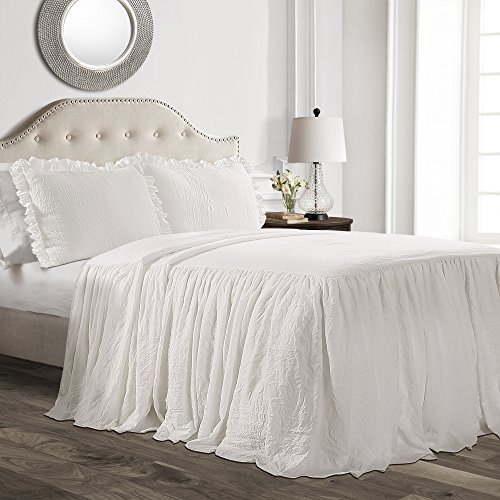
Chenille or matelassé white bedspreads pair beautifully with pastel throws, floral accents, and soft lighting. Consider a white bedspread with a subtle pattern to add interest without breaking the clean color palette.
Minimalist and Airy
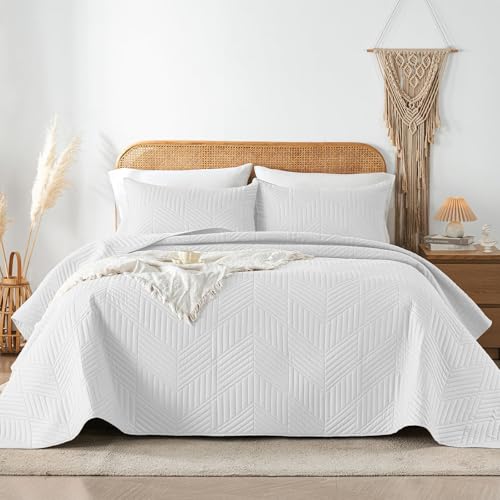
Keep the bed simple: a flat white bedspread, two well-sized pillows, and a small accent. Let the white do the work. A minimalist bedroom benefits from the light-reflecting quality of white bedding.
For more bedroom styling ideas, browse our bedroom decor guides.
Caring for Your White Bedspread
White bedspreads are easier to maintain than many people assume. Follow these care tips to keep yours bright and fresh:
- Wash regularly: Wash every one to two weeks in cold or warm water, depending on the care label.
- Use a gentle detergent: Avoid harsh bleaches unless the label permits them. Oxygen-based brighteners are safer for most fabrics.
- Check before tumble drying: High heat can shrink cotton and set wrinkles. Use low heat or line dry when possible.
- Treat stains promptly: White fabric shows stains quickly, so blot and pre-treat as soon as possible.
- Store clean and dry: Store folded in a dry place to prevent yellowing and mildew.
If you want general care guidance, our mattress care tips also cover how to keep your sleep environment fresh.
Quick Buying Checklist
Before you choose a full white bedspread, run through this checklist:
- Measure your mattress: Width, length, and depth. Confirm the bedspread dimensions cover the drop you want.
- Decide on warmth: Light and breathable for hot sleepers, quilted or chenille for cooler rooms.
- Check the fabric: Cotton, linen blend, or chenille — match to your care preferences and texture goals.
- Review construction: Look for even stitching, reinforced hems, and colorfast finishing.
- Plan your style: Neutral layering, high-contrast modern, or minimalist.
- Confirm care instructions: Machine washable is a practical priority for most households.
If you are also updating your pillows or sheets, our white bedspread guide for queen beds offers parallel advice you can adapt.
Frequently Asked Questions
What is the difference between a bedspread and a comforter?
A bedspread is typically a single-layer or lightly quilted cover designed to drape over the entire bed, often reaching the floor. A comforter is a thicker, filled blanket usually paired with a duvet cover or used on its own. Bedspreads provide a more tailored, finished look; comforters provide more loft and warmth.
Can a full bedspread fit a queen bed?
Generally no. A full bedspread is sized for a 54-inch-wide mattress, while a queen is 60 inches wide. Using a full bedspread on a queen will leave the sides short. For a queen bed, choose a queen-size or full/queen bedspread with adequate drop.
How do I keep a white bedspread from yellowing?
Wash it regularly with a gentle detergent, avoid high heat in the dryer, and store it clean and dry. Oxygen-based brighteners can help maintain whiteness. Avoid storing in damp areas or plastic bags that trap moisture.
Is a white bedspread good for year-round use?
Yes, if you choose the right fabric. Quilted and chenille white bedspreads work year-round in most climates. In hot climates or for hot sleepers, seersucker or waffle weave is more comfortable. White itself is not inherently warm or cool — the fabric weight and weave determine that.
How often should I wash my white bedspread?
Every one to two weeks is ideal for most households. If you have pets or allergies, wash weekly. Always follow the care label, and pre-treat stains before washing.
What thread count is best for a white bedspread?
Thread count alone is not a reliable quality indicator. A well-woven cotton bedspread in the 200–400 thread count range generally feels comfortable and holds up well. Focus on weave quality, stitching, and fabric finish rather than chasing the highest number.
Ready to Choose Your Full White Bedspread?
Browse our curated selection of full white bedspreads and find the right fit, fabric, and style for your bedroom.
View Top Picks