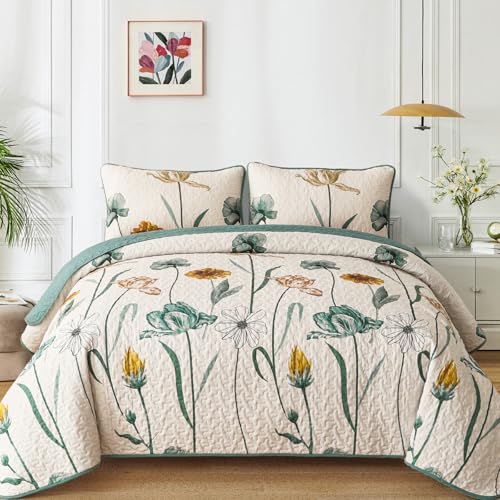
Blue Green Bedspreads: The Complete Buying & Styling Guide
Blue green bedspreads bring a calm, coastal-inspired feel to any bedroom. Learn how to choose the right shade, fabric, size, and styling approach so your bed looks beautiful and sleeps comfortably.
Start the GuideWhy blue green? The blue green family — from soft sage and seafoam to deep teal and ocean blue — is one of the most versatile palettes in bedroom design. These cool, soothing tones promote a restful atmosphere, pair effortlessly with neutral furniture, and work across modern, coastal, farmhouse, and minimalist styles. This guide walks you through everything you need to know before choosing a blue green bedspread.
Understanding the Blue Green Color Family
"Blue green" is not a single color — it is a spectrum that runs from cool, airy seafoam to rich, moody teal. Understanding where a shade falls on that spectrum helps you match it to your existing decor and the mood you want to create.
Seafoam & Mint
Light, airy, and fresh. Best for bright bedrooms, coastal themes, and spaces with white or light wood furniture.
Sage & Eucalyptus
Muted and earthy. A natural fit for farmhouse, Japandi, and organic-modern interiors that use warm neutrals.
Teal & Turquoise
Bold and saturated. Adds personality and pairs well with crisp white, brass accents, and dark wood tones.
Deep Ocean & Peacock
Rich and dramatic. Suited to moody, luxurious bedrooms and larger spaces that can carry a darker palette.
If you are exploring complementary bedding across the blue spectrum, our guide to blue bedspreads and comforters offers a broader look at shades and materials. For a softer, patterned alternative, a blue and white floral bedspread can bring a similar calm feel with added visual interest.
How to Choose a Blue Green Bedspread
Choosing the right bedspread comes down to four decisions: fabric, size, style, and how it fits your room. Work through these in order and the selection becomes much simpler.
1. Choose the Right Fabric
- Cotton: Breathable, easy to care for, and ideal for year-round use. Good for warm sleepers and humid climates.
- Linen: Naturally temperature-regulating with a relaxed, textured look. Best for a breezy, coastal aesthetic.
- Chenille: Soft, plush, and cozy. A great choice for cooler months and bedrooms that lean toward comfort-first styling.
- Quilted cotton: Lightweight with a classic matelassé or diamond pattern. Works well as a layering piece over a duvet.
- Microfiber blends: Durable and wrinkle-resistant, often found in entry-level and mid-range options.
For a plush queen-sized option with a classic feel, a blue chenille bedspread in queen size is a strong choice for cooler rooms, while a lightweight blue bedspread in king size suits warmer climates and layered styling.
2. Match the Size to Your Bed
Bedspread sizing is often confused with comforter sizing. A true bedspread should drape over the sides and, in many cases, reach toward the floor. Check the drop measurement rather than relying on the label alone.
| Bed Size | Typical Bedspread Dimensions | Best For |
|---|---|---|
| Twin | Approximately 80" x 110" | Kids' rooms, guest rooms, daybeds |
| Full | Approximately 96" x 110" | Teen rooms and smaller primary bedrooms |
| Queen | Approximately 102" x 120" | Most primary bedrooms |
| King | Approximately 120" x 120" | Large primary suites and guest suites |
If you prefer a tailored look with a shorter drop, a coverlet is a better fit. If you want a full drape, choose an oversized bedspread or size up by one category.
3. Decide on Style and Pattern
Solid blue green bedspreads are the most versatile and easiest to layer. Patterned options — stripes, florals, paisley, or geometric — add character and can anchor a room's design. Consider the following:
- Solid: Best for minimalist and modern rooms, and easiest to mix with patterned pillows.
- Striped: Creates a crisp, tailored feel; works well in coastal and preppy interiors.
- Floral: Softens the look; ideal for traditional and cottage-style bedrooms.
- Textured (matelassé, quilted, chenille): Adds depth without pattern; a strong choice for neutral rooms.
4. Consider the Room and Lighting
Cool tones like blue green can appear darker in north-facing rooms and brighter in sun-filled spaces. If your bedroom receives limited natural light, choose a lighter shade such as seafoam or sage. In a bright room, deeper teal and ocean tones hold their richness without washing out. Pair darker bedspreads with blackout curtains to control light and preserve the color's depth.
Comparing Blue Green Bedspreads by Tier
Rather than comparing by numeric figures, it helps to understand how bedspreads differ by market tier. The table below outlines what you can generally expect at each tier so you can match the product to your needs.
| Tier | Typical Materials | Best For |
|---|---|---|
| Entry-level | Microfiber blends, basic cotton, simple quilted constructions | Guest rooms, kids' rooms, seasonal refresh |
| Mid-range | 100% cotton, cotton-linen blends, chenille, matelassé | Primary bedrooms, everyday use, year-round comfort |
| Premium | Long-staple cotton, stonewashed linen, dense quilting | Design-forward bedrooms and long-term use |
| Luxury | Belgian linen, Egyptian cotton, hand-finished detailing | High-end primary suites and statement styling |
For most households, the mid-range tier offers the best balance of durability, comfort, and design flexibility. Entry-level options are a sensible starting point for guest rooms, while premium and luxury tiers are worthwhile investments for a room used every night.
Styling Blue Green Bedspreads in Your Bedroom
Blue green is a flexible base color, but the surrounding palette determines whether the room feels coastal, earthy, or modern. Below are proven combinations and styling approaches.
Coastal and Nautical
Pair a seafoam or turquoise bedspread with white linen sheets, light wood or painted white furniture, and woven textures. Add striped or rope-detail pillows and keep the overall palette airy. A brass or brushed nickel lamp provides a warm contrast to the cool tones.
Earthy and Organic
Sage and eucalyptus shades work beautifully with warm neutrals — cream, sand, and clay. Layer in natural materials such as jute rugs and linen pillows, and keep metals warm with brass or bronze. This combination suits Japandi and organic-modern interiors.
Modern and Moody
Deep teal and ocean bedspreads can anchor a darker, more dramatic bedroom. Pair with charcoal or dark wood furniture, matte black accents, and a single warm light source. Keep the bedding palette tight — one or two shades of blue green plus white — to avoid visual clutter.
Layer With Pillows and Throws
Pillows are the easiest way to change the look of a blue green bedspread without replacing the bedspread itself. Try a mix of white or cream shams, one patterned accent pillow, and a textured throw folded at the foot of the bed. A body pillow in a coordinating neutral can add both comfort and a layered, hotel-style finish.
If your bedroom leans bohemian, a boho bedspread in queen size can complement a blue green palette through texture and pattern. For a more graphic, high-contrast look, a black, white, and gold bedspread shows how a bold palette can be built around a strong central color.
Care and Maintenance Tips
Proper care keeps a blue green bedspread looking rich and prevents fading, which is especially important for saturated teal and ocean shades.
- Wash cold: Use cold water and a gentle cycle to protect dye depth and fabric structure.
- Turn inside out: Reduces surface wear and preserves color on the visible side.
- Avoid over-drying: Remove from the dryer while slightly damp and smooth flat to prevent creasing, especially for linen and cotton.
- Limit direct sun: Prolonged sun exposure fades blue green tones faster than most neutral colors; rotate the bedspread periodically.
- Spot clean promptly: Blue green shows water marks on some fabrics; blot spills immediately rather than rubbing.
Ready to Explore Blue Green Bedspreads?
Browse recommended options selected for comfort, color depth, and durability.
View Recommended PicksFrequently Asked Questions
What colors pair well with blue green bedspreads?
Blue green bedspreads pair beautifully with warm neutrals like cream, sand, and beige, as well as crisp whites. For contrast, consider terracotta, mustard, or soft blush. Metallic accents in brass or brushed nickel also complement the cool tones.
Are blue green bedspreads suitable for all seasons?
Yes. Lightweight cotton or linen blue green bedspreads work well for warmer months, while quilted or chenille versions add warmth in cooler seasons. Layering a blue green bedspread over a duvet allows year-round flexibility.
What size bedspread do I need for a queen bed?
For a queen bed, look for a bedspread measuring roughly 90 by 100 inches for a slight overhang. If you prefer a fuller drape to the floor, choose a coverlet or bedspread labeled as oversized queen.
How do I style a blue green bedspread for a coastal look?
Pair a blue green bedspread with white linen sheets, natural woven textures, and light wood furniture. Add striped or rope-detail pillows and keep the palette airy with plenty of white and sandy tones.