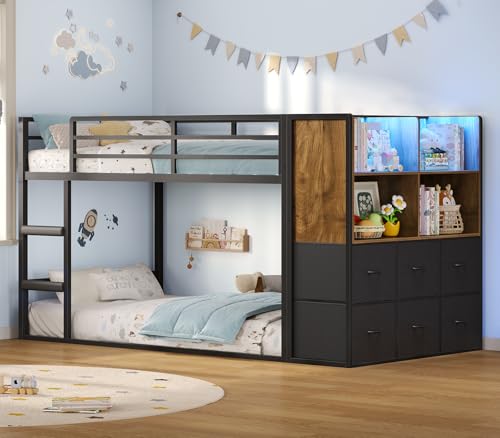
Bunk Beds for Rooms with Low Ceilings: The Complete Guide
Discover how to safely fit a bunk bed into a room with limited vertical space. Learn clearance rules, low-profile designs, and layout strategies that keep tight bedrooms functional and comfortable.
Quick summary: A room with a ceiling below 8 feet can still host a bunk bed, but the frame must be chosen carefully. Prioritize low-profile designs, verify mattress-to-ceiling clearance of at least 30 inches, and never compromise on guardrails or weight ratings. This guide walks you through every measurement and design decision.
Why Low Ceilings Change the Bunk Bed Equation
Bunk beds are one of the most efficient space-saving solutions for small bedrooms, guest rooms, cabins, and shared kids' rooms. However, when the ceiling is lower than the standard 8 feet, the vertical stacking that makes bunk beds so useful becomes a constraint rather than an advantage. The top sleeper needs enough room to sit up without hitting the ceiling, and the frame itself must not push the mattress surface too high.
This is why bunk beds for rooms with low ceilings are a distinct category. They are engineered with compressed frame heights, lower top rails, and sometimes a modified ladder or stair placement. Choosing a standard bunk bed for a low-ceiling room can create a cramped, unsafe sleeping environment. The good news is that a well-chosen low-profile model can deliver the same space-saving benefits while keeping the room safe and breathable.
Before shopping, measure three things: your exact ceiling height, the thickness of the mattresses you plan to use, and the total height of any frame you are considering. Those three numbers determine whether a bunk bed is viable and which design will work best.
Ceiling Clearance Rules You Should Not Ignore
Safety guidance for bunk beds consistently emphasizes clearance above the top mattress. The widely cited minimum is 30 inches (76 cm) between the top mattress surface and the ceiling. This allows a sleeper to sit up, roll over, and get in and out without striking the ceiling. Some guidelines recommend even more for adults or taller children.
In practice, this means the total height of the bunk bed frame plus the top mattress must leave at least 30 inches of open air below the ceiling. For a room with a 7-foot (84-inch) ceiling, that leaves a maximum combined frame-and-mattress height of about 54 inches — which is why true low-profile bunk beds are essential. For an 8-foot ceiling, you have more flexibility, but the same principle applies.
Also consider the clearance above the bottom bunk. The gap between the bottom mattress and the underside of the top bunk should be comfortable enough for the lower sleeper to sit up. A common recommendation is at least 30 inches there as well. If the top bunk is lowered to fit a low ceiling, the bottom clearance can shrink, so check both figures.
| Ceiling Height | Typical Feasibility | What to Prioritize |
|---|---|---|
| 7 ft (84 in) | Challenging — requires a dedicated low-profile frame | Compressed overall height, thin mattresses, strict 30-inch top clearance |
| 7.5 ft (90 in) | Feasible with low-profile designs | Low top rail, verified mattress thickness, solid guardrails |
| 8 ft (96 in) | Comfortable for most bunk beds | Standard frames work; still confirm top clearance |
| 8.5 ft+ (102 in+) | Flexible — most designs fit | Focus on layout, ladder placement, and storage |
Low-Profile Bunk Bed Designs That Work
Not every bunk bed is built for tight vertical spaces. The following design categories are the most reliable options when ceiling height is limited. Each has trade-offs, so match the design to your room and sleeper profiles.
1. Short or Junior Bunk Beds
These frames are intentionally built shorter than standard bunks. The top bunk sits lower, and the overall frame height is compressed. They are ideal for younger children and for rooms where the ceiling is just under 8 feet. Many short bunk beds use thinner mattress profiles, which also helps preserve clearance. If you are exploring compact configurations, twin-size bunk beds are a common starting point because they keep the footprint and height manageable.
2. Low-Profile Metal Frames
Metal bunk beds often have a slimmer profile than wood or upholstered designs. A black metal bunk bed twin over twin can be a strong choice for low-ceiling rooms because the frame geometry is typically simpler and the top rail can sit lower. Look for models explicitly described as low-profile or short-height, and confirm the total frame height in the specifications.
3. Built-In and Custom Configurations
If the room has an unusual ceiling angle or an alcove, a built-in solution may outperform a freestanding frame. Built-in bunk beds for small rooms can be designed around the exact ceiling height, maximizing usable space. This is a more involved project, but it gives you full control over clearance and ladder placement.
4. Bunk Beds with Storage Instead of Height
Sometimes the smartest move in a low-ceiling room is to trade vertical stacking for under-bed storage. A bunk bed for small rooms with storage can keep the top bunk at a safer height while using drawers or cubbies to replace the storage you would otherwise lose. This approach keeps the room organized without pushing the sleeping surface toward the ceiling.
A Step-by-Step Measurement Checklist
Before you commit to any bunk bed, run through this checklist. It takes about fifteen minutes and prevents the most common low-ceiling mistakes.
- Measure the ceiling height at the exact spot where the bunk bed will stand. Ceilings can vary slightly across a room, especially in older homes or attics.
- Decide on mattress thickness. A thinner mattress preserves clearance. Confirm the maximum mattress height the frame supports.
- Calculate the top mattress surface height. Add the frame's platform height to the mattress thickness.
- Subtract from the ceiling height. The result must be at least 30 inches for safety and comfort.
- Check the bottom bunk clearance. Measure from the bottom mattress surface to the underside of the top bunk. Aim for at least 30 inches if an adult or older child will sleep below.
- Verify guardrails. The top bunk should have guardrails on both sides, with no more than a small gap that could trap a limb.
- Confirm the ladder or stair position. Make sure the access point does not collide with a sloped ceiling or a nearby wall.
- Check the weight rating. The frame must be rated for the intended sleeper, especially if adults will use the top bunk.
If your ceiling is sloped rather than flat, the lowest point of the ceiling above the top bunk is the number that matters. Bunk beds for sloped ceilings require special placement so the tallest sleeper is not positioned under the lowest point.
Mattress Choices That Protect Your Clearance
Mattress thickness directly affects how much headroom the top bunk has. In a low-ceiling room, a thinner mattress is often the simplest way to gain several inches of clearance without changing the frame. However, thinner mattresses can sacrifice comfort, so balance the two needs.
Look for frames that specify a maximum mattress height, and avoid overstuffing the top bunk. A mattress that sits too high above the guardrail defeats the purpose of the rail and creates a fall risk. If the sleepers are adults, prioritize a supportive mattress that is still within the frame's recommended thickness range. For rooms where the top bunk is mainly for children, a thinner, firmer mattress is usually acceptable.
Also consider the mattress foundation. Some low-profile bunks use a slat base that adds less height than a box spring. Avoiding a box spring on the top bunk is often necessary in low-ceiling rooms because it adds several inches of stack height.
Safety Priorities for Low-Ceiling Bunk Rooms
Safety is always important with bunk beds, but low ceilings add specific risks. A sleeper who sits up too quickly can strike the ceiling, and a frame that is too tall for the room can make the top bunk feel enclosed. Keep these priorities in mind:
- Guardrails on the top bunk are non-negotiable, even when the ceiling is low. The rail should extend above the mattress surface.
- A stable ladder that attaches firmly to the frame and does not wobble. In tight rooms, a ladder that protrudes into the walkway can be a hazard, so measure the floor space too.
- Reinforced frame construction for adult sleepers. A bunk bed that can hold adults should be rated accordingly, with a solid build and no flex in the rails.
- No ceiling-mounted accessories that reduce clearance, such as hanging lamps or fans directly above the top bunk.
- Age-appropriate use. Young children should not sleep on the top bunk of a low-ceiling frame without supervision and a properly fitted rail.
Room Layout Strategies for Tight Vertical Spaces
Placement matters as much as the frame itself. In a low-ceiling room, the bunk bed should be positioned where the ceiling is highest, if there is any variation. Keep the ladder side clear and avoid pushing the bed into a corner where the top sleeper has even less headroom.
If the room is shared by two people, consider a twin over full bunk bed when floor space allows, because the larger lower bunk can serve as a primary sleeping spot while the top bunk remains a secondary option. In tighter rooms, a bunk bed for small rooms keeps the footprint minimal. For rooms that need to serve multiple functions, a bunk bed with a desk underneath can replace a separate study area, freeing floor space and reducing clutter.
Lighting also deserves attention. Low ceilings can make a room feel closed in, so use wall-mounted or clip-on reading lights rather than tall floor lamps. Avoid anything that hangs low over the top bunk. Blackout curtains can help with sleep quality, but make sure the curtain rod does not interfere with the bunk frame.
Who Should Choose a Low-Ceiling Bunk Bed
Low-profile bunk beds are a practical fit for several scenarios: apartments with compact bedrooms, attic rooms with sloped or low ceilings, cabins and vacation homes with rustic construction, and shared kids' rooms where the ceiling is below the modern standard. They are also useful in basement bedrooms where ductwork or ceiling height limits the available space.
They are less suitable for adults who need generous headroom on the top bunk, or for rooms where the ceiling is so low that even a compressed frame cannot meet the 30-inch clearance rule. In those cases, a single bed with under-bed storage or a built-in loft bed for adults may be a better solution than a stacked bunk.
Related Guides for Tight and Small Bedrooms
- Bunk beds for 8-foot ceilings
- Bunk beds for sloped ceilings
- Bunk beds for small rooms
- Bunk beds for small rooms with storage
- Built-in bunk beds for small rooms
- Built-in bunk beds
- Bunk bed buying guide
- Bunk bed frames
- Black metal bunk beds twin over twin
- Black bunk beds twin over twin
- Bunk beds twin size
- Bunk beds that can hold adults
- Bunk beds twin over full
- Bunk beds with a desk underneath
- Built-in loft beds for adults
- Blackout curtains
Ready to compare low-profile options for your room? Browse recommended frames and check availability through the product section below.
Explore Bunk Bed OptionsFrequently Asked Questions
What is the minimum ceiling height for a bunk bed?
Most safety guidelines recommend at least 7 feet (84 inches) of ceiling height for a standard bunk bed, with a minimum of 30 inches of clearance between the top mattress surface and the ceiling. Rooms below 8 feet should use a low-profile design and verify clearance carefully.
How much clearance do you need above a top bunk?
A minimum of 30 inches (76 cm) between the top mattress and the ceiling is the widely recommended baseline. More clearance improves comfort, especially for adults or taller children who need to sit up.
Can bunk beds fit in a room with 7-foot ceilings?
Yes, but only with a dedicated low-profile or short bunk bed. You need to measure the combined frame and mattress height and confirm at least 30 inches of clearance below the ceiling. Thin mattresses and compressed frames are usually required.
Are low-ceiling bunk beds safe for adults?
They can be, if the frame is rated for adult weight, the top bunk has adequate clearance, and guardrails are present. Adults should prioritize reinforced construction and a weight capacity that matches the intended sleeper.
Should I choose a metal or wooden low-profile bunk bed?
Both can work. Metal frames often have a slimmer profile, while wooden frames may feel warmer and more stable. The deciding factor should be the specified overall height, weight rating, and guardrail design — not the material alone.
What mattress thickness is best for a low-ceiling bunk bed?
Choose the thinnest mattress that still provides adequate support and stays within the frame's maximum mattress height. A thinner mattress preserves clearance, but it should not sit below the guardrail or compromise comfort.