Bunk Beds for Small Rooms with Storage
Two sleeping surfaces, zero wasted floor space. Learn how storage-integrated bunk beds turn cramped bedrooms into organized, restful, and multi-functional spaces.
Space-saving guide • Storage-first layouts • Safety essentialsWhy Storage Bunk Beds Solve the Small-Room Problem
A small bedroom has a fixed floor area, but it does not have a fixed functional capacity. The moment you stack two sleep surfaces vertically, you reclaim the square footage that a second bed would normally occupy. When you add integrated storage to that same frame, you eliminate the dressers, toy bins, and shelving units that would otherwise eat into the remaining floor space.
That is the core logic behind bunk beds for small rooms with storage: one footprint, two sleepers, and a built-in answer to clutter. For families with children sharing a room, guest rooms that double as studies, or multi-generational homes, this combination is often more practical than a single large bed paired with freestanding furniture.
The benefits compound over time. Integrated drawers keep clothing off the floor and out of sight. Stair storage replaces a bulky bookcase. Under-bunk cubbies give toys and bedding a defined home, which makes daily tidying faster. Fewer standalone pieces also mean fewer edges to navigate in a tight room, which matters when the same space must host play, homework, and sleep.
If your primary constraint is the room itself rather than the storage, the broader guide to bunk beds for small rooms covers footprint planning and ceiling clearance in more depth. For rooms where a permanent structure is not feasible, built-in bunk beds for small rooms explores custom carpentry options that blend into the architecture.
The Main Storage Configurations Explained
Storage bunk beds are not a single product category. The storage mechanism you choose determines how the bed functions day to day, how easy it is to assemble, and how much usable volume you actually gain. The table below compares the four most common configurations.
| Configuration | How It Works | Best For | Trade-Off |
|---|---|---|---|
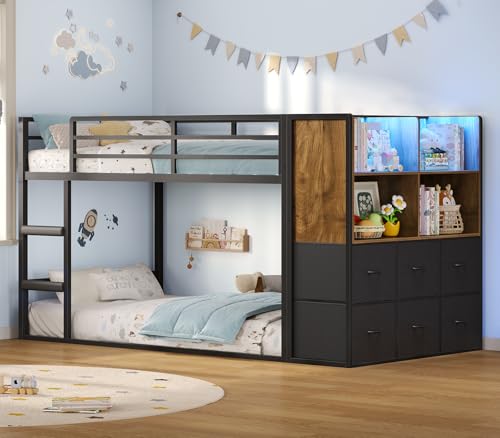
| Under-bunk drawers | Wide drawers built into the lower frame or beneath the bottom mattress platform. | Clothing, linens, and small toys in shared kids' rooms. | Drawer depth is limited by frame height. |
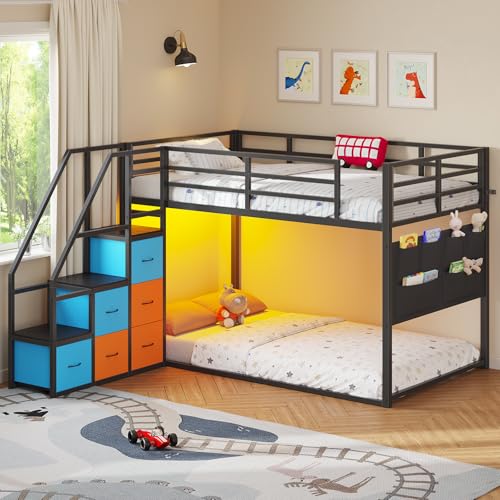
| Stair storage | The ladder is replaced by a staircase with hollow steps or a side cabinet. | Younger children and rooms where a ladder feels risky. | Occupies more floor width than a straight ladder. |
| Built-in shelving | Open or closed shelves integrated into the headboard, footboard, or side panel. | Books, display items, and bedside essentials. | Open shelves collect dust and need regular tidying. |
| Trundle + storage combo | A pull-out lower bed paired with drawer space in the remaining frame volume. | Guest rooms and sleepover-friendly bedrooms. | Reduces drawer capacity compared to a fixed lower bunk. |
Under-bunk drawers
Drawers are the most familiar storage format and the easiest to live with. They slide out like a dresser, keep contents dust-free, and hide clutter behind a clean facade. The key specification to check is drawer glide quality: entry-level models often use simple nylon runners, while mid-range and premium frames typically use metal ball-bearing slides that remain smooth after years of use.
Stair storage
Stair storage is a strong choice when the upper bunk is used by a younger child or when the room lacks space for a safe ladder landing. Each step can open as a compartment, or the staircase can be flanked by a narrow cabinet. The trade-off is width: a storage staircase typically adds several inches to the bed's overall footprint, so measure the wall carefully. For a deeper comparison of stair-equipped frames, see built-in bunk beds with stairs.
Built-in shelving
Shelving integrated into the headboard or side panel is ideal for bedside essentials — a lamp, a book, a glass of water — without adding a nightstand. Closed shelving keeps the visual line clean; open shelving is more accessible but demands regular tidying. Many families combine open shelves at the head end with closed drawers at the foot end for a balanced storage mix.
Trundle and storage combinations
A trundle adds a third sleeping surface for guests, but it consumes the volume that would otherwise hold deep drawers. If sleepovers are frequent, the trundle is worth the storage sacrifice. If everyday organization matters more, a fixed lower bunk with full drawers is usually the better trade. The guide to bunk beds and trundle beds breaks down the space math in detail.
Planning the Layout Around Your Storage Bunk
A storage bunk bed only delivers its space-saving promise if the surrounding layout supports it. The frame itself is the anchor; the rest of the room must be arranged so that drawers can open, stairs can be climbed, and windows and doors remain usable.
Start with the wall width, not the bed width
Measure the full wall where the bed will sit, then subtract the clearance needed for drawer pull-out. A drawer that extends 18 inches needs 18 inches of open floor in front of it. If a desk or wardrobe blocks that path, the drawer becomes a storage unit you can never fully open. Corner placement often works well because it concentrates the bed's footprint and leaves one long wall free for a desk or wardrobe.
Respect ceiling height and headroom
Standard bunk beds need roughly 30 to 36 inches of clearance between the bottom mattress and the underside of the top bunk. Rooms with low ceilings may require a low-profile bunk or a loft configuration instead. If the ceiling slopes, place the taller side of the bed under the higher portion of the ceiling. The dedicated guide to bunk beds for rooms with low ceilings covers measurement thresholds and safe alternatives.
Keep the ladder or stairs on the open side
The climbing path should never open into a doorway swing or a traffic corridor. Position the bed so the ladder or staircase faces the center of the room or a clear wall. For stair-storage models, confirm that the staircase does not block a closet door or a radiator.
Use vertical space above the bed
Once the bunk is in place, the wall above the upper bunk is prime real estate. A narrow floating shelf or a wall-mounted reading light adds function without consuming floor space. Pair this with blackout curtains to improve sleep quality in a shared room, especially during summer evenings.
Safety and Structural Considerations
Storage adds complexity to a bunk bed frame, and complexity makes structural quality more important, not less. A drawer bank or staircase introduces moving parts and load-bearing joints that a simple ladder does not. Prioritize frames with reinforced corner brackets, solid slat bases, and a clear weight rating for both bunks.
Guardrails and upper-bunk safety
The upper bunk should have a full-length guardrail on both open sides, with a gap no wider than a few inches at the head and foot. Guardrail height matters: it must sit high enough above the mattress to prevent roll-out, which is why mattress thickness and guardrail height must be considered together. Never add an aftermarket mattress that raises the sleep surface above the guardrail's intended line.
Stairs versus ladders
Ladders are compact but require coordination and a clear landing. Stairs with handrails are safer for younger children and for adults who use the upper bunk occasionally. If the bed is intended for children under six, check the manufacturer's age guidance carefully; many upper bunks are not recommended for very young children regardless of stair configuration.
Wall anchoring
Tall storage bunks should be anchored to the wall using the supplied anti-tip kit. This is especially important in rooms with carpet, where the frame can shift slightly during use. Anchoring also stabilizes stair-storage units, which carry more lateral load than a simple ladder.
Material and finish quality
Solid wood and high-grade engineered wood frames generally hold up better than thin particleboard, particularly at drawer joints and stair treads. Look for a rust-proof finish on metal components and a smooth, snag-free finish on wooden edges. For adult users, confirm that the frame is rated for adult weight on both bunks; the guide to bunk beds that can hold adults explains what to check.
Matching a Mattress to a Storage Bunk Bed
The mattress is not an afterthought on a bunk bed. An overly thick mattress can compromise guardrail safety on the upper bunk, and an overly soft mattress can make the ladder entry feel unstable. Most bunk bed manuals specify a maximum mattress height, commonly in the 6-to-8-inch range for the top bunk.
Firmness and support
Medium-firm mattresses tend to work well on bunk beds because they distribute weight evenly across the slat base and resist sagging at the edges. If the lower bunk is used by an adult, a slightly firmer mattress improves support and reduces motion transfer. For children, a medium-firm option balances comfort and spinal support.
Slat base compatibility
Check the slat spacing on the frame. Wider spacing requires a sturdier mattress or a bunkie board to prevent the mattress from dipping between slats. If the frame ships with a solid platform rather than slats, ventilation becomes the priority — a breathable mattress cover helps prevent moisture buildup.
Mattress size consistency
Twin-over-twin is the most common configuration for small rooms, but twin-over-full and full-over-full options exist for rooms that can accommodate a wider lower bunk. Confirm the exact mattress sizes the frame accepts before ordering, and note that a full-size lower bunk reduces the floor space available for drawers and walkways.
Comparing Tiers: Entry-Level to Premium
Storage bunk beds vary widely in construction quality, and the differences show up most clearly in the moving parts — drawer glides, stair hinges, and frame joints. The tiers below describe relative market positioning, not specific products.
Entry-Level Tier
Simple drawer banks, basic slat bases, and lighter frame stock. Suitable for occasional use and lighter sleepers. Drawer glides may be nylon rather than metal, so expect more frequent adjustment over time.
Mid-Range Tier
Metal ball-bearing drawer slides, reinforced corner brackets, and a mix of solid wood and engineered panels. A solid choice for daily use in children's rooms and guest spaces.
High-End Tier
Solid hardwood frames, dovetailed or reinforced drawer boxes, and precision-fit stair storage. Heavier and more stable, with a finish that resists daily wear.
Premium Tier
Custom-grade joinery, integrated lighting or charging points in some models, and commercial-grade hardware. Intended for long-term daily use and heavier adult sleepers.
In practice, the mid-range tier offers the most balanced combination of durability and feature depth for a family bedroom. Entry-level models can work well in guest rooms or seasonal settings, while high-end and premium tiers make sense when the bed will be used every night for many years. The broader bunk bed buying guide covers frame materials, weight ratings, and assembly expectations in more detail.
If the room is a dedicated children's space, pair the storage bunk with a durable mattress and washable bedding. The guide to bunk beds for kids adds age-specific safety notes, and bunk beds with built-in shelves explores shelving-heavy layouts for book-loving children.
A Practical Pre-Purchase Checklist
Before committing to a storage bunk bed, run through the following checks. Each one addresses a failure point that is difficult or impossible to fix after delivery.
- Measure the wall and the drawer clearance. Confirm that every drawer and the staircase can open or be climbed without hitting furniture or a door swing.
- Check ceiling height above the upper bunk. Leave enough headroom to sit up comfortably, and confirm the upper guardrail does not intersect a ceiling fan or light fixture.
- Verify the weight rating for both bunks. If adults will use the upper bunk, confirm the frame is rated accordingly.
- Confirm the mattress height limit. Match your mattress purchase to the guardrail specification.
- Inspect the storage hardware. Metal drawer slides, reinforced stair treads, and solid hinges are the parts that wear first.
- Plan for assembly. Stair-storage models take longer to build than simple frames; clear the room and recruit a second person.
- Anchor to the wall. Use the anti-tip kit and follow the manual's anchoring instructions.
For rooms that need more than storage — a desk, a couch, or a pull-out bed — explore bunk beds with a desk underneath and bunk beds with a couch. These configurations trade some drawer volume for dedicated functional zones, which can be the right call in a studio or a teenager's room.
Ready to Compare Storage Bunk Options?
Browse curated storage bunk beds selected for small rooms, then match the frame to your mattress and layout. Every recommendation below is chosen for space efficiency, structural quality, and practical storage volume.
Explore Storage Bunk OptionsFrequently Asked Questions
What is the main benefit of bunk beds for small rooms with storage?
They combine two sleeping surfaces and integrated storage in a single vertical footprint, freeing floor space for play, study, or movement in compact bedrooms. Instead of adding a separate dresser or shelving unit, the bed itself absorbs the storage function.
Are storage bunk beds safe for children?
Yes, when they meet current safety standards, include full-length guardrails on the upper bunk, and use a sturdy ladder or integrated stairs. Always follow the manufacturer's age and weight guidance, and anchor the frame to the wall using the supplied anti-tip kit.
What mattress thickness works best with storage bunk beds?
Most bunk beds specify a maximum mattress height, often around 6 to 8 inches, to keep guardrails effective. Check the product manual and choose a mattress that does not exceed the upper-bunk limit. A medium-firm mattress with a supportive core tends to perform well on slat bases.
Do storage bunk beds require assembly?
Most models ship flat-packed and require assembly. Stair and drawer configurations typically take longer to build than a simple twin-over-twin frame, so plan for a few hours and two people. Keep the manual for future hardware adjustments.
Can a storage bunk bed work in a room with a sloped ceiling?
It can, but placement matters. Put the taller side of the bed under the higher portion of the ceiling and confirm the upper bunk has enough headroom to sit up. The guide to bunk beds for sloped ceilings covers measurement thresholds and alternative configurations.
Should I choose drawers or a trundle for the lower bunk?
Choose drawers if everyday organization is the priority, and a trundle if frequent sleepovers are expected. A trundle adds a third sleeping surface but consumes the volume that would otherwise hold deep drawers. The guide to bunk beds with a trundle underneath compares the space math.
Final Thoughts
Storage bunk beds are one of the most effective furniture decisions you can make in a small bedroom, but they reward careful planning. Measure the wall, respect drawer clearance, confirm the mattress height limit, and choose a storage configuration that matches how the room is actually used. A mid-range frame with metal drawer slides and a reinforced stair unit will usually outperform an entry-level model in daily use, while a high-end or premium frame makes sense when the bed will serve the household for many years.
If you are still narrowing down the room layout, start with the core guide to bunk beds for small rooms, then return here to finalize the storage format. For adult users or multi-generational rooms, bunk beds for adults with storage covers heavier-duty frames and larger bunk sizes.