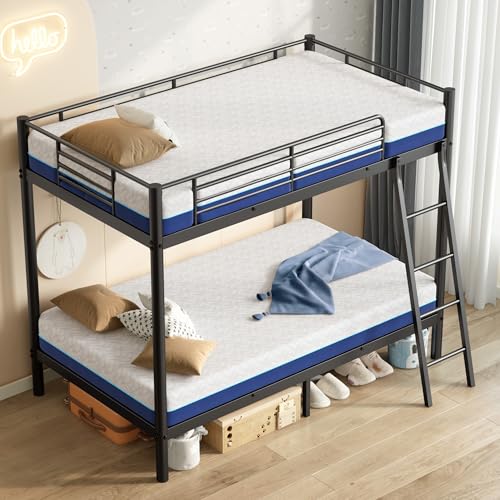
Cheap Twin Bunk Beds with Mattresses: Smart Space-Saving Picks
Everything you need to know before choosing an entry-level twin over twin bunk bed with mattresses included — frame materials, safety standards, mattress compatibility, and practical setup tips for small rooms.
Why this guide matters: Twin bunk beds with mattresses included are one of the most efficient ways to sleep two people in a compact footprint. But not all entry-level options are built the same. This guide walks you through frame construction, mattress pairing, safety features, and room layout so you can make a confident decision before adding a set to your cart.
Why Twin Bunk Beds with Mattresses Are a Smart Choice
Twin over twin bunk beds maximize vertical space without expanding the floor footprint. They are a practical solution for shared kids' rooms, guest rooms, vacation homes, dorm-style setups, and any space where two sleepers need to share a compact area. When the mattresses are included, you eliminate the guesswork of matching mattress thickness to the bunk's guardrail height and weight capacity.
Entry-level bunk bed sets have improved dramatically in recent years. Many now use reinforced metal slats, solid wood construction, and certified finishes that meet current safety guidelines. The key is knowing which specifications matter most so you can separate a solid build from a flimsy one.
If you are exploring broader bunk bed configurations beyond the twin over twin format, it helps to compare layouts side by side. Our guide to twin over full bunk beds for adults is useful if you need a larger lower berth, while full bunk beds covers wider sleeping surfaces for growing kids or teens. For very tight rooms, custom bunk beds for small rooms explains how to tailor dimensions to your wall space.
Frame Materials and Construction: What to Look For
The frame is the backbone of any bunk bed. Entry-level models typically use one of three materials: powder-coated steel, solid pine or rubberwood, or engineered wood with a laminate finish. Each has trade-offs in durability, assembly complexity, and weight capacity.
Metal Frames
Metal bunk beds are often the most straightforward to assemble and tend to hold up well in high-use settings. Look for high-grade steel tubing with a rust-proof finish, reinforced corner brackets, and slats that are welded rather than merely screwed. A heavy-duty metal frame with a central support bar is a strong indicator of a well-engineered build.
Wood Frames
Solid wood frames offer a warmer look and tend to be quieter under movement. Pine and rubberwood are common in the mid-tier and entry-level categories. Check that the slats are at least 2.5 inches wide and that the ladder is integrated into the frame rather than hooked on separately. A distressed white finish or natural stain can help the bed blend into existing decor.
Engineered Wood
Engineered wood with a laminate finish is often the most lightweight option. It can be a good fit for guest rooms or seasonal use, but it may not hold up as well to daily climbing and roughhousing. If you choose this route, verify the weight capacity and look for a manufacturer that specifies ASTM or CPSC compliance.
What Defines an Entry-Level Bunk Bed Set
Entry-level sets typically include the frame, slats, ladder, and two mattresses in a single package. They prioritize essential function over decorative detail. Expect simpler guardrails, a lighter frame, and standard foam or innerspring mattresses. These sets are a good value for their tier when the frame is reinforced and the mattresses meet current flammability and durability standards.
For a deeper look at how metal frames compare in different configurations, see our breakdown of metal frame bunk beds twin over full. If you prefer a lower overall profile for younger children, low bunk beds twin over twin covers designs that sit closer to the floor.
Mattress Compatibility: Thickness, Firmness, and Fit
When mattresses are included with a bunk bed set, the most important specification is thickness. Bunk bed guardrails are designed to sit at a safe height above the mattress surface. A mattress that is too thick can reduce the effective guardrail height and create a fall risk. A mattress that is too thin can leave gaps between the mattress and the frame.
Most twin bunk beds are designed for mattresses between 5 and 8 inches thick. Included mattresses in entry-level sets are typically in the 6-inch range. That thickness balances comfort with safety and keeps the top bunk guardrail effective.
Firmness Considerations
Bunk mattresses are often firmer than standard bed mattresses because a firmer surface distributes weight more evenly across the slats and reduces sagging over time. For children, a medium-firm feel is generally recommended. For adults using the lower bunk, a slightly softer top layer can improve comfort without compromising support.
If you are sourcing mattresses separately, our budget mattresses guide covers entry-level options that fit standard bunk dimensions. You can also explore bunk beds for adults with mattresses included if you need a set sized for larger sleepers.
Weight Capacity and Slat Support
Always check the per-bunk weight capacity. Entry-level sets often support around 200 pounds per bunk, while mid-tier and heavy-duty frames can support more. Slat spacing matters too: slats spaced more than 3.5 inches apart can allow a mattress to sink between them. Reinforced slats with a center support rail are a sign of a sturdier build.
Safety Features That Matter
Bunk bed safety is not optional, especially in households with young children. The following features are worth verifying before purchase:
- Full-length guardrails on the top bunk — the rail should extend at least 5 inches above the mattress surface and run along both the front and the ends of the bed.
- Sturdy ladder with wide rungs — a ladder that hooks securely to the frame and has flat, non-slip rungs is safer than a narrow, removable ladder.
- Rounded corners and sanded edges — sharp edges on metal or wood frames are a common source of minor injuries.
- Center support rail — this reduces flex in the middle of the frame and helps prevent sagging over time.
- Certified finishes — look for low-VOC or water-based finishes, especially in children's rooms.
If you are setting up a bunk bed for younger children, our guide to loft beds for kids explains how elevated sleep surfaces can be configured safely with the right guardrails and ladder placement.
Space Planning: Making a Twin Bunk Bed Work in Your Room
A twin over twin bunk bed typically measures about 78 inches long and 42 inches wide, with a height between 60 and 65 inches. That footprint fits comfortably in rooms that are at least 8 feet by 9 feet, leaving space for a dresser, a small desk, or a reading chair.
Ceiling height is the other critical factor. Leave at least 30 to 36 inches of clearance between the top mattress surface and the ceiling so the upper sleeper can sit up comfortably. If your ceiling is lower, a low-profile bunk bed or a low profile twin over full bunk bed may be a better fit.
Room Layout Tips
- Place the bunk bed against a solid wall to reduce wobble and improve stability.
- Keep the ladder side clear of furniture so it can be used safely at night.
- Use under-bed storage bins to reclaim the floor space beneath the lower bunk.
- Anchor the frame to the wall with the included anti-tip kit if one is provided.
For rooms that need to double as study or play areas, bunk beds with desk configurations combine sleeping and workspace in a single footprint. If storage is the priority, affordable bunk beds with storage covers options with built-in drawers and shelving.
Twin Bunk Bed Tiers at a Glance
Use this comparison to understand how bunk bed sets differ across quality tiers. The descriptors below are based on relative market positioning, not on numeric figures.
| Tier | Frame Material | Best For | Notable Features |
|---|---|---|---|
| Starter Tier | Powder-coated steel or engineered wood | Guest rooms, seasonal use, first bunk bed | Basic guardrails, included foam mattresses, simple ladder |
| Essential Tier | Solid pine or reinforced metal | Daily use in kids' rooms | Center support rail, wider slats, certified finish |
| Balanced Tier | Heavy-duty steel or hardwood | Teens and adults sharing a room | Higher weight capacity, integrated ladder, anti-tip kit |
| Top-Tier | Premium hardwood or commercial-grade steel | High-use households, vacation rentals | Reinforced corner brackets, noise-reduction design, premium mattresses |
If you are comparing wider configurations, full over full bunk beds for adults and full size over full size bunk beds explain how larger sleeping surfaces affect room layout and frame requirements.
Assembly and Setup Tips for a Smooth Build
Most twin bunk bed sets ship in one or two boxes and can be assembled in two to four hours with basic tools. A few practical tips can make the process easier:
- Assemble the frame in the room where it will be used, or in a nearby open space, to avoid squeezing it through doorways later.
- Sort hardware by step before starting; most kits include labeled bags.
- Tighten bolts in a diagonal pattern to keep the frame square.
- Check all connections after the first week of use, then every few months.
- Place the mattresses only after the frame is fully secured and the guardrails are in place.
If you are adding a bunk bed to a room that also needs seating, comfortable space-saving beds covers multi-functional options that combine sleeping and lounging.
Frequently Asked Questions
Are twin bunk beds with mattresses included safe for young children?
Yes, when the set meets current safety standards and the top bunk is used by children aged six and older. Verify that the guardrails extend at least 5 inches above the mattress and that the ladder is securely attached. Always use the recommended mattress thickness.
What mattress thickness works best for a twin bunk bed?
Most twin bunk beds are designed for mattresses between 5 and 8 inches thick. A 6-inch mattress is a common choice because it keeps the guardrail at a safe height while still providing adequate comfort and support.
Can adults use a twin bunk bed?
Many entry-level and mid-range twin bunk beds support adult sleepers, but it is important to check the per-bunk weight capacity. Adults who need more room may prefer a twin over full bunk bed for adults or a full over full bunk bed for adults.
How much space is needed around a twin bunk bed?
Leave at least 30 inches of clearance on the ladder side and 24 inches on the other sides for comfortable movement. A room measuring at least 8 feet by 9 feet is usually sufficient for a twin over twin bunk bed plus a small dresser.
Do bunk beds with included mattresses require a box spring?
No. Most bunk beds use a slat support system that is designed to hold the mattress directly. Adding a box spring can raise the mattress above the guardrail and create a safety hazard.
Ready to Compare Twin Bunk Bed Options?
Browse our curated selection of twin bunk beds with mattresses included. Each listing highlights frame construction, safety features, and mattress specifications so you can compare options at a glance.