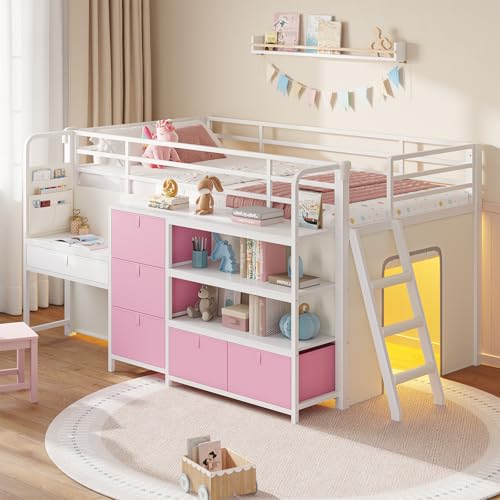
Children's Beds with Desk: The Smart Way to Combine Sleep and Study
If you are searching for a children's bed that does more than just provide a place to sleep, a bed with an integrated desk is one of the most practical choices available. This guide explains the main design types, what to look for in build quality and safety, and how to match a bed-desk combo to your child's age, room size, and daily routine.
Explore Recommended OptionsWhy a bed with a desk makes sense: As children grow, their bedrooms need to serve two big purposes at once — rest and study. A combined bed-and-desk unit frees up floor space, keeps homework supplies close at hand, and helps establish a clear routine where sleep and focus live side by side. Parents researching this category usually want to know which configuration suits their room, which materials hold up over years of use, and which safety features matter most.
The Main Types of Children's Beds with Desk
Bed-and-desk combinations come in several configurations, and the right one depends on ceiling height, room layout, and how much storage your child needs. Below are the most common designs, each described with a market-position descriptor rather than any specific figures, so the guidance stays useful over time.
Loft Bed with Desk Underneath
The bed sits elevated with the desk tucked below, creating a compact study nook without consuming extra floor area. This is the most popular configuration for school-age children because it separates sleeping space from work space vertically. Entry-level models often use a simple ladder and a fixed desk surface, while mid-range versions add guardrails, a wider desk, and built-in shelving.
Bunk Bed with Desk and Storage
A bunk arrangement where one level — often the lower bunk — is replaced or supplemented by a desk and drawer unit. These work well when two children share a room, or when a single child needs generous storage. Mid-range and premium bunk designs frequently include reversible ladders, under-bed drawers, and reinforced frames rated for heavier use.
Captain's Bed with Pull-Out Desk
The mattress sits on a raised platform with drawers beneath, and a desk surface extends or pulls out from the side. This style suits smaller rooms where a full loft feels too tall. It is a solid choice for younger children transitioning out of a toddler bed who still need a dedicated homework spot.
L-Shaped or Corner Bed-Desk Unit
An L-shaped layout wraps the bed and desk around a corner, maximizing wall space and leaving the center of the room open. These designs often appear in premium children's furniture lines and suit older children and teenagers who need a larger study surface and more privacy.
What to Look For Before You Choose
Because a bed-desk combo is a long-term purchase, the details of construction and safety matter more than surface styling. Use the checklist below as a buying framework; it applies to every configuration described above.
- Frame stability and weight rating: Look for reinforced joinery, metal-to-metal connections where possible, and a stated weight capacity that comfortably exceeds your child's current size. Heavy-duty and commercial-grade frames are worthwhile investments for bunk and loft designs.
- Guardrails and ladder safety: For any elevated bed, full-length guardrails on all open sides are essential. Ladders should have wide, non-slip steps and be securely attached — never rely on a leaning ladder alone.
- Desk surface size and height: The desk should be deep enough for a laptop, notebooks, and a lamp, and its height should suit your child's seated posture. Adjustable-height desks are feature-rich for their class and grow with the child.
- Material and finish: Solid wood and high-grade engineered wood with a durable, low-emission finish are the standard to aim for. Check that edges are rounded and that painted surfaces meet current safety standards for children's furniture.
- Storage integration: Drawers, shelves, and cubbies reduce clutter and keep study materials organized. Reversible or modular storage is a plus if the room layout may change.
- Ceiling clearance: Measure the distance from floor to ceiling before choosing a loft or high bunk. Your child should be able to sit up in bed and stand comfortably at the desk without ducking.
- Assembly and future flexibility: Check whether the bed can be split into separate pieces later — for example, a bunk that converts to a single bed plus a standalone desk. This extends the useful life of the furniture.
Matching the Design to Your Child's Age and Room
The best configuration changes as children grow. For younger children, a low captain's bed with a pull-out desk keeps everything within reach and reduces climbing risk. As they move into the school years, a loft bed with desk becomes practical because it delivers a full study area while preserving floor space for play. For siblings sharing a room, a bunk bed with storage or a solid wood bunk bed with desk solves both sleeping and study needs in one footprint. If you are also planning the rest of the room, our children's beds with trundle guide and children's bunk beds with drawers overview can help you compare storage options. For rooms where a desk is not the priority, small bunk beds remain a reliable space-saving alternative.
Room dimensions should drive the final decision. Measure wall lengths, door swing, and window placement before ordering. A corner or L-shaped unit can turn an awkward nook into a productive study zone, while a straight loft works best along a solid wall. Whichever layout you choose, keep at least a small circulation path around the bed and desk so the room does not feel cramped.
Safety, Durability, and Long-Term Use
Children's furniture takes daily wear, so build quality is not a detail to skip. Frames with reinforced brackets, rust-proof finishes on metal components, and solid build construction at stress points will hold up far better than lighter assemblies. Check that the desk is firmly anchored to the bed frame and that there are no exposed bolts or sharp edges at hand height. If the bed includes a ladder, confirm that the rungs are grooved or textured to reduce slipping, even in socks.
Durability also means adaptability. A bed-desk combination that can be reconfigured — a loft that detaches into a standalone desk, or a bunk that converts to two single beds — stays useful through growth spurts and room changes. This makes the purchase efficient in the long run and reduces the need to replace furniture every few years.
Frequently Asked Questions
What age is suitable for a loft bed with a desk?
Most manufacturers recommend loft beds for children around six years and older, once they can climb safely and follow routine instructions. Younger children do better with a low captain's bed or a bed with a pull-out desk that stays close to floor level.
Can a bed with a desk fit in a small bedroom?
Yes — that is often the main reason families choose one. A loft bed with a desk underneath uses vertical space instead of floor space, and corner or L-shaped units make efficient use of awkward walls. Always measure ceiling height and leave clearance for sitting and standing.
Is a bunk bed with a desk sturdy enough for daily use?
Mid-range and premium bunk designs with reinforced frames and metal-to-metal connections are built for daily use. Check the stated weight capacity and look for heavy-duty construction at the ladder and corner joints. Avoid lighter assemblies that flex or creak under load.
How do I keep the study area organized?
Choose a design with integrated drawers, shelves, or cubbies, and pair it with a simple desktop organizer. Keeping the desk surface clear of non-study items helps children focus, and storage built into the bed frame reduces clutter on the floor.
Choosing the Right Children's Bed with Desk
A children's bed with a desk is a practical, space-smart solution that supports both rest and study in one footprint. Start by matching the configuration to your child's age and room dimensions: a low captain's bed for younger children, a loft or bunk with desk for school-age kids, and a corner or L-shaped unit for older children who need a larger workspace. Then verify the safety features, frame stability, and material quality before you commit.
Once you have narrowed down the style, compare the specific models recommended below to see which combination of desk size, storage, and build quality fits your home. Each option is selected for its suitability in real family bedrooms, and viewing the details will help you confirm the right choice for your child.