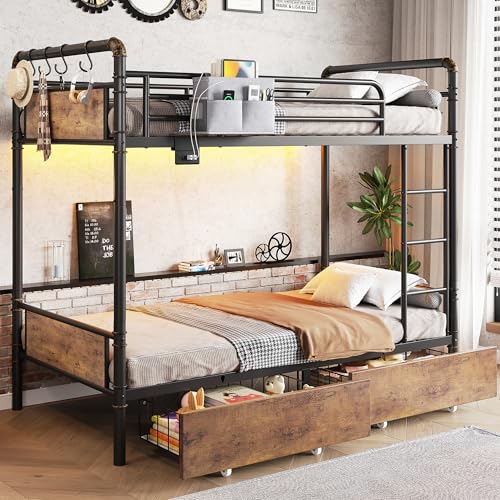
Convertible Bunk Beds with Storage: The Complete Buyer's Guide
Everything you need to know about multi-functional bunk beds that split into separate beds and include built-in storage — perfect for growing families, small rooms, and flexible guest spaces.
Why this guide matters: Convertible bunk beds with storage solve two common problems at once — limited floor space and limited storage. If you are researching this category, you already know you want a bunk bed that can adapt. This guide explains how these beds work, what to check before buying, and how to match a model to your room, your family, and your long-term needs.
What Are Convertible Bunk Beds with Storage?
A convertible bunk bed with storage is a sleeping system that combines three functions in one footprint: a stacked bunk configuration, the ability to separate into two independent beds, and integrated storage compartments. Unlike a fixed bunk bed, a convertible model gives you the option to reconfigure the furniture as your household changes — for example, when children grow older and prefer their own beds, or when a guest room needs to become a shared bedroom.
Storage is typically built into one or more areas: under-bed drawers, staircase compartments, side shelves, or a combination of all three. This makes these beds especially appealing for children's bunk beds with storage stairs, where the staircase itself becomes a usable storage zone rather than wasted vertical space.
Because convertible bunk beds are a long-term furniture investment, understanding the conversion mechanism, material quality, and storage layout before purchasing is essential. The sections below break each of these down.
Key Features to Look For
Not all convertible bunk beds with storage are built to the same standard. Use the feature checklist below to compare models on the factors that affect safety, durability, and day-to-day usability.
Conversion Mechanism
Look for a frame that separates cleanly into two standalone beds. Mid-range and premium models typically use reinforced brackets and interlocking posts, while entry-level options may rely on simpler bolt-through joints.
Storage Configuration
Drawers are best for clothing and bedding, while open shelves suit books and toys. Staircase storage offers the largest volume but requires a wider footprint. Match the storage type to what you actually need to store.
Stair vs. Ladder Access
Storage stairs are generally more stable and safer for younger children. Ladders take up less floor space but demand careful placement and adequate clearance.
Guardrails and Safety
Check guardrail height and coverage on the top bunk, plus the presence of a full-length rail on the upper level. Premium models often include reinforced guardrails with wider attachment points.
Material and Build
Solid wood and high-grade steel frames offer the best long-term durability. Engineered wood is common in mid-range models and can perform well when properly finished and reinforced.
Mattress Compatibility
Confirm the maximum mattress thickness the frame supports, especially for the top bunk where guardrail height matters. Most convertible designs specify a compatible mattress depth.
How the Conversion Works
The conversion feature is the defining characteristic of this bed category, and it is worth understanding before you buy. Most convertible bunk beds fall into one of three conversion types:
- Full separation: The top and bottom units detach completely to become two freestanding beds. This is the most flexible configuration and the most common in family-oriented designs.
- Twin-over-full conversion: The bunk starts as a twin-over-full arrangement and can be split into a twin bed and a full bed. This is useful for siblings of different ages. See convertible bunk beds twin over full for a closer look at this configuration.
- Twin-over-twin conversion: Both levels are the same size, making the split into two identical beds straightforward. This layout is popular for shared children's rooms — see convertible bunk beds twin over twin for configuration details.
When the bed is split, the storage components usually remain attached to the lower unit or the staircase section. Before purchasing, confirm whether the storage stays with one bed after conversion or whether it can be repositioned, as this affects how the two beds will be arranged in the room.
Buying tip: Ask whether the conversion requires tools and how long it takes. A well-designed mid-range or premium model can usually be split in under an hour with basic tools, while some entry-level designs require partial disassembly of the frame.
Storage Types Compared
The storage element is where most of the practical value of these beds lies. The table below compares the main storage configurations so you can match the bed to your room and your storage priorities.
| Storage Type | Best For | Space Impact | Typical Tier |
|---|---|---|---|
| Under-bed drawers | Clothing, bedding, and folded items | Low — uses existing under-bed clearance | Entry-level to mid-range |
| Storage staircase | Books, toys, and larger household items | Moderate — requires a wider footprint | Mid-range to premium |
| Side shelving | Display, small accessories, and bedside items | Low — uses vertical space | Mid-range |
| Combined drawers and stairs | Families needing maximum storage volume | Moderate to high — the largest footprint | Premium to high-end tier |
If storage volume is your top priority, a combined design with both staircase compartments and under-bed drawers offers the most usable space. If floor space is tighter, under-bed drawers and side shelving deliver practical storage without expanding the bed's footprint — similar in spirit to the space-conscious approach seen in compact bunk beds for small rooms.
Sizing and Room Planning
Convertible bunk beds with storage are larger than standard bunk beds because the storage elements add to the footprint. Before choosing a model, measure your room carefully and account for the following:
- Footprint including stairs or drawers: A storage staircase can add significant width. Leave clearance for drawers to open fully.
- Ceiling height: The top bunk needs adequate headroom for a seated or sleeping child. Check the recommended ceiling clearance in the product specifications.
- Conversion footprint: When the bed splits into two beds, the two units together may require more floor area than the bunk configuration. Plan where each bed will go after conversion.
- Door and window clearance: Avoid placing the bed where drawers or stairs block doors, windows, or heating vents.
For a room-by-room planning approach, the same principles that apply to children's beds for small rooms are useful here: prioritize circulation space over maximum storage volume, and place the bed against a solid wall where possible.
Safety Considerations
Bunk beds carry specific safety requirements that are more critical than those for standalone beds. When evaluating a convertible model with storage, pay attention to the following:
- Guardrail height and coverage: The top bunk should have guardrails on all open sides, with a height that accounts for the mattress thickness you plan to use.
- Stair stability: Storage stairs should be firmly attached to the frame, with non-slip treads and a handrail where possible.
- Weight capacity: Check the rated capacity for each level separately, since the top bunk often has a lower limit than the bottom.
- Corner and edge finishing: Rounded or chamfered edges reduce injury risk, particularly on staircase handrails and drawer fronts.
- Certification: Look for current safety standard compliance stated on the product listing.
For families with younger children, a storage staircase is often the safer and more comfortable choice than a vertical ladder. Models designed specifically as children's bunk beds with stairs usually include reinforced stair assemblies and higher guardrails.
Comparing Tiers: What Changes Across the Market
Convertible bunk beds with storage span a wide range of quality tiers. Rather than thinking in terms of numbers, it helps to understand what improves as you move up the market.
| Tier | Frame and Mechanism | Storage Build | Best For |
|---|---|---|---|
| Entry-level | Basic bolt-through joints; conversion requires more steps | Simple drawers with standard slides | Occasional use and short-term setups |
| Mid-range | Reinforced brackets; smoother separation process | Dovetailed drawers and integrated stair storage | Growing families and everyday use |
| Premium | Solid wood or high-grade steel; tool-light conversion | Soft-close drawers, full staircase compartments | Long-term daily use in shared bedrooms |
| High-end tier | Heavy-duty frame with lifetime-grade hardware | Custom storage layout; premium finishes | Frequent conversion and multi-purpose rooms |
Mid-range models generally offer the best balance of conversion smoothness, storage quality, and structural reinforcement. Entry-level models can work well for occasional or guest use, but if the bed will be converted regularly, the smoother mechanism of a mid-range or premium design is a worthwhile long-term investment.
Who Should Consider a Convertible Bunk Bed with Storage?
These beds are not the right fit for every household, but they excel in several specific situations:
- Shared children's bedrooms: When two children share a room but may eventually need separate beds, a convertible bunk bed delays the need to buy new furniture.
- Guest rooms and multi-use rooms: A bunk bed that splits into two beds is useful for a room that serves as both an office and a guest space.
- Small homes with limited storage: The integrated storage replaces the need for a separate dresser or shelving unit in tight rooms.
- Families planning for change: If you expect your household to evolve over the next several years, the flexibility of a convertible design reduces future furniture purchases.
If your room is very compact and conversion is not a priority, a fixed bunk bed with storage may be a more efficient choice. The broader category of convertible beds covers additional multi-purpose designs worth exploring if you want to compare options.
Ready to Compare Convertible Bunk Beds with Storage?
Now that you understand the conversion types, storage layouts, sizing rules, and safety checks, you are ready to evaluate specific models. Our recommended picks below are organized to help you compare features at a glance.
Frequently Asked Questions
What are convertible bunk beds with storage?
They are multi-functional bunk beds that can be separated into independent beds and include built-in storage such as drawers, shelves, or staircase compartments. They are designed for flexibility and space efficiency.
Can convertible bunk beds be separated into two beds?
Yes. Most convertible bunk beds are designed to split into two standalone beds. The conversion method varies by model, so confirm whether the split requires tools and how the storage components are redistributed afterward.
Are bunk beds with storage stairs safer than ladders?
Storage stairs generally provide a more stable and secure climb than vertical ladders, with wider treads and handrails. They are often recommended for younger children, though the overall safety of any bunk bed depends on guardrails, weight capacity, and proper assembly.
What should I check before buying a convertible bunk bed with storage?
Verify weight capacity for each level, guardrail height, stair or ladder stability, mattress thickness compatibility, and safety standard compliance. Also measure the room to confirm the bed's footprint — including the storage elements — fits comfortably.