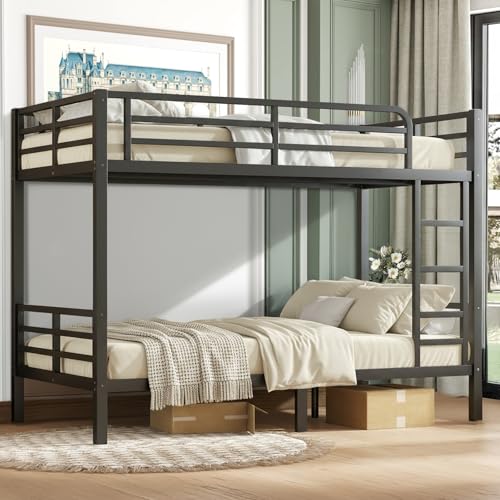
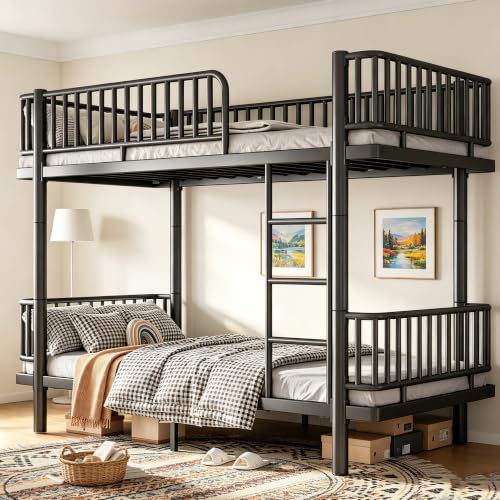
Heavy Duty Twin XL Bunk Beds for Adults: The Complete Buying Guide
Everything you need to know about durable adult-grade twin XL bunk beds — frame strength, weight capacity, safety, mattress fit, and how to choose the right model for your space.
Why twin XL bunk beds make sense for adults: A twin XL mattress offers five extra inches of length compared with a standard twin, making it a genuinely adult-friendly sleeping surface. When paired with a heavy-duty frame, a twin XL bunk bed delivers space-saving performance without compromising on support or safety.
Bunk beds are no longer reserved for children's rooms. Adults living in apartments, guest rooms, shared housing, cabins, and vacation properties increasingly turn to heavy duty twin XL bunk beds for adults as a practical way to sleep two people in the footprint of one bed. The key difference between a kids' bunk bed and an adult-grade model comes down to frame engineering, weight ratings, and safety detailing.
This guide walks through what separates a true heavy-duty adult bunk bed from a standard model, which materials and construction methods to prioritize, how to match mattresses to the frame, and the safety features that matter most. By the end, you will have a clear checklist for choosing a model that will hold up to daily adult use for years.
What Makes a Twin XL Bunk Bed "Heavy Duty"?
The term heavy duty is often used loosely, so it helps to know what actually distinguishes an adult-grade frame. A genuinely heavy-duty twin XL bunk bed typically includes:
- Reinforced frame construction — thick-gauge steel tubing or solid hardwood joinery rather than thin tubular metal or particle board.
- High weight capacity per bunk — adult-grade models commonly rate each sleeping surface at 400 pounds or more, with top-tier models supporting 500 pounds and above.
- Reinforced slat systems — closely spaced metal slats or thick wooden slats with center support rails to prevent sagging.
- Sturdy connection hardware — bolted joints, welded corners, and cross-bracing that resist wobble over time.
- Full-length guardrails on the top bunk, secured with reinforced brackets rather than simple pins.
- Weight-distributing legs — four to six legs with wide feet to spread load across the floor.
If a listing does not clearly state a per-bunk weight capacity, treat that as a warning sign. Reputable adult bunk bed makers publish weight ratings openly because it is one of the most important specifications buyers use to compare models.
Twin XL vs. Standard Twin: Why Length Matters
A standard twin mattress measures 38 inches wide by 75 inches long. A twin XL keeps the same 38-inch width but extends the length to 80 inches — matching the length of a queen or king mattress. For adults, that extra five inches makes a meaningful difference in comfort, especially for anyone taller than about 5 feet 10 inches.
The trade-off is that twin XL bedding, sheets, and mattress protectors are slightly less common than standard twin sizes, though availability has improved considerably as twin XL has become the default size in college dormitories and adult bunk setups. When shopping, confirm whether a bunk frame is built specifically for twin XL mattresses, since a standard twin mattress will leave a gap at the foot of a twin XL frame.
Frame Materials: Metal vs. Wood
Both metal and wooden frames can be engineered to heavy-duty standards, but they behave differently in practice:
| Material | Strengths | Considerations | Best For |
|---|---|---|---|
| Reinforced steel / metal | Very high weight capacity, minimal flex, slim profile, easy to clean | Can feel cooler to the touch; assembly hardware should be checked periodically | High-traffic rooms, rental properties, maximum durability |
| Solid hardwood | Warm aesthetic, quiet operation, excellent joinery strength when properly built | Heavier to move; quality depends heavily on wood species and joinery method | Primary bedrooms, guest rooms, design-focused spaces |
| Metal with wood accents | Balances strength and style; often feature-rich for its class | Check that the wood components are solid, not veneered particle board | Mixed-use rooms, styling flexibility |
For most adult buyers prioritizing long-term durability, a reinforced steel frame is the most straightforward path to a high weight capacity. Wooden frames can match that performance when built with solid hardwood and through-bolted joinery, but entry-level wooden bunks using particle board should be avoided for adult use.
Weight Capacity: What to Look For
Weight capacity is the single most important specification for adult bunk beds. As a general benchmark across the category:
- Entry-level tier: often rated around 250–300 pounds per bunk — generally intended for children and teens.
- Mid-range tier: commonly rated 350–450 pounds per bunk, suitable for most adults.
- Top-tier / commercial-grade: rated 500 pounds or more per bunk, built for daily adult use, guest houses, and hospitality settings.
Remember that weight capacity applies per sleeping surface, not to the bunk bed as a whole. A model rated at 500 pounds per bunk supports 1,000 pounds total across both bunks when properly assembled and placed on a level floor.
Safety Features That Matter for Adults
Adult bunk beds still require the same core safety engineering as children's models, even though adult users are more careful. Key features to verify:
- Guardrails on the top bunk — at least 5 inches above the mattress top, with no more than a 3.5-inch gap that could trap a limb.
- Secure ladder attachment — a ladder that hooks or bolts onto the frame rather than resting loosely.
- Anti-slip ladder rungs — flat, wide steps with textured surfaces are safer than thin round rungs.
- Corner bumpers or rounded edges — reduces injury risk in tight rooms.
- Center support rail — prevents mattress sagging and distributes weight evenly.
- Wall-anchoring kit — many adult bunk beds include or recommend anchoring to the wall for tip-over prevention.
Placement tip: Position the bunk bed so the ladder is not blocked by furniture and the top bunk is not directly beneath a ceiling fan or light fixture. Leave at least 30 inches of clearance above the top mattress for comfortable sitting up.
Mattress Fit and Thickness Guidelines
Mattress choice directly affects both comfort and safety on a bunk bed. For a twin XL bunk bed used by adults:
- Top bunk: choose a mattress between 6 and 8 inches thick. A thicker mattress can raise the sleeping surface above the guardrail, reducing its protective value.
- Bottom bunk: any standard twin XL mattress thickness works, though a medium-firm feel is generally recommended for adult back support.
- Firmness: medium-firm mattresses suit most adult sleepers and pair well with the rigid slat support typical of heavy-duty bunk frames.
- Material: memory foam, hybrid, and innerspring twin XL mattresses all work, provided the mattress meets the frame's thickness guidance for the top bunk.
If you are still deciding on mattress type, our guides to hybrid mattresses and general mattress selection can help narrow the options. Also confirm that the bunk frame's slat spacing is no more than about 3 inches for foam mattresses, or use a bunkie board for additional support.
Assembly, Maintenance, and Long-Term Care
Heavy-duty bunk beds are heavier and more complex to assemble than standard beds, so plan for a two-person assembly session of roughly one to two hours. A few maintenance habits will keep the frame solid for years:
- Re-tighten all bolts and connection hardware about a month after assembly, then check every six months.
- Inspect slats and center support rails periodically for cracks or bowing.
- Keep the ladder attachment points clean and free of debris.
- Use a mattress protector on both bunks to extend mattress life.
- Place the bed on a level floor; use furniture pads under the legs on hard surfaces to prevent scratching.
Who Should Choose a Heavy Duty Twin XL Bunk Bed?
Adult-grade twin XL bunk beds are a strong fit for several situations:
- Guest rooms and vacation rentals — sleep two adults comfortably in a small footprint.
- Apartments and shared housing — maximizes floor space in studios and small bedrooms.
- Cabins and bunkhouses — durable frames handle seasonal, high-traffic use.
- Teenagers transitioning to adult furniture — a twin XL frame will serve through the teen years and beyond.
- Multi-generational homes — provides flexible sleeping arrangements without a dedicated second bedroom.
If you need even more sleeping capacity, explore heavy duty triple bunk beds for adults, or compare with heavy duty metal bunk beds for adults and heavy duty wooden bunk beds for adults for material-specific options. Buyers prioritizing maximum structural strength may also want to review our broader guide to heavy duty bunk beds and high weight capacity bunk beds.
Final Buying Checklist
Before committing to a model, run through this checklist:
- Per-bunk weight capacity clearly stated and suitable for adult users (400+ pounds recommended).
- Frame material is reinforced steel or solid hardwood — not thin tubing or particle board.
- Full-length guardrails on the top bunk with a secure bracket system.
- Closely spaced slats with a center support rail.
- Ladder bolts or hooks securely to the frame.
- Fits twin XL mattresses (38" × 80") without gaps.
- Assembly hardware is included and clearly documented.
- Wall-anchoring kit available or included.
With these criteria in hand, you can evaluate any heavy duty twin XL bunk bed listing with confidence and choose a frame that will serve your household safely and reliably for years to come.
Frequently Asked Questions
What weight capacity should a heavy duty twin XL bunk bed for adults support?
Look for a per-bunk weight capacity of at least 400 pounds, with many top-tier models rated for 500 pounds or more per sleeping surface. The frame should use reinforced steel or solid hardwood joinery to support adult users safely.
Are twin XL bunk beds long enough for adults?
Yes. A twin XL mattress measures 38 inches wide by 80 inches long, giving adults five extra inches of legroom compared with a standard twin. This makes twin XL bunk beds a practical choice for teenagers and adults alike.
What mattress thickness works best for adult bunk beds?
For the top bunk, a mattress between 6 and 8 inches thick is typically recommended to keep the guardrail effective. For the bottom bunk, any standard twin XL mattress thickness works, though medium-firm support is ideal for adults.
Can two adults sleep comfortably on a twin XL bunk bed?
Yes, provided the frame is rated for adult use. Each twin XL sleeping surface is a full adult-length bed, so two adults can sleep comfortably on separate bunks. The key is choosing a model with a high enough weight capacity for the heavier sleeper.
Compare Top-Rated Adult Twin XL Bunk Beds
Browse our curated selection of heavy-duty twin XL bunk beds designed for adult sleepers.
View Recommended Models