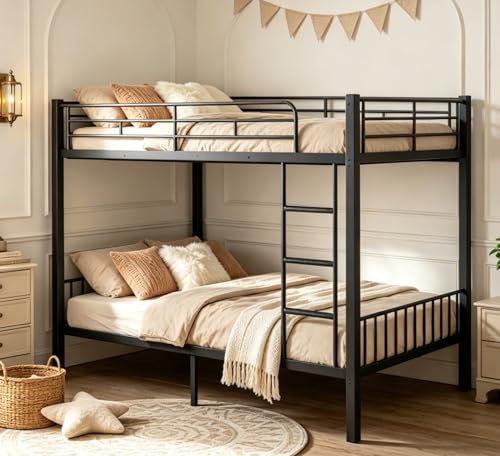
High Weight Capacity Bunk Beds: A Complete Heavy-Duty Buying Guide
Learn how to choose reinforced, heavy-duty bunk beds that safely support adults and heavy sleepers. Compare materials, frame designs, weight ratings, and safety features before you decide.
EXPLORE HEAVY-DUTY OPTIONSWhy this guide matters: Standard bunk beds are often designed for children, with modest weight limits and lighter frames. If you are an adult, a heavier sleeper, or you need a bed for a guest room or shared space, a high weight capacity bunk bed is a safer and more durable choice. This guide explains what to look for so you can buy with confidence.
What Are High Weight Capacity Bunk Beds?
High weight capacity bunk beds are engineered with reinforced frames, thicker steel or hardwood, and stronger fastening systems than standard bunk beds. They are built to accommodate heavier sleepers — often adults — on both the upper and lower bunks without compromising stability or safety. Instead of a single lightweight rail, these beds typically use double-sided ladders, full-length guardrails, and cross-bracing underneath the mattress platform.
These beds are especially useful in guest rooms, vacation homes, dormitories, and multi-person households. A robust bunk bed frame also reduces wobble and squeaking over time, which makes it a long-term investment in comfort and quiet. If you are comparing different adult-oriented bunk configurations, you may also want to review heavy-duty bunk beds for adults and heavy-duty metal bunk beds for adults for additional context on frame styles.
Key Features That Define a Heavy-Duty Bunk Bed
Reinforced Frame Construction
Look for thick-gauge steel or solid hardwood frames with corner braces and center support legs. These distribute weight evenly and prevent flexing under load.
Higher Weight Ratings
Heavy-duty models typically advertise per-bunk weight ratings well above standard child bunk beds. Always verify the upper and lower bunk ratings separately.
Full-Length Guardrails
Safety rails on the upper bunk should extend along most of the mattress length and sit high enough to prevent accidental rolls.
Secure Ladder Attachment
A sturdy ladder with wide, textured steps and a firm hook or bolt-on connection reduces the risk of slips and wobble.
Thick Mattress Support Slats
Wider, closely spaced slats — or a solid metal grid — prevent sagging and extend mattress life under heavier loads.
Anti-Slip and Anti-Squeak Design
Non-slip mattress surfaces and reinforced joints keep the bunk quiet and stable during the night.
Frame Materials Compared
The material of a bunk bed frame directly affects its strength, weight capacity, and longevity. Below is a comparison of the most common options for high weight capacity bunk beds.
| Material | Strength & Durability | Best For | Tier Positioning |
|---|---|---|---|
| Heavy-Gauge Steel | Excellent — resists bending and wobble under heavy loads | Adults, heavy sleepers, shared rooms | Professional-grade to top-tier |
| Solid Hardwood (Oak, Maple) | Very strong with proper joinery and reinforcement | Warm aesthetic plus heavy-duty support | Premium to high-end tier |
| Engineered Wood with Steel Core | Good balance of rigidity and design flexibility | Guest rooms and style-conscious setups | Mid-range to premium |
| Standard Metal Tube | Moderate — may flex under heavier adults | Lightweight users and occasional use | Entry-level to mid-range |
For a deeper look at steel-based options, see heavy-duty metal bunk beds twin over twin and heavy-duty bunk beds. If you prefer a natural wood finish, heavy-duty wooden bunk beds for adults covers joinery and finish considerations.
Understanding Weight Capacity Before You Buy
Weight capacity is the single most important specification to check when shopping for a high weight capacity bunk bed. Most manufacturers list a per-bunk rating, which means the upper and lower bunks may have different limits. Pay attention to the following:
- Upper bunk rating: Often lower than the bottom bunk because the upper platform must support both the sleeper and the guardrail system. Confirm the exact figure in the product manual.
- Lower bunk rating: Usually the highest, but still worth verifying — some frames rely on the floor for the lower bunk and a separate rail system for the top.
- Combined load: The total weight of two sleepers plus mattresses should not exceed the manufacturer's stated limits.
- Mattress thickness: A thicker mattress on the upper bunk can raise the sleeper above the guardrail. Match mattress height to the frame's recommended maximum.
Never assume that a bunk bed labeled "heavy-duty" has the same rating on both levels. When in doubt, check the included documentation or contact the manufacturer. For a wider range of reinforced frames, browse heavy-duty bunk beds with storage and heavy-duty full over full bunk beds.
Safety first: Always assemble the bunk bed exactly according to the manufacturer's instructions, use the included anti-tip hardware, and place the bed on a level floor. If the bunk bed will be used by children, confirm that it meets the relevant safety standard for your region.
Types of High Weight Capacity Bunk Beds
Twin-Over-Twin Heavy-Duty Bunks
These are the classic bunk configuration and the most common choice for adult-safe setups. Twin-over-twin frames with reinforced steel or hardwood offer excellent support and fit neatly into standard bedrooms. See heavy-duty bunk beds twin over twin for more details.
Full-Over-Full Heavy-Duty Bunks
Full-over-full bunk beds provide more sleeping space on each level and are popular in guest rooms and vacation homes. Because they are larger and heavier, they require particularly robust frames and careful assembly. Explore heavy-duty full over full bunk beds for configuration ideas.
Twin XL and Extended Bunks
Twin XL bunk beds add extra length, making them suitable for taller adults. Heavy-duty twin XL options combine the extra length with reinforced steel construction. Learn more at heavy-duty twin XL bunk beds and heavy-duty twin XL bunk beds for adults.
Loft Beds for Adults
A heavy-duty loft bed lifts the sleeping platform to free up floor space below. These are ideal for home offices, studios, and small apartments. Browse heavy-duty loft beds for adults and full size wooden loft beds for adults for inspiration.
Triple Bunks
Triple bunk beds stack three sleeping spaces in one footprint — a space-saving solution for large households and rental properties. Because the upper bunks are higher, heavy-duty triple bunks require exceptionally sturdy frames and strict adherence to assembly instructions. See heavy-duty triple bunk beds for adults.
How to Choose the Right Heavy-Duty Bunk Bed
- Measure your room and ceiling height. Leave enough headroom above the upper bunk and account for the ladder's footprint. A loft or high bunk may not fit under a low ceiling.
- Confirm the weight rating per bunk. Match the rating to the heaviest intended sleeper on each level, with a safety margin.
- Decide between metal and wood. Steel frames typically offer the highest strength-to-profile ratio, while hardwood suits warmer interior styles. Both are available in heavy-duty versions.
- Check the mattress support system. Closely spaced metal slats or a solid platform prevent sagging. Avoid frames with widely spaced, thin slats.
- Prioritize safety features. Look for full-length guardrails, a sturdy ladder, and anti-tip brackets. Confirm the frame meets relevant safety standards.
- Plan for assembly and space. Heavy-duty frames are heavier and may require two people to assemble. Review the manual before purchase.
- Consider storage and style. If floor space is limited, a storage bunk or loft may be more practical. For design ideas, see high-end bunk beds for adults and high-quality bunk beds for adults.
Safety and Assembly Tips
- Assemble the bunk bed on a level floor and tighten all bolts and screws securely. Re-check fasteners after the first week of use.
- Use the anti-tip hardware supplied by the manufacturer to secure the frame to a wall if recommended.
- Place the bunk bed away from ceiling fans, light fixtures, and windows to avoid injury.
- Keep the ladder clear of obstructions and ensure the rungs are clean and dry.
- Do not allow more than one person on the upper bunk, and do not use the upper bunk for storage.
- Inspect the frame periodically for loose joints, bent rails, or worn hardware.
- Choose a mattress that fits the bunk platform snugly without gaps.
Who Should Consider a High Weight Capacity Bunk Bed?
Heavy-duty bunk beds are a smart choice for a wide range of households:
- Adults sharing a room: Reinforced frames support adult sleepers on both levels.
- Guest rooms and vacation homes: A durable bunk bed accommodates varying guests without wear and tear.
- Large families and multi-person households: Triple bunks and full-over-full bunks maximize sleeping space.
- Rentals and shared housing: Sturdy frames hold up to frequent use and reduce maintenance.
- Small apartments: Loft and storage bunk options free up floor space while keeping a high weight rating.
If you are outfitting a guest room, you may also find useful ideas in guest room beds for small spaces and guest bed ideas.
Heavy-Duty Bunk Bed Styles at a Glance
| Style | Best For | Key Strength | Considerations |
|---|---|---|---|
| Twin-Over-Twin Heavy-Duty | Guest rooms, adult shared rooms | Compact footprint with strong per-bunk ratings | Limited width per sleeper |
| Full-Over-Full Heavy-Duty | Families, vacation homes | More sleeping space per level | Requires more floor and ceiling space |
| Twin XL Heavy-Duty | Taller adults and teens | Extra length plus reinforced frame | Specialty mattress size |
| Heavy-Duty Loft | Small apartments, studios | Frees floor space below | Climbing ladder required; check ceiling height |
| Triple Bunk | Large households, rentals | Three sleeping spaces in one footprint | High upper bunk; strict assembly required |
Frequently Asked Questions
What weight capacity should I look for in a high weight capacity bunk bed?
Look for a per-bunk rating that comfortably exceeds the weight of the intended sleeper on each level. Heavy-duty adult bunk beds generally advertise significantly higher ratings than child-focused models. Always verify the upper and lower bunk limits separately in the product documentation.
Are metal or wooden bunk beds stronger?
Both can be very strong when properly engineered. Heavy-gauge steel frames typically offer the highest strength-to-profile ratio and resist flexing well, while solid hardwood frames with reinforced joinery provide excellent durability and a warmer aesthetic. The construction details matter more than the material category alone.
Can adults safely sleep on the top bunk?
Yes, if the bunk bed is specifically rated for adults and the upper bunk's weight capacity is respected. Check the guardrail height, confirm the ladder is secure, and ensure the frame is assembled according to the manufacturer's instructions.
What mattress thickness is safe for the upper bunk?
The mattress should fit the platform snugly and not exceed the height recommended by the manufacturer — typically the top of the mattress should sit below the guardrail. A mattress that is too thick can raise the sleeper above the safety rail.
How do I reduce squeaking in a bunk bed?
Re-tighten all bolts and screws after assembly, add felt pads or rubber washers at metal-to-metal contact points, and place the bed on a level floor. Choosing a frame with reinforced joints and anti-squeak design also helps over the long term.
Do heavy-duty bunk beds require two people to assemble?
Most heavy-duty frames are heavier and larger than standard bunk beds, so two people are strongly recommended for safe assembly. Review the manual before starting and allow enough time to complete the process carefully.