Home Office Beds: Smart Solutions for Work and Rest
Maximize every square foot with dual-purpose furniture. Whether you're setting up a guest room that doubles as a workspace or converting a studio apartment, our guide covers everything you need to choose the right home office bed.
Explore Bed TypesWhy Home Office Beds Matter
The modern home is constantly evolving. Remote work has transformed spare bedrooms, studio apartments, and even living rooms into dual-purpose spaces. A home office bed allows you to maintain a productive workspace during the day while providing a comfortable sleeping area when needed—without dedicating an entire room to either function.
This approach is particularly valuable for homeowners in urban areas where square footage comes at a premium, families hosting frequent guests, and professionals who need a dedicated work zone but still want their space to feel livable. The right home office bed eliminates the awkwardness of inflatable mattresses in the living room and the stiffness of sleeping on a cramped sofa.
Key Insight: The most successful home office beds prioritize one function while accommodating the other. Decide whether your room is primarily a workspace that occasionally hosts guests, or a bedroom that needs a functional desk area—then choose your furniture accordingly.
When evaluating options, consider how frequently each function will be used. Daily remote workers need a workspace that supports long hours of focus, while occasional overnight guests may only need a comfortable, supportive sleep surface a few times per year. This balance determines whether you should invest in a flagship-tier Murphy bed system or a mid-range sofa bed with a pull-out mechanism.
For those exploring broader workspace furniture options, our home office guide covers desks, chairs, and storage solutions that complement a dual-purpose room.
Types of Home Office Beds
Not every space-saving bed works the same way. Below is a breakdown of the most popular home office bed types, their strengths, and the scenarios where each excels.
Murphy Beds (Wall Beds)
Murphy beds fold vertically into a wall-mounted cabinet, freeing up the entire floor area when not in use. Many models integrate a fold-down desk or shelving, making them a true work-sleep hybrid. Entry-level Murphy beds typically use spring or piston mechanisms, while mid-range and premium models offer smoother pneumatic lifts and reinforced frames for daily operation.
- Best for: Studios, guest rooms, and any room where the bed should completely disappear during the day
- Considerations: Requires wall anchoring and sufficient ceiling height; professional installation is recommended for safety
- Tier options: Entry-level models work well for occasional guests; premium systems are ideal for daily use
Loft Beds with Desk Space
A loft bed elevates the sleeping surface, creating room underneath for a desk, chair, and storage. This vertical approach is especially effective in rooms with high ceilings. Loft beds are available in metal, wood, and upholstered finishes, with some designs featuring built-in shelving and drawers.
- Best for: Teen rooms, dorm-style setups, and compact apartments with vertical clearance
- Considerations: The ladder or stair access takes getting used to; not ideal for sleepers with mobility concerns
- Tier options: Heavy-duty metal frames offer durability for daily use; wooden designs blend better with traditional decor
Sofa Beds and Sleeper Sofas
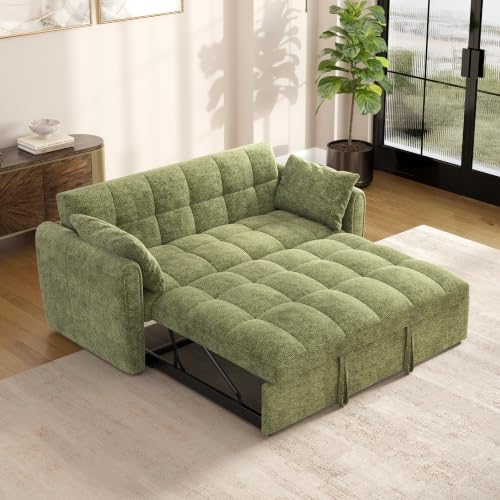
Sofa beds provide seating during the day and convert into a sleeping area at night. Modern sleeper sofas with memory foam or hybrid mattresses have largely solved the comfort complaints of older designs. These work well in multi-use spaces where the room needs to function as a lounge, office, and guest room.
- Best for: Living rooms that double as guest spaces and home offices with limited wall space
- Considerations: Daily conversion can wear on mechanisms; look for reinforced frames and quality mattress layers
- Tier options: Entry-level models suit occasional overnight stays; high-end sofa beds offer proper mattress construction for frequent use
Futon Beds and Futon Bunks
Futons remain a practical option for flexible spaces. A futon bunk bed combines a sofa-like lower level with an upper sleeping platform, effectively creating three zones—seating, sleeping, and storage—in a single footprint. These work well for students, young adults, and casual guest rooms.
- Best for: Casual guest rooms, teen spaces, and hobby rooms that need versatility
- Considerations: Futon mattresses vary widely in comfort; choose a firm, supportive model for regular sleeping
- Tier options: Steel-frame futons are durable and straightforward; wooden designs offer a warmer aesthetic
Adjustable Beds with Work-Friendly Positions
Adjustable beds allow you to raise the head and foot sections for reading, watching TV, or working in bed. While not a space-saving solution in the traditional sense, they can reduce the need for a separate desk in small rooms. Top-tier adjustable beds offer programmable positions and massage features that support both relaxation and productivity.
- Best for: Small studio apartments and anyone who prefers working from a reclined position
- Considerations: Requires a compatible mattress; not a substitute for a proper desk for long work sessions
- Tier options: Mid-range adjustable beds cover basic positioning; premium models add memory presets and zero-gravity settings
If you're furnishing a guest space rather than a dedicated office, explore our guest bed ideas for additional inspiration on making visitors comfortable.
How to Choose the Right Home Office Bed
Selecting a home office bed requires balancing space constraints, usage frequency, and comfort. Use the following framework to narrow your options.
1. Measure Your Space Accurately
Before browsing any product, measure the room's length, width, and ceiling height. For Murphy beds, confirm that the wall you plan to use has adequate structural support and that the folded bed won't obstruct doorways or light switches. For loft beds, ensure at least 30 inches of clearance between the top mattress and the ceiling.
2. Define Your Primary Use
Ask yourself: Will someone sleep in this room every night, or only a few times a month? The answer determines the quality tier you should target. Daily sleepers need a proper mattress and a robust mechanism; occasional guests can be well-served by a mid-range sofa bed or futon. If the room is primarily a home office, prioritize desk ergonomics and choose a bed that stows away completely.
3. Consider Conversion Effort
How much effort are you willing to invest in transforming the room from office to bedroom? Murphy beds typically require clearing floor space and unlatching a mechanism—a two-minute process. Sofa beds involve removing cushions and pulling out a frame. Loft beds are permanent installations. Choose a conversion process you'll realistically maintain.
4. Evaluate Build Quality and Safety
Look for reinforced frames, high-grade steel hardware, and weight ratings that exceed your expected use. Murphy bed mechanisms should have safety locks to prevent accidental folding. Loft beds need secure guardrails and stable ladder attachments. Heavy-duty models are worth the investment for daily use—entry-level options suffice for occasional setups.
| Bed Type | Space Efficiency | Comfort Level | Best For |
|---|---|---|---|
| Murphy Bed | Excellent (folds into wall) | High (standard mattress) | Studios & guest rooms |
| Loft Bed | Very good (vertical use) | High (standard mattress) | Teen rooms & dorms |
| Sofa Bed | Good (seating + sleep) | Moderate to high | Living room combos |
| Futon Bunk | Very good (multi-zone) | Moderate | Casual guest spaces |
| Adjustable Bed | Moderate (fixed footprint) | High (customizable) | Small studios |
Pro Tip: If you're deciding between a Murphy bed and a sofa bed, consider the room's primary identity. A Murphy bed signals "this is a bedroom that can host work," while a sofa bed signals "this is a living space that can host guests." The right choice depends on how you want the room to feel day to day.
Choosing the Right Mattress for a Home Office Bed
The mattress you pair with your home office bed has a significant impact on comfort and longevity. Different bed types impose different constraints.
Murphy Beds
Most Murphy beds accommodate standard mattresses up to 10–12 inches thick. Innerspring and hybrid mattresses work well, but memory foam models are often preferred because they conform without the rigid edges that can interfere with folding. Look for a mattress with a sturdy edge support system if the bed will be used frequently.
Sofa Beds
Sofa bed mattresses are typically thinner and designed to fold. If your sofa bed sees regular use, consider upgrading to a replacement mattress with higher-density foam or a hybrid construction. These upgrades dramatically improve comfort without requiring a new frame.
Loft Beds
Loft beds accept standard twin, full, or queen mattresses depending on the frame size. Ensure the mattress thickness doesn't exceed the guardrail height—typically 6–8 inches above the mattress top is the safety standard.
Adjustable Beds
Adjustable beds require flexible mattresses, usually memory foam or latex. Innerspring mattresses are generally incompatible unless specifically rated for adjustable use. Check the bed's documentation for approved mattress types.
For a deeper dive into mattress construction and firmness options, see our hybrid mattresses guide, which explains how different materials affect sleep quality and durability.
Setup and Space Planning Tips
Even the best home office bed underperforms if the surrounding space isn't planned well. Consider these practical guidelines when arranging your dual-purpose room.
- Zone the room clearly: Use rugs, lighting, or furniture placement to distinguish the workspace from the sleeping area. This helps your brain switch between "work mode" and "rest mode."
- Prioritize natural light for the desk: Position your workspace near a window if possible, but keep the bed away from direct glare if it doubles as a screen area.
- Choose multi-functional storage: A fully assembled bedside table can serve as a nightstand during sleep hours and a document or device organizer during work hours.
- Keep conversion paths clear: If you're using a Murphy bed, ensure the floor area in front of it remains unobstructed. Avoid placing heavy furniture in the bed's swing path.
- Invest in blackout curtains: A workspace needs natural light, but a bedroom needs darkness. Layered window treatments let you control the environment for both functions.
- Test the layout with tape: Before assembling furniture, mark the bed's open and closed footprint on the floor with painter's tape. This reveals conflicts you might miss on a floor plan.
For small-space inspiration beyond the bed itself, our guest room beds for small spaces collection covers additional compact solutions.
Ready to Transform Your Space?
Browse our curated selection of home office beds and find the perfect balance between productivity and rest.
View Recommended Products