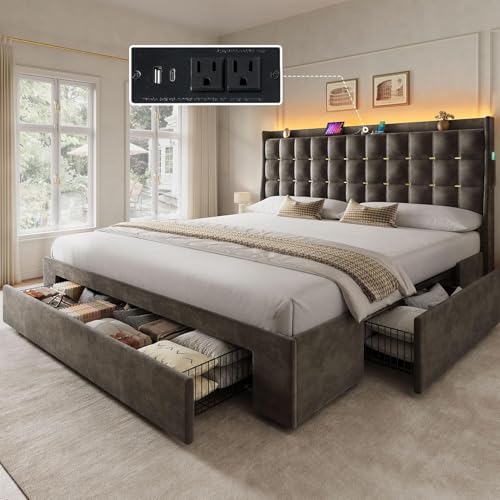
King Size Storage Beds: The Complete Buying Guide
Maximize your bedroom space without compromising on comfort. Learn how to choose a king size storage bed that matches your mattress, room layout, and daily routine.
Explore Top PicksWhy a king size storage bed? A king bed already dominates a bedroom footprint. Adding integrated storage transforms that footprint into a dual-purpose asset — sleeping surface plus wardrobe. For anyone researching this category, the real challenge is not finding storage, but choosing the right type of storage, the right mechanism, and a frame that will remain sturdy for years of nightly use.
What Makes a King Size Storage Bed Different?
A king size storage bed is fundamentally a king bed frame engineered with an internal storage cavity. Three broad architectures dominate the market, and each solves a different problem:
- Lift-up storage beds — A hydraulic or gas-lift platform raises the entire mattress, exposing a continuous storage well beneath. This design usually offers the largest single storage volume, ideal for bulky items such as extra bedding, seasonal clothing, or travel bags.
- Drawer storage beds — Two, three, or four drawers built into the base, accessed from the sides or foot of the bed. Drawers suit daily-access items like pajamas, socks, or reading materials, and they avoid lifting a heavy king mattress.
- Combination and platform storage beds — A platform bed with a reinforced slat system plus drawers or a partial lift section. These models balance a cleaner profile with practical storage.
For buyers weighing alternatives, our broader guide to beds with lift-up storage explains how hydraulic mechanisms compare across frame types, while beds with storage drawers covers drawer count, glides, and depth.
Storage Types Compared: Lift-Up vs. Drawers
| Storage Type | Best For | Typical Tier | Considerations |
|---|---|---|---|
| Hydraulic lift-up | Bulky seasonal items, full-footprint storage | Mid-range to premium | Requires clearance to raise the mattress; check lift-assist rating |
| Side drawers (2–4) | Everyday clothing, bedside essentials | Entry-level to mid-range | Needs side clearance for drawer travel |
| Foot-end drawers | Rooms with limited side space | Entry-level to mid-tier | Access can be tight if the bed sits near a wall |
| Combination lift + drawers | Maximum flexibility and organization | Premium to luxury | Heavier frame; verify assembly and slat support |
If your priority is a bed that doubles as a full wardrobe, a lift-up mechanism is usually the most efficient use of the footprint. If you prefer not to move the mattress at all, drawer-based designs remain the more ergonomic everyday option.
Frame Materials and Build Quality
A king mattress is heavy, and storage beds carry additional mechanical stress. Material choice directly affects longevity:
- Solid wood frames — Typically oak, pine, or rubberwood. Durable construction with a warm, traditional finish. Look for reinforced corner joints and a center support rail, especially on king sizes.
- Engineered wood and MDF — Common in entry-level and mid-range models. Modern finishes can look polished, but verify the weight rating and whether the base includes a center support leg.
- Metal frames — High-grade steel frames are strong and space-efficient. Pair with a solid slat system to prevent mattress sagging.
- Upholstered bases — Padded fabric or leather bases add visual softness. These tend to sit in the premium to luxury tier and often include lift-up storage.
For readers who also care about the visual style, our guide to modern storage beds explores cleaner silhouettes, while modern storage beds with drawers focuses on drawer-integrated contemporary designs.
Key Features to Check Before You Buy
- Weight capacity and center support — King frames should include a center rail and at least one center support leg. Confirm the stated capacity covers your mattress plus occupants.
- Slat system — Closely spaced, reinforced slats protect the mattress and distribute load. Some lift-up models use a solid platform instead.
- Mechanism rating — For lift-up beds, check the hydraulic or gas-lift rating. Higher-tier mechanisms feel smoother and hold position more reliably.
- Drawer glides — Metal ball-bearing glides outperform simple wood-on-wood runners. Soft-close hardware is common in premium models.
- Assembly complexity — King storage beds are large. Look for clearly labeled parts, included tools, and manufacturer assembly videos.
- Clearance dimensions — Measure side clearance for drawers and overhead clearance for lift-up models before ordering.
Pro tip: If you are upgrading from a smaller bed, review a king size bed with frame guide first. Storage beds add depth and height, so room layout planning should happen before purchase, not after delivery.
Room Planning: Will a King Storage Bed Fit?
A standard king mattress measures approximately 76 inches wide by 80 inches long. Storage beds add several inches of frame depth on all sides. Practical planning steps:
- Maintain at least 24 inches of walking clearance on the sides you use most.
- For drawer models, add the drawer travel distance to your side clearance calculation.
- For lift-up models, ensure nothing hangs directly above the bed that could obstruct the raised platform.
- Place the bed so that drawer access is not blocked by nightstands or dressers.
Complementary pieces matter too. A pair of matching bedside tables improves the layout — see our guide to king size beds with bedside tables for proportion guidance, and rugs under king size beds for floor planning.
Matching the Bed to Your Sleep Style
Storage should not come at the expense of sleep support. Couples with different firmness preferences may prefer a slatted platform that accommodates a split or dual-firmness mattress. Side sleepers should confirm that the frame's slat spacing supports a pressure-relieving mattress without sagging. Back and stomach sleepers typically benefit from a firmer slat base with minimal flex. If you are still deciding on the mattress itself, compare frame depth and mattress thickness so the finished bed height stays comfortable for getting in and out.
Maintenance and Longevity Tips
- Vacuum the storage cavity every few months to prevent dust buildup.
- Lubricate hydraulic lift mechanisms according to the manufacturer's schedule.
- Check and tighten bolts after the first month, then annually.
- Avoid overloading drawers beyond their stated capacity.
- Use a mattress protector to keep the sleeping surface clean and reduce the need to move the mattress.
How to Choose: A Quick Decision Framework
Use this simple sequence to narrow your options:
- Decide storage priority — bulky items (lift-up) or daily-access items (drawers).
- Measure the room — side clearance, drawer travel, and overhead clearance.
- Set your tier — entry-level, mid-range, premium, or luxury, based on mechanism quality and material.
- Confirm support — center rail, support legs, and slat spacing.
- Check assembly and warranty — especially for hydraulic components.
If you are also refreshing the surrounding bedroom, our modern dresser and modern bedroom bench guides help complete a cohesive layout without duplicating storage.
Frequently Asked Questions
What is a king size storage bed?
A king size storage bed is a king-sized bed frame that integrates built-in storage, typically as under-bed drawers, a lift-up hydraulic platform, or a combination of both. It maximizes bedroom space by turning the area beneath the mattress into functional storage.
Are king size storage beds sturdy enough for heavy mattresses?
Yes. High-end tier and professional-grade models use reinforced slats, high-grade steel mechanisms, and solid wood construction rated for the weight of premium king mattresses. Always check the manufacturer's weight capacity and assembly instructions.
How much storage space does a king storage bed provide?
A lift-up king storage bed typically offers the full footprint of the mattress as continuous storage, while drawer-style beds usually provide two to four deep drawers. Exact capacity depends on the design tier and frame depth.
Do king size storage beds require a box spring?
Most modern king size storage beds use a slatted platform and do not require a box spring. Lift-up models often work best with a mattress only. Always confirm the manufacturer's recommendation for your specific model.
Can a king storage bed be used in a small bedroom?
Yes, but planning matters. Drawer models need side clearance, while lift-up models need overhead clearance. In tight rooms, foot-end drawers or a lift-up design with a single access side can work well. Measure carefully before ordering.