Lightweight Furniture: The Complete Guide to Easy-Move Beds & Bedroom Pieces
If you have ever struggled to rearrange a bedroom or move a heavy bed frame up a narrow stairwell, lightweight furniture is the practical answer. This research-based guide explains how lightweight bedroom furniture is built, which materials and joinery to look for, and how to choose pieces that stay stable and durable while remaining easy to move.
Explore Lightweight PicksWhat Counts as Lightweight Furniture?
Lightweight furniture is not a single category — it is a design philosophy. A piece qualifies as lightweight when its total weight has been reduced through material choice, hollow-core construction, or smart engineering, without compromising the structural integrity needed for daily use. In the bedroom, this usually means bed frames built from aluminum, thin-profile steel, or engineered wood, plus nightstands and dressers that use hollow panels or canvas-and-frame construction.
The goal is simple: furniture you can reposition alone, carry through doorways, and move between rooms or apartments without hiring help. That matters for renters, apartment dwellers, students, older adults, and anyone who rearranges their space seasonally. For a broader look at compact bedroom concepts, our guide to Japanese beds shows how low-profile, minimal-footprint designs pair naturally with lightweight construction.
Who Benefits Most from Lightweight Bedroom Furniture
Understanding whether lightweight furniture suits your situation is the first step in a smart purchase. The table below maps common living scenarios to the type of lightweight piece that tends to work best.
| Living Situation | Why Lightweight Helps | Best-Suited Pieces |
|---|---|---|
| Renters who move often | Reduces moving effort and damage risk to walls and floors | Aluminum or thin-steel bed frames, folding nightstands |
| Small apartments and studios | Easy to reconfigure when space needs change | Platform beds, nesting side tables, canvas storage bins |
| Students and dorm rooms | Can be carried solo and disassembled without tools | Tool-free metal frames, lightweight loft beds |
| Older adults | Safer to reposition; less strain during cleaning | Low-profile frames, lightweight bedside tables with handles |
| Frequent redecorators | Quick to swap layouts without professional movers | Modular shelving, lightweight dressers, folding benches |
If your priority is maximizing floor space rather than portability, pair lightweight pieces with compact layouts. Our article on L-shaped bunk beds for small rooms covers how footprint and weight interact in tight bedrooms.
Materials and Build Quality: What to Look For
The weight of a piece is determined almost entirely by its core material and joinery. Knowing the trade-offs helps you judge whether a lightweight frame will hold up over years of use.
Aluminum
Aluminum is the standout material for lightweight bed frames. It offers a high strength-to-weight ratio, resists rust, and is easy to powder-coat in durable finishes. A quality aluminum frame with reinforced corner brackets can support a full mattress while weighing a fraction of a comparable steel or solid-wood frame. Look for thick-walled tubing rather than thin sheet metal.
Thin-Profile Steel
Steel is heavier than aluminum but often stronger per unit of thickness. Lightweight steel frames achieve their lower weight through slimmer tubing and strategic bracing rather than material substitution. High-grade steel with a rust-proof finish is a solid choice for long-term durability, especially in humid climates.
Engineered Wood and Hollow-Core Panels
Plywood, MDF, and hollow-core panels reduce weight in headboards, nightstands, and dressers. The key quality marker is the density and grade of the core — denser engineered wood holds screws better and resists warping. Avoid particleboard with visible flaking at the edges, which signals poor moisture resistance.
Canvas, Mesh, and Frame Construction
For storage pieces like bins, hampers, and folding side tables, canvas stretched over a metal or wood frame delivers excellent weight savings. These are ideal for items that do not bear heavy loads but need to be moved frequently.
For a deeper look at how frame construction affects stability, see our comparison of king-size metal beds, where support-leg placement is discussed in detail.
Choosing a Lightweight Bed Frame
The bed is the heaviest and most consequential piece in most bedrooms, so it deserves the most scrutiny. A lightweight bed frame should meet three criteria: it supports the mattress evenly, it resists lateral wobble, and it can be disassembled or moved without special tools.
Frame Types Worth Considering
- Aluminum platform frames: The lightest option overall. Best for renters and apartment dwellers who move frequently. Confirm the frame includes a center support rail for larger mattress sizes.
- Tool-free steel frames: Often fold or slot together in minutes. Good for guest rooms and dorm settings where setup speed matters.
- Lightweight wood platform beds: Slatted bases with thin-profile legs. Warmer aesthetic than metal, but check that the slats are close enough to support your mattress type.
- Folding and wall-mounted beds: These free up floor space entirely when not in use. If this appeals to you, our guide to king wall beds explains the hardware and installation requirements.
Matching Frame to Mattress
Lightweight frames work best with mattresses that do not require a box spring. Foam, hybrid, and latex mattresses pair well with slatted or solid platform bases. If you are still deciding on a mattress, our overview of latex mattresses covers how they distribute weight and why they suit platform frames.
Size Considerations
Larger frames inherently weigh more and are harder to move, even in lightweight materials. If portability is the priority, a full or queen size is the practical ceiling for solo maneuvering. For a broader size comparison, see our guides to king beds and king-size beds.
Lightweight Storage and Nightstands
Bedroom storage does not have to be anchored in place. Lightweight nightstands, dressers, and shelving let you reconfigure a room in an afternoon — useful in shared apartments, guest rooms, and multi-use spaces.
Nightstands
A lightweight bedside table should be stable enough to hold a lamp and a book without tipping. Look for a wide base or anti-slip feet. Open-frame designs and canvas-sided tables are the lightest options. For style-led ideas, our collection of Japanese-style bedside tables showcases low-profile pieces that pair well with lightweight frames.
Dressers and Shelving
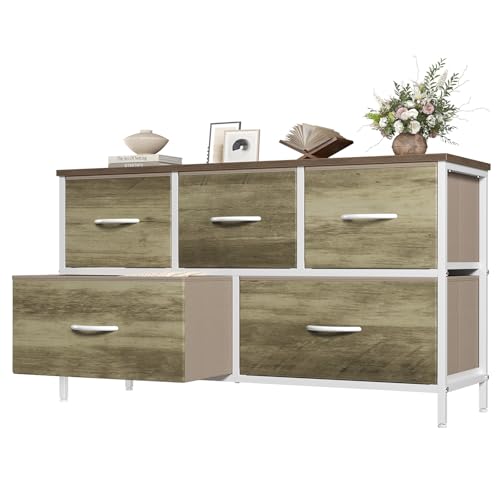
Hollow-core dressers and modular shelving systems reduce weight while keeping capacity. The trade-off is load rating: keep heavy items in lower drawers and avoid overloading top shelves. Wall-anchoring kits are strongly recommended for any tall, lightweight storage unit, regardless of material.
Kids and Guest Rooms
Lightweight furniture is especially valuable in kids' rooms, where layouts change as children grow. Our guide to kids beds covers frame options that balance safety, weight, and adaptability.
Quality Tiers Explained
Lightweight furniture spans a wide quality range. Rather than focusing on figures, it helps to understand how construction and finish differ across tiers. The table below uses consistent tier descriptors you can apply when comparing any product in this category.
| Tier | Typical Construction | Best For |
|---|---|---|
| Entry-level | Thin-gauge steel or basic engineered wood; simple screw assembly; limited reinforcement | Guest rooms, temporary setups, light-duty use |
| Mid-range | Thicker tubing or denser panels; reinforced corner brackets; powder-coated finish | Everyday use in apartments and rentals |
| Premium | High-grade aluminum or thick-wall steel; welded or bolted joints; center support rails; rust-proof finish | Long-term use with frequent repositioning |
| Luxury | Engineered alloys or premium hardwood composites; precision joinery; integrated support systems | Design-led spaces where weight savings must not compromise finish |
As a rule, mid-range and premium models tend to offer the best balance of portability and stability. Entry-level pieces are fine for occasional use, but check the stated load capacity and inspect the joinery before relying on them daily.
Stability and Safety Checks Before You Buy
Lightweight construction introduces specific safety considerations. Run through this checklist before committing to any piece:
- Load rating: Confirm the frame's stated weight capacity and compare it to the combined weight of your mattress and sleepers.
- Center support: Frames larger than twin size should include a center rail or support leg to prevent sagging.
- Anti-slip features: Rubber or felt pads under legs protect floors and reduce sliding on hard surfaces.
- Wall anchoring: Any tall or narrow storage unit should be anchored to the wall, especially in homes with children or pets.
- Assembly hardware: Check that bolts and brackets are metal, not plastic, at load-bearing joints.
- Finish quality: A rust-proof or powder-coated finish extends lifespan in humid environments.
Frequently Asked Questions
Is lightweight furniture strong enough for daily use?
Yes, provided the piece is engineered correctly. Aluminum and high-grade steel frames with reinforced joints routinely support full mattresses and adult sleepers. The key is to check the stated load rating and avoid entry-level pieces for heavy daily use.
Can a lightweight bed frame support a heavy mattress?
Most can, but you should match the frame to the mattress type. Hybrid and latex mattresses are heavier than all-foam models, so confirm the frame includes a center support rail and slats spaced closely enough for your mattress.
Does lightweight mean less durable?
Not necessarily. Weight reduction through better materials and smarter joinery can actually improve durability compared with thick, poorly braced panels. The trade-off is usually in load rating rather than lifespan.
Are lightweight bed frames suitable for renters?
They are ideal for renters. Most lightweight frames assemble and disassemble with basic tools, which reduces moving effort and the risk of damage to walls and doorways.
How do I keep a lightweight nightstand from tipping?
Choose a design with a wide base, place heavier items in lower drawers, and use anti-slip pads under the legs. Anchor tall units to the wall whenever possible.
Can lightweight furniture be used in humid climates?
Yes, but prioritize aluminum frames or steel with a rust-proof finish. Avoid untreated engineered wood in bathrooms or poorly ventilated rooms, where moisture can cause swelling and warping.
Ready to Choose the Right Lightweight Piece?
Use the criteria in this guide — material, joinery, load rating, and tier — to compare options with confidence. When you are ready, browse our curated selection below.
View Recommended Options