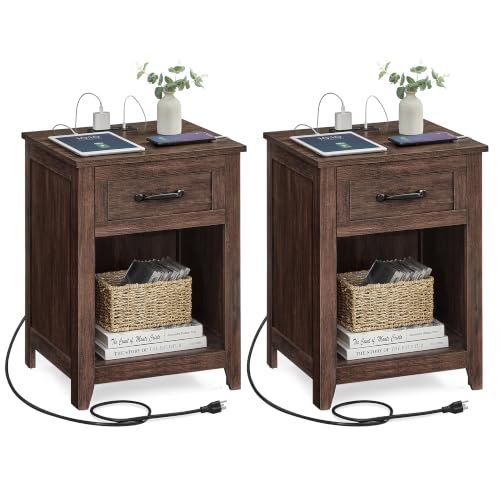
Start With Function: What Each Piece Must Do
Before comparing styles, map out the job each piece performs in your bedroom. A chest of drawers typically stores folded clothing, linens, or accessories, while a bedside table keeps nightly essentials within arm's reach. Clarifying these roles prevents you from buying furniture that looks cohesive but fails in daily use.
Bedside table essentials
- Nightly reach zone: a lamp, phone, glasses, a book, and a glass of water should all fit comfortably on the top surface.
- Closed storage: one or two drawers hide chargers, medication, and small personal items so the surface stays clear.
- Height alignment: the tabletop should sit level with or slightly below the mattress top — usually within two to four inches.
Chest of drawers essentials
- Drawer depth and glide quality: deeper drawers suit bulky knitwear, while shallow drawers organize accessories and delicates.
- Footprint versus walkway: leave at least 24 inches of clearance in front of drawers so they open fully without blocking movement.
- Top surface use: decide whether the top will stay clear, hold a mirror, or display decor — this affects how tall and wide you want the unit.
Measure before you shop
Record the width of your bed, the height of the mattress top, the distance between bed and walls, and the length of any free wall. Bring these numbers with you — they quickly eliminate pieces that would crowd the room or sit at an awkward height beside the bed.
Should They Match Exactly? Three Coordination Approaches
There is no single correct answer, but there are three proven strategies. Each delivers a different visual effect, and each works best in specific room contexts.
| Approach | Visual Effect | Best For | Tier Consideration |
|---|---|---|---|
| Exact match set | Formal, polished, highly coordinated | Traditional bedrooms, guest rooms, buyers who want a finished look with minimal styling effort | Essential to mid-range tier sets offer the widest selection |
| Complementary pairing | Cohesive but relaxed, with subtle variation | Modern and transitional bedrooms where a little contrast adds interest | Mid-range to premium tier pieces often share hardware and finish families |
| Deliberate contrast | Eclectic, curated, design-forward | Bedrooms with a strong style point of view, such as rustic or bohemian spaces | High-end tier and vintage pieces mix most successfully |
If you prefer the exact-match route, browse coordinated bedroom furniture collections where the chest and bedside tables share drawer fronts, hardware, and finish. If you lean toward complementary pairing, keep at least two elements consistent — for example, the same wood species and the same metal finish on handles — while allowing the silhouette to differ. For contrast, anchor the room with one dominant tone and repeat it in smaller accents such as lamps or frames.
Matching by Style: Find a Shared Design Language
Style consistency is the fastest route to a coordinated bedroom. Rather than hunting for identical pieces, look for shared design cues across categories. A master bedroom bedside table guide can help you define the aesthetic you want before you commit to a dresser.
Modern and minimalist
Clean lines, flat fronts, and restrained hardware define this look. Choose a chest with handleless or slim bar pulls, then pair it with bedside tables that echo the same geometry. Avoid ornate detailing, which clashes with the pared-back approach.
Traditional and classic
Look for raised panel drawer fronts, bracket feet, and warm wood finishes. A matched set works beautifully here. If you prefer variation, keep the same finish and switch the bedside table silhouette — for instance, a three-drawer chest beside the bed paired with a taller five-drawer dresser across the room.
Rustic and farmhouse
Reclaimed wood, distressed finishes, and sturdy proportions set the tone. A log-style furniture reference illustrates how chunky, natural textures can be carried through a room. Repeat the wood grain and metal accents between the dresser and bedside tables to tie the look together.
Scandinavian and mid-century
Tapered legs, light woods, and functional simplicity are the signatures. Matching sets in this style feel airy and uncluttered. If you mix brands, keep leg shape and wood tone consistent — these two details do most of the coordinating work.
Proportion and Placement: Getting the Scale Right
Matching pieces still look wrong if their scale is off. Use these guidelines to keep the room balanced.
- Bedside table width: each table should be roughly as wide as, or slightly wider than, the lamp you place on it — typically 18 to 24 inches for a standard bed.
- Dresser width versus bed width: a chest of drawers placed opposite the bed should be narrower than the bed frame so the bed remains the focal point.
- Visual weight: a tall, dark dresser can overwhelm a small room. In compact spaces, favor a low-profile platform bed with lighter furniture to keep sightlines open.
- Traffic flow: maintain a clear path between the bed, dresser, and doorway — aim for 30 inches of walking space in primary routes.
Balance the two sides of the bed
If one side of the bed has a wall and the other has open space, use matching bedside tables on both sides anyway. Symmetry around the headboard instantly makes a room feel composed, even when the rest of the layout is asymmetric.
Materials and Finishes: The Details That Unify a Room
Wood tone is the single strongest coordinating signal in a bedroom. When drawers and bedside tables share a finish, the eye reads them as a family even if their shapes differ. Consider these material pairings:
- Solid wood with solid wood: the most durable and cohesive option. Look for consistent grain direction and matching stain tones across pieces.
- Wood with painted finishes: pair a natural wood chest with painted bedside tables in a muted color drawn from your bedding or wall palette.
- Metal accents: brass, matte black, or brushed nickel hardware should match across both pieces. A metal bedside table with drawer can bridge a wood dresser and a modern bed frame if the hardware finishes align.
- Marble and stone tops: a marble-top bedside table with drawer adds a premium touch; repeat the stone or a similar sheen on the dresser top or lamp bases to avoid a mismatched feel.
Storage Planning: Making the Pair Work Together
Think of the dresser and bedside tables as a storage system rather than two separate purchases. Divide your belongings by frequency of use: items you touch nightly belong in bedside drawers, while seasonal or bulkier clothing goes into the chest.
- Inventory your nightly items. If you need space for a tablet, chargers, and a journal, choose bedside tables with at least two drawers.
- Count your folded clothing categories. This tells you how many drawers the chest needs and whether deep or shallow drawers serve you better.
- Plan for overflow. A bench or storage-equipped furniture piece can absorb extra linens and keep both the dresser and bedside tables uncluttered.
If the bedroom doubles as a workspace, a matching desk and bedside table pairing extends the coordinated look while adding a functional surface. The same principle applies to long bedside tables with drawers, which suit wider beds and provide extra storage without a separate chest.
Common Mistakes to Avoid
- Ignoring mattress height. Bedside tables that sit far below the mattress force you to reach awkwardly every night.
- Overmatching every element. When the bed, dresser, and tables are identical in finish and style, the room can feel like a showroom. Introduce one soft contrast, such as a woven lamp shade or a textile accent.
- Buying before measuring doorways. Confirm that the chest fits through your entry and stairwell before ordering.
- Neglecting drawer glide quality. Soft-close, side-mounted glides are a hallmark of mid-range and premium tiers; entry-level models may use simpler runners that wear faster with daily use.
- Skipping the anchor test. If you have young children, secure both the dresser and any tall bedside unit to the wall.
Frequently Asked Questions
Should a dresser and bedside table match exactly?
Not necessarily. Exact matches create a formal, coordinated look, but complementary pieces with shared wood tones or hardware finishes can look equally intentional. The key is consistency in style and material family rather than identical models.
What height should bedside tables be relative to the bed?
The top of a bedside table should sit level with or slightly below the top of the mattress, typically within two to four inches. This allows easy reach for lamps, books, and essentials while maintaining visual balance.
Can I mix wood tones between drawers and bedside tables?
Yes, mixing wood tones works well when done deliberately. Anchor the room with one dominant tone and introduce a secondary tone through smaller pieces like bedside tables. Repeat the secondary tone elsewhere in the room to create cohesion.
How much storage should a bedside table offer?
Choose based on your nightly essentials. A single drawer suits minimal items like a book and glasses, while two or three drawers accommodate tablets, chargers, and medication. Pair with a chest of drawers if you need larger clothing storage.
Do matching bedroom furniture sets go out of style?
Matching sets remain a practical choice for a polished look, but they can feel rigid. Modern bedrooms often blend a matching core set with accent pieces in complementary materials, which keeps the design flexible and timeless.
Ready to Coordinate Your Bedroom Storage?
Use the measurement checklist above, choose a coordination approach that suits your style, and verify that the scale works for your room. When the chest of drawers and bedside tables share a design language, the bedroom instantly feels calmer and more intentional.