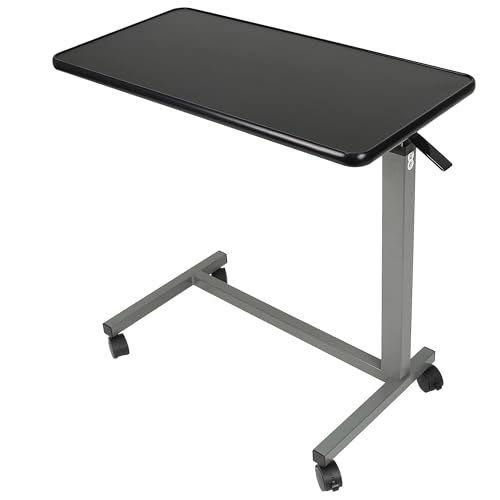
Overbed Bedside Table with Wheels: The Complete Buying Guide
Everything you need to know about choosing a mobile overbed table that brings convenience, comfort, and independence to your bedside routine.
When you spend extended time in bed — whether recovering from surgery, managing limited mobility, or simply enjoying a lazy weekend — reaching for a glass of water, a book, or a laptop can become surprisingly difficult. An overbed bedside table with wheels solves that problem by placing a stable, movable surface directly over your mattress. Unlike a fixed nightstand, this type of table rolls into position and adjusts to your body, making daily tasks easier and safer.
This guide explains how overbed tables work, what features matter most, and how to match a model to your needs. By the end, you will understand the trade-offs between essential-tier and premium options and feel confident about selecting the right table for your bedroom.
Quick summary: An overbed bedside table with wheels is a mobile surface that extends over the bed. Key features to evaluate are height adjustability, wheel quality, tabletop tilt, weight capacity, and frame stability. Mid-range and top-tier models typically offer smoother adjustment mechanisms and reinforced construction compared with entry-level options.
What Is an Overbed Bedside Table with Wheels?
An overbed table is a freestanding piece of furniture with a C-shaped or cantilevered base that slides under the bed frame. The tabletop extends horizontally over the mattress, allowing a person lying or sitting in bed to use it as a dining tray, reading desk, or storage surface. Adding wheels transforms it into a mobile unit that can be repositioned without lifting.
These tables are closely related to other bedside storage solutions. If you prefer a traditional fixed option, browse our guides to over bedside tables and over bed tables. For space-constrained rooms, a narrow bedside table may pair well with a mobile overbed unit.
Who Benefits Most from a Wheeled Overbed Table?
Overbed tables with wheels serve a wide range of users. The table’s mobility is its defining advantage, so the people who benefit most are those who need flexibility throughout the day.
People with Limited Mobility
Users who cannot easily reach a standard nightstand gain independence by rolling the table into the exact position they need.
Post-Surgery Recovery
During recovery, meals, medication, and entertainment can be kept within arm’s reach without straining the body.
Elderly Users
A stable, adjustable surface reduces the need to twist or lean, lowering the risk of falls and muscle strain.
Caregivers
Caregivers can organize supplies, serve food, and reposition the table quickly, improving efficiency and safety.
Key Features to Evaluate Before Buying
Not all overbed tables are built the same. The features below separate entry-level models from premium and commercial-grade units. Use this checklist to compare options objectively.
1. Height Adjustability
Adjustable height is essential. A table that sits too high or too low causes discomfort and poor posture. Look for a model with a smooth adjustment mechanism, ideally with a locking lever or gas-spring assist. Mid-range and premium tables usually offer a wider height range and more precise locking than entry-level models.
2. Wheel Quality and Locking Casters
Wheels determine how easily the table moves and how stable it feels once positioned. Small casters work well on hard floors, while larger wheels roll more smoothly over carpet. Locking casters are a valuable safety feature — they prevent the table from sliding when you lean on it or place a heavy object on the surface.
3. Tabletop Size and Tilt
A generous tabletop accommodates a laptop, plate, and book at the same time. Tilt-adjustable tops are useful for reading or writing. Consider whether you need a flat work surface or an angled reading surface; some premium models offer both.
4. Frame Material and Stability
High-grade steel frames with a rust-proof finish offer the best durability. The base should be wide enough to prevent tipping when the tabletop is fully extended. Reinforced joints and heavy-duty construction are hallmarks of top-tier and commercial-grade models.
5. Weight Capacity
Always check the manufacturer’s specified load rating. Entry-level tables handle lighter everyday items, while professional-grade units support heavier loads. If you plan to use the table as a workspace with monitors or equipment, choose a model rated for higher weight.
6. Assembly and Portability
Most overbed tables require some assembly. Look for models with clear instructions and minimal tools. If you plan to move the table between rooms, consider its folded dimensions and overall weight.
Comparison: Entry-Level vs. Mid-Range vs. Premium
The table below uses universal quality tiers rather than numeric figures, so the comparison stays useful over time.
| Feature | Entry-Level Tier | Mid-Range Tier | Premium / Top-Tier |
|---|---|---|---|
| Frame construction | Basic steel tubing | Reinforced steel frame | Heavy-duty, commercial-grade steel |
| Height adjustment | Manual, limited range | Smooth lever or knob lock | Gas-spring or precision-lock system |
| Wheels | Standard casters | Larger casters with locks | Premium locking casters, quiet-roll |
| Tabletop | Flat, basic finish | Flat with slight tilt option | Tilt and height adjustable, premium surface |
| Weight capacity | Light to moderate | Moderate to heavy | Heavy-duty, professional-grade |
| Best for | Occasional use | Daily use and recovery | Long-term and care settings |
In general, a mid-range model offers the best balance of durability and smooth operation for most households. Premium and commercial-grade tables are worthwhile investments for care facilities or users who rely on the table every day.
How to Set Up Your Overbed Table Safely
Proper setup improves comfort and reduces the risk of accidents. Follow these steps after assembly:
- Position the base so it slides fully under the bed frame without pinching bedding.
- Adjust the tabletop to lap or chest level while seated in your normal sleeping position.
- Lock the casters before placing heavy items on the surface.
- Test the table’s stability by gently leaning on the edge.
- Keep frequently used items toward the center of the tabletop to reduce tipping risk.
- Check the adjustment mechanism periodically and tighten any loose fittings.
If your room is tight, combine the overbed table with a narrow bedside table with drawers for permanent storage. For charging cables and small devices, a narrow bedside table with charging station can complement the mobile table.
Matching Your Overbed Table to Your Bedroom Style
Function comes first, but style matters too. An overbed table sits in your bedroom every day, so choose a finish that complements your existing furniture. If your room leans toward clean lines, a minimalist bedside table aesthetic pairs well with a simple white or neutral overbed table. For warmer interiors, a modern farmhouse bedside table style suggests wood-tone finishes and classic proportions.
Consider the overall design of your room. A modern bedroom often benefits from sleek metal frames and matte finishes, while a minimalist bedroom favors understated shapes. If you are still planning the room, our guides to modern beds and modern bedside tables offer additional inspiration.
Common Mistakes to Avoid
- Ignoring wheel type: Small casters struggle on carpet; larger wheels roll poorly on some hard floors. Match the wheel to your flooring.
- Skipping the load rating: Placing heavy equipment on an entry-level table can damage the frame or cause tipping.
- Choosing a fixed-height model: A table that cannot adjust may force awkward posture and reduce comfort.
- Neglecting caster locks: Without locking wheels, the table may slide when you lean on it.
- Overlooking assembly space: Confirm the assembled dimensions fit your room and that the base clears your bed frame.
Frequently Asked Questions
What is an overbed bedside table with wheels?
It is a mobile table that extends over a bed so users can eat, read, work, or place personal items without leaving bed. The wheels make it easy to reposition during the day.
Who benefits most from an overbed table on wheels?
People with limited mobility, those recovering from surgery, elderly users, and caregivers all benefit. Anyone who spends extended periods in bed will find the table useful.
How do I choose the right height for an overbed table?
Choose an adjustable-height model. The tabletop should sit comfortably at lap or chest level when you are seated in bed. Adjustability accommodates different mattress heights and user positions.
Can an overbed table with wheels be used on carpet?
Yes, but wheel type matters. Larger casters roll more easily over carpet, while smaller wheels work best on hard floors. Locking casters add stability on any surface.
How much weight can an overbed table support?
Weight capacity varies by model. Entry-level tables support lighter loads, while reinforced and commercial-grade models handle heavier use. Always check the manufacturer’s specified load rating.
Final Thoughts
An overbed bedside table with wheels is a practical addition to any bedroom where comfort and accessibility matter. Focus on height adjustability, wheel quality, and frame stability, and match the quality tier to how often you plan to use the table. A well-chosen model will serve you reliably for years and make everyday routines noticeably easier.
For more bedroom organization ideas, explore our guides to nightstands, oversized bedside tables with drawers, and pedestal bedside tables.