Pillows & Throws for Beds: The Complete Buying Guide
Everything you need to choose supportive pillows and cozy throws that transform your bed into a comfortable, well-styled sleep sanctuary.
A practical guide for research-stage shoppers comparing fill types, sizes, fabrics, and styling options.
Why pillows and throws matter more than most people think: A pillow is the single closest piece of bedding to your body for the entire night, and it determines how well your head and neck stay aligned. A throw is the layer you reach for when the temperature drops or when you want your bed to look finished rather than bare. Together, these two accessories do more for nightly comfort and visual polish than almost any other bedding purchase — yet they are usually the last items shoppers think through. This guide fills that gap.
Part 1: Pillows — Support First, Style Second
A decorative pillow can make a bed look inviting, but a sleep pillow is the one your body actually relies on. Before browsing colors and textures, narrow down the pillow that supports your sleeping position. The right pillow keeps your head, neck, and spine in a neutral line — reducing morning stiffness and helping you stay asleep instead of shifting around all night.
Match the pillow to your sleep position
Side Sleepers
Need a thicker, more responsive pillow that fills the gap between the shoulder and the head. Medium-loft or high-loft pillows with a supportive core — memory foam, latex, or a firm down-alternative — work best. Too little loft causes the neck to drop; too much pushes the head upward.
Back Sleepers
Benefit from a medium-loft pillow that supports the natural curve of the neck without craning the head forward. A pillow with a slight contour or a medium-firm fill keeps the cervical spine aligned while letting the head rest in a neutral position.
Stomach Sleepers
Usually need a low-loft, soft pillow — or even no pillow — to avoid tilting the neck backward. A thin down or soft down-alternative pillow that compresses easily is the safest starting point. A supportive pillow that is too tall is often the cause of neck strain in this group.
Combination Sleepers
Change position throughout the night, so a medium-loft pillow with balanced support tends to be the most flexible choice. Adjustable-fill pillows (where you can add or remove fill) are especially useful for people who shift between side and back sleeping.
Compare common pillow fill types
| Fill Type | Best For | Feel & Support | Position in Market |
|---|---|---|---|
| Memory Foam | Side and back sleepers who want contouring support | Slow-responding, pressure-relieving; holds shape but can trap heat | Mid-range to premium |
| Latex | Sleepers who want bouncy, responsive support and durability | Springy, breathable, resilient; naturally cooling and long-lasting | Premium tier |
| Down | Stomach sleepers and anyone who prefers a soft, moldable feel | Plush and compressible; needs regular fluffing and may trigger allergies | High-end tier |
| Down-Alternative | Allergy-conscious sleepers who want a down-like feel | Soft, hypoallergenic, easier to clean; varies in loft and resilience | Mid-range |
| Buckwheat / Adjustable Fill | Combination sleepers and anyone who wants to fine-tune loft | Firm, customizable, holds position well; heavier and noisier | Starter to mid-tier |
| Polyester Fiberfill | Guest rooms and entry-level setups | Soft and lightweight; compresses over time and needs replacing sooner | Essential tier |
A useful rule of thumb: the more hours you spend in one sleep position, the more it pays to match the fill precisely. Mid-range and premium fills tend to hold their loft longer than basic fiberfill, which flattens faster and offers less consistent neck support over months of nightly use. If you are unsure between two firmness levels, an adjustable-fill pillow removes much of the guesswork.
Pillow sizes and how many you actually need
- Standard (20 × 26 in): The most common sleeping pillow size; fits standard pillowcases and suits most twin, full, and queen beds.
- Queen (20 × 30 in): Slightly longer than standard; a good fit for queen beds and sleepers who move around.
- King (20 × 36 in): Proportionate for king and California king beds; also popular with larger sleepers or those who want more surface area.
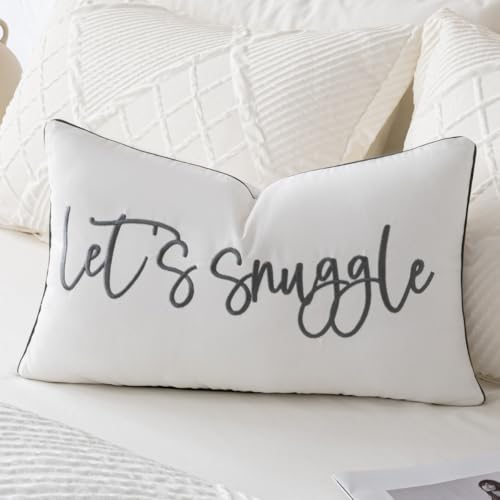
- Euro shams (26 × 26 in): Large square decorative pillows used as a backdrop layer against the headboard — styling first, light back support second.
- Lumbar / accent pillows: Small rectangular or shaped pillows for visual interest and lower-back support when reading in bed.
For sleeping, most adults do well with one to two support pillows per person. For styling, a queen bed typically looks balanced with two sleeping pillows, two shams, and one or two accents; a king bed can carry an extra accent or a lumbar pillow to maintain proportion. Resist the urge to overcrowd a smaller bed — fewer, well-chosen pillows read as more intentional.
Protecting your pillow extends its useful life and keeps dust mites and allergens in check. A washable pillow protector under the pillowcase is one of the simplest upgrades you can make, and comparing options side by side is easier with a structured pillow comparison before you commit.
Part 2: Throws — The Layer That Finishes the Bed
A throw blanket is often the piece that makes a bed look styled rather than simply made. But a throw is also functional: it is the layer you pull over your legs on a cool evening, drape over your shoulders while reading, or fold at the foot of the bed for easy access. Choosing the right size and material matters more than the pattern you pick.
Choose a throw material for your climate and habits
- Cotton and cotton blends: The most versatile year-round choice — breathable in warm months, layerable in cool ones, and generally easy to care for. A solid choice for daily use.
- Linen blends: Airy and relaxed with a natural texture that softens with each wash. Well suited to warm sleepers and relaxed, lived-in bedroom styles.
- Wool and wool blends: Warm, durable, and temperature-regulating; best for cooler climates or winter layering. Look for softer weaves to avoid scratchiness.
- Fleece and plush synthetics: Very warm and soft with a cozy hand-feel; ideal for cold rooms and casual settings, though less breathable than natural fibers.
- Knit and chunky-knit throws: High visual texture that makes a bed look instantly cozier; best used as a top accent layer rather than the sole blanket for cold sleepers.
- Quilted throws: Lightly padded and structured; they hold their shape well when folded at the foot of the bed and work across seasons.
Throw sizes: decorative vs. functional
A throw sized roughly 50 × 60 inches is the classic decorative accent — it folds neatly across the foot of a queen or king bed and looks proportionate. If you want a throw that genuinely covers a person, look for a larger 60 × 80 inch size that behaves more like a small blanket. The most common styling mistake is using an undersized throw on a large bed: it makes the whole setup look unfinished. Match the throw's scale to the bed size, and fold it with a deliberate, even edge.
How pillows and throws work together
The strongest bed styling pairs pillows and throws that echo each other without matching exactly. A simple framework:
- One shared color family. Pull one accent color from the throw into the decorative pillows — this creates cohesion without looking like a matched set.
- Mix textures, not just colors. A knit throw against smooth cotton shams, or a quilted throw against velvet accents, adds depth that photographs and lives well.
- Follow a clear pillow hierarchy. Sleeping pillows in the back, shams in the middle, decorative accents in front, and a lumbar pillow as the final touch if the bed is wide enough.
- Let the throw bridge the room. In a minimalist bedroom, a single textured throw is often the only accent the bed needs. In a modern bedroom, a clean-edged quilted throw keeps the look crisp. On a platform bed, a modern bedding setup benefits from a low-profile throw that doesn't compete with the frame.
Ready to Compare Your Options?
Browse recommended pillows and throws for beds, selected for support, durability, and everyday comfort — then check availability and read full details before you decide.
Explore Top Picks BelowPart 3: A Practical Buying Checklist
Before you commit to any pillow or throw, run through these checks. They cover the details that shoppers most often overlook — and that most often lead to returns.
- Confirm the fill and loft for pillows. Read the fill description and check whether the loft is listed as low, medium, or high. If your sleep position is borderline, choose adjustable fill.
- Check the care instructions. Machine-washable covers and protectors make daily life easier. Some premium fills require spot cleaning or professional care — factor that into your routine.
- Verify the dimensions. Pillow and throw sizes vary between brands. Measure your bed and existing pillowcases before ordering, especially for king and California king setups.
- Look for certifications where relevant. For allergy-sensitive sleepers, check for hypoallergenic labeling and washable protectors. For throws, check fiber content and any flammability or care standards listed on the label.
- Plan the layering. Decide in advance how many decorative pillows your bed can carry without looking cluttered, and whether your throw will be decorative or functional.
- Consider the season. A breathable cotton throw plus a medium-loft pillow covers most of the year; add a warmer throw or a second layer for winter rather than replacing everything.
If you are also refreshing the wider bedding setup, our bedding and linens guides cover sheets, comforters, and protectors that pair naturally with the pillows and throws discussed here. And if you are still deciding on the bed itself, the broader buying guides and reviews section covers frames and mattresses that these accessories are designed to fit.
Frequently Asked Questions
What is the difference between a bed pillow and a decorative throw pillow?
A bed pillow is designed for sleep support and aligns your head and neck. A decorative throw pillow is primarily for visual styling and accent, though some can offer light back support when reading in bed. Sleep pillows prioritize ergonomics; throw pillows prioritize aesthetics and texture.
How many pillows should a bed have?
For sleeping, most people need one to two support pillows per sleeper. For styling, a queen bed typically looks balanced with two sleeping pillows, two standard shams, and one or two decorative accents. A king bed can carry an additional accent or a lumbar pillow for proportion.
What is the best throw blanket material for year-round use?
Cotton and cotton-blend throws are the most versatile for year-round use because they breathe well in warm months and layer comfortably in cool months. Linen blends offer a similar balance with a more relaxed texture, while synthetic fleece is warmer and better suited to colder seasons.
How do I choose the right throw blanket size for my bed?
A throw sized roughly 50 by 60 inches works well as a decorative accent folded at the foot of a queen or king bed. For a throw that actually covers a sleeper, look for a larger 60 by 80 inch size. Always match the throw's scale to the bed size so it doesn't look undersized.
How often should bed pillows and throws be cleaned?
Pillowcases should be washed weekly, and pillows themselves every three to six months depending on the fill. Throw blankets used daily benefit from washing every two to four weeks. Always follow the care label, and use pillow protectors to extend the life of the pillow between washes.