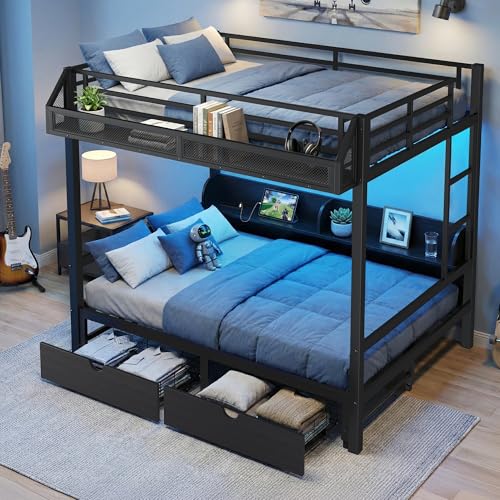
Queen Bunk Beds With Storage: The Complete Buyer's Guide
Maximize your space without compromising comfort. Learn how to choose a queen bunk bed with built-in storage that fits your family, your room, and your long-term needs.
Why this guide matters: A queen bunk bed with storage is a serious furniture investment. It combines two full-size sleeping surfaces with hidden organization, making it ideal for guest rooms, shared bedrooms, vacation homes, and multi-generational households. This guide walks you through frame construction, storage configurations, safety standards, and layout considerations so you can make a confident, informed decision.
What Is a Queen Bunk Bed With Storage?
A queen bunk bed with storage is a double-decker sleeping system where at least one bunk accommodates a queen-size mattress, paired with integrated storage such as under-bed drawers, a built-in staircase, shelving, or a trundle compartment. Unlike standard twin-over-twin bunks, these models are designed for adults, older teenagers, and couples who need full-size sleeping space without occupying two separate footprints.
Storage is the defining feature. It transforms what would otherwise be a tall, space-hungry frame into a functional furniture piece that replaces a dresser, a closet organizer, or a standalone shelving unit. For rooms where floor space is limited, this combination is especially efficient.
Who Should Consider a Queen Bunk Bed With Storage?
These beds are not a one-size-fits-all solution. They serve specific use cases particularly well:
- Shared adult bedrooms: Siblings, roommates, or adult family members who need separate sleeping surfaces but share a single room.
- Guest rooms and vacation properties: A queen bunk with storage lets you host two couples or a family without dedicating two separate bedrooms.
- Multi-generational homes: Grandparents or adult children who need comfortable, full-size sleeping arrangements in a compact footprint.
- Small apartments and condos: When every square foot counts, vertical sleeping plus integrated storage is a practical layout strategy.
- Cabins and beach houses: Durable, adult-rated bunks with drawers keep belongings organized and out of the way.
If you are furnishing a child's room, a standard twin bunk may be more appropriate. For adult-oriented spaces, explore our broader collection of queen bunk beds for adults to compare configurations.
Storage Configurations Explained
Not all storage is created equal. The right configuration depends on what you need to store, how often you access it, and how much floor space you can spare.
Under-Bed Drawers
Drawers built into the base of the lower bunk are the most common storage solution. They are ideal for clothing, linens, and small personal items. Look for drawers with metal glides or reinforced tracks rather than simple wooden sliders, especially in mid-range and premium models. Drawer depth matters: shallow drawers suit folded clothing, while deeper drawers can hold bedding or shoes.
Built-In Staircase With Storage
A staircase is safer than a ladder for daily use, and many stair designs incorporate hidden compartments or open shelves. This configuration is particularly valuable in adult households where climbing a vertical ladder is impractical. Staircase storage often provides the largest usable volume of any built-in option. If this is a priority, review our selection of queen size bunk beds with stairs.
Trundle Compartment
A trundle adds a third sleeping surface or a large storage cavity beneath the lower bunk. When used for storage, the trundle area can hold bulky items such as extra comforters, seasonal clothing, or luggage. When used as a bed, it provides flexible sleeping space for guests. Our guide to queen size bunk beds with trundle covers the trade-offs in detail.
Shelving and Combination Units
Some models integrate open shelving into the headboard, footboard, or side panels. These are best for display items, books, and frequently accessed objects. Combination units that pair drawers with shelves offer the most versatility but tend to have a larger footprint and a more complex assembly process.
Frame Materials and Construction Quality
Because a queen bunk supports significantly more weight than a twin bunk, construction quality is non-negotiable. The frame material and joinery determine safety, longevity, and how stable the bed feels during daily use.
| Material | Durability Tier | Best For | Key Consideration |
|---|---|---|---|
| High-grade steel | Commercial-grade | High-traffic guest rooms, adult use | Look for reinforced corner joints and powder-coated finishes |
| Solid hardwood (oak, maple, pine) | Premium to luxury | Primary bedrooms, long-term investment | Confirm that the frame uses kiln-dried wood and mortise-and-tenon joinery |
| Engineered wood with hardwood reinforcement | Mid-range | Guest rooms, occasional use | Check weight ratings carefully; not all engineered frames are adult-rated |
| MDF or particle board | Entry-level | Light use, temporary setups | Verify that the manufacturer explicitly rates the frame for adult use |
Regardless of material, check the per-bunk weight rating. A frame rated for 250 pounds per bunk is not the same as one rated for 400 pounds or more. Adult-rated models typically publish higher limits and use thicker rails, more support slats, and heavier hardware.
Safety Standards and Structural Requirements
Bunk bed safety is regulated, and reputable manufacturers comply with recognized standards. When evaluating a queen bunk bed with storage, confirm the following:
- Guardrails on the top bunk: At least two rails, with the upper rail positioned high enough to prevent accidental rolls.
- Secure ladder or staircase attachment: The ladder or stair unit should hook or bolt firmly to the frame, not rest loosely.
- Slat spacing: Support slats should be spaced closely enough to prevent mattress sagging and entrapment. Follow the manufacturer's mattress thickness recommendation.
- Weight ratings: Both the top and bottom bunks should have published, realistic weight limits.
- Corner stability: Reinforced corner brackets or cross-bracing reduce sway, which is especially important for taller queen bunk frames.
If the top bunk is intended for a child, verify that the design meets the relevant youth safety standard for bunk beds. For adult use, focus on weight ratings and frame rigidity.
Room Layout and Clearance Considerations
A queen bunk bed is taller and wider than a standard bunk. Before purchasing, measure your room and account for the following:
- Ceiling height: Allow at least 30 to 36 inches of clearance above the top bunk mattress for comfortable sitting and safe movement.
- Footprint: Queen bunks typically occupy a footprint similar to a standard queen bed, but staircase and drawer extensions add depth. Measure the full assembled dimensions, not just the mattress size.
- Drawer clearance: Under-bed drawers need room to pull out. Confirm that the drawer extension does not block a doorway or walkway.
- Staircase landing: A built-in staircase requires floor space at the foot of the bed. Account for this in your layout plan.
- Access to windows and vents: Avoid placing the top bunk directly in front of a window or blocking an air vent.
If your room is tight, consider whether a queen loft bunk bed might free up floor space beneath the upper bunk for a desk or seating area. Loft configurations trade a second sleeping surface for open floor space, which may suit your layout better.
Comparing Queen Bunk Bed Storage Options
The table below summarizes the most common storage configurations so you can match them to your needs.
| Configuration | Best For | Accessibility | Trade-Off |
|---|---|---|---|
| Under-bed drawers | Clothing, linens, personal items | Easy, pull-out access | Requires floor clearance in front of the bed |
| Staircase with compartments | Bulkier items, daily clothing | Step-level access, safe climbing | Adds footprint at the foot of the bed |
| Trundle compartment | Seasonal storage, guest bedding | Lower access, may require bending | Less convenient for daily-use items |
| Integrated shelving | Books, display items, small objects | Open and visible | Limited capacity for bulky items |
Ready to compare specific models? Browse our curated selection of queen bunk beds with storage and filter by configuration, frame material, and safety features.
Explore Recommended ModelsAssembly, Maintenance, and Long-Term Care
Queen bunk beds with storage are more complex to assemble than simple frames. Staircases, drawer tracks, and reinforced joints all add steps to the build process. Before you begin, confirm that all hardware is present, review the instructions fully, and set aside enough time for a careful assembly. A poorly assembled bunk is a safety risk, not just an inconvenience.
For maintenance, tighten all bolts and screws periodically, especially during the first few months of use. Check drawer glides for smooth operation and lubricate them if necessary. Inspect the frame for loose joints or wobbling, and address any issues immediately. If the bed includes a ladder or staircase, verify that the attachment points remain secure.
Mattress choice also matters. Use a mattress that matches the manufacturer's thickness recommendation for each bunk. A mattress that is too thick can compromise guardrail height on the top bunk; a mattress that is too thin may not provide adequate support. For the lower bunk, a standard queen mattress is typical, while the upper bunk may require a thinner profile mattress.
Common Mistakes to Avoid
- Ignoring weight ratings: Assuming that any queen bunk can safely support two adults is a mistake. Check the published ratings for each bunk.
- Underestimating ceiling clearance: A top bunk that leaves less than 30 inches of clearance is uncomfortable and potentially unsafe.
- Overlooking drawer clearance: Drawers that cannot fully extend defeat the purpose of storage.
- Choosing storage without considering access: A trundle compartment is less convenient for daily clothing than side-access drawers.
- Skipping the assembly review: Reading the assembly guide before purchase helps you understand the complexity and tools required.
Frequently Asked Questions
Are queen bunk beds with storage strong enough for adults?
Yes, provided the model is explicitly rated for adult use. Adult-rated queen bunks typically use reinforced frames, high-grade steel or solid hardwood, and publish higher weight capacities than youth models. Always check the per-bunk weight rating before purchasing.
How much clearance is needed above a queen bunk bed?
Most designs require at least 30 to 36 inches of clearance between the top bunk mattress and the ceiling for comfortable sitting and safe movement. Measure your ceiling height before choosing a model, especially if the top bunk has a tall guardrail.
What types of storage are available on queen bunk beds?
Common configurations include under-bed drawers, built-in staircases with hidden compartments, trundle beds, shelving units, and combination options. The right choice depends on your room layout and what you need to store.
Do queen bunk beds with storage require assembly?
Most models ship flat-packed and require assembly. Staircase and storage configurations generally take longer to build than simple frames. Review the assembly guide and confirm whether tools are included before starting.
Final Thoughts
A queen bunk bed with storage is a practical, space-efficient solution for adult households, guest rooms, and shared living spaces. The key is to prioritize frame strength, safety ratings, and storage access over cosmetic details. Measure your room carefully, confirm weight ratings, and choose a storage configuration that matches how you actually use the space. If you are exploring other queen-size options, our guide to queen size bunk beds with storage covers additional configurations and design considerations.
When you are ready to compare models, the recommended products below are organized to help you evaluate frame construction, storage type, and safety features side by side.