Split Box Springs for Full Size Beds: The Complete Guide
A full size bed is one of the most popular choices for guest rooms, teen bedrooms, and compact apartments. A split box spring can make delivery and setup dramatically easier — but only if you understand sizing, support, and assembly. This guide explains everything you need to choose with confidence.
Explore Recommended OptionsWhat This Guide Covers
What Is a Split Box Spring for a Full Size Bed?
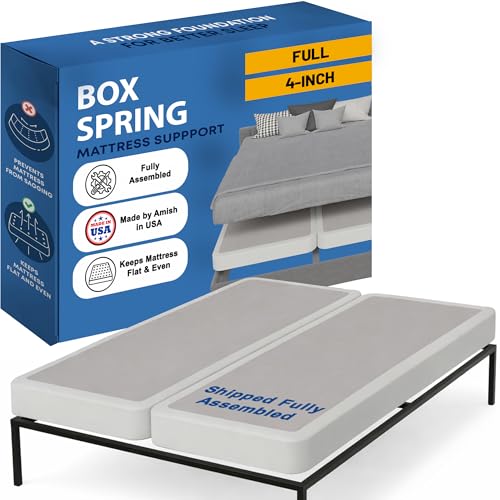
A split box spring is a foundation delivered in two separate halves rather than one solid unit. For a full size bed, each half is approximately the width of a twin foundation. When placed side by side inside a bed frame, the two pieces together create a support platform that matches the footprint of a standard full size mattress.
The concept is simple: two smaller pieces are easier to maneuver than one bulky foundation. That matters most in tight stairwells, narrow hallways, and apartment buildings with small elevators. A split design also makes it easier to move the foundation out again when you replace it, which is a practical advantage many buyers only appreciate later.
It helps to think of the split box spring as a foundation, not a mattress. It does not provide cushioning for sleeping; it provides a flat, stable surface that keeps the mattress evenly supported and allows air to circulate underneath. If you are still researching the broader category, the main beds and frames section is a useful starting point.
Why Choose a Split Foundation for a Full Size Bed?
Full size beds sit in a middle zone: large enough for two sleepers in a compact room, but small enough that a single-piece foundation should be manageable. Even so, a split foundation offers several concrete benefits.
- Easier delivery and installation. Two half-width pieces navigate corners, doorways, and staircases far more easily than one rigid unit.
- Simpler moving day. When you relocate, each half can be carried by one person, reducing the risk of damage to walls and the foundation itself.
- Better for tight bedrooms. If your bedroom is small, assembling the foundation inside the room is often the only practical option. Split pieces make that possible.
- Easier storage and disposal. Replacing a foundation is less of a logistical headache when it comes apart into two manageable sections.
- Compatibility with standard mattresses. A correctly sized split foundation supports a regular full size mattress without modification.
If your bedroom is genuinely cramped, it is worth reading about space-saving beds for small rooms alongside this guide. The right foundation and the right frame together make a small room feel far more functional.
Sizing and Fit: Getting the Measurements Right
A standard full size mattress measures 54 inches wide by 75 inches long. A split box spring for a full size bed should match that footprint when both halves are joined. In practice, each half is roughly 27 inches wide and 75 inches long, though exact dimensions vary slightly by manufacturer.
Two measurements matter most:
- Combined width. The two halves together must equal the mattress width. A gap or overlap at the center seam creates an uneven sleeping surface.
- Height. The foundation height plus mattress height determines the final bed height. Standard foundations are typically in the 5 to 9 inch range, with low-profile options at the shorter end.
Practical tip: Measure your bed frame's inner rails before ordering. The foundation must drop inside the frame and rest on the rails, not balance on top of them. If the frame has a center support rail, confirm that the rail height matches the foundation's resting height so both halves sit perfectly level.
If you are also comparing frame sizes, the beds and frames category covers the major size classes and how they interact with foundations. Buyers who later move up to a larger bed often review storage beds double with mattress configurations, since those frames typically include integrated support systems.
Types of Split Box Springs and Quality Tiers
Split foundations are not all built the same way. The internal construction determines how well the unit holds its shape and how long it lasts. Instead of thinking in terms of figures, it helps to classify products by build tier.
| Tier | Construction | Best For | Durability Notes |
|---|---|---|---|
| Entry-Level | Wood frame with basic coil springs and a simple fabric cover | Guest rooms, occasional-use beds, starter setups | Solid for light use; may soften sooner under daily two-person load |
| Mid-Range | Reinforced wood or steel frame with higher coil count and denser padding | Primary bedrooms, teen rooms, daily use | Better shape retention; good value for its tier over many years |
| Premium | High-grade steel springs, reinforced corners, heavy-duty cover | Heavy mattresses, two-adult daily use, long-term setups | Excellent structural stability; resistant to sagging at the seam |
| Commercial-Grade | Engineered steel grid or torsion modules with commercial certification | Rental properties, hospitality, high-turnover rooms | Built for repeated use and frequent mattress changes |
Beyond tier, there are a few construction styles worth knowing:
- Traditional coil box springs. The classic design, using steel coils inside a wood or metal frame. Responsive and breathable.
- Semi-flex foundations. A hybrid of coil and rigid support, offering a slightly firmer feel under the mattress.
- Rigid platform foundations. No coils at all; a slatted or solid deck inside a fabric-covered frame. Often recommended for memory foam and hybrid mattresses.
Always check the mattress manufacturer's foundation requirements. Some warranties are voided by using the wrong foundation type, so matching construction to mattress technology is not optional.
Support and Frame Requirements
A split foundation is only as good as the frame beneath it. Because the design relies on two separate pieces meeting at the center, the bed frame must prevent the halves from drifting apart.
Key requirements:
- Center support rail. A metal or wood rail running the length of the frame directly under the seam. This is the single most important feature for a split setup.
- At least one center leg. The center rail needs a leg to the floor, ideally with a leveling foot, to prevent bowing under weight.
- Sufficient slat spacing. If the frame uses slats beneath the foundation, keep gaps tight — generally no more than 3 inches apart for coil foundations.
- Level floor contact. Uneven flooring is a common cause of seam sagging. Adjustable feet help.
Common mistake: Placing a split foundation directly on the floor. Even if it seems stable at first, the two halves can shift apart over time, and moisture can become trapped under the fabric cover. A proper frame with a center rail is strongly recommended.
Some buyers pair a split foundation with an adjustable base for a partner's preference. If that is your situation, understand that standard split box springs are not compatible with articulated platforms. Review dedicated options such as split adjustable beds with mattress and split mattress adjustable beds instead of forcing a static foundation onto a moving base.
Matching a Split Foundation to Your Mattress
The right foundation depends on what sits on top of it. Here is how the major mattress types align:
- Innerspring mattresses. Pair well with traditional coil box springs. The springs work together to distribute weight.
- Memory foam mattresses. Usually need a rigid or semi-flex foundation with a solid or tightly slatted deck. A coil box spring may feel too soft underneath.
- Hybrid mattresses. Typically accept either a semi-flex or rigid foundation. Check the manufacturer's list of approved foundations.
- Latex mattresses. Prefer a firm, breathable, slatted base. A rigid split platform foundation is often the best match.
Mattress weight also matters. Heavier mattresses place more load on the center seam. If your mattress is on the heavier side, choose a premium or high-end tier foundation with reinforced center structure rather than an entry-level unit.
Sleepers who eventually move toward a split king setup will find a different foundation logic entirely. Guides on split king beds adjustable and split king adjustable beds explain how those systems are structured. For shoppers researching mattress types more broadly, the main mattresses section is a solid reference.
Setup and Assembly Tips
Assembling a split foundation is straightforward, but small details determine whether the setup feels solid or wobbly.
- Build the frame first. Fully assemble the bed frame, including the center rail and center leg, before bringing in the foundation halves.
- Lower each half into place. Set one half down inside the frame, flush against the headboard end and one side rail. Then set the second half beside it.
- Press the halves together. The inner edges should touch with no visible gap. Some models include a connecting strap or clip to keep the halves aligned.
- Check the seam. Run your hand along the center line. A soft or uneven spot indicates the halves are not level with each other.
- Place the mattress. Center the mattress on the foundation so overhang is equal on all sides. Overhang puts uneven pressure on the foundation edges.
- Test for movement. Gently push the bed from the sides. A properly installed split foundation should not shift inside the frame.
If the foundation feels squeaky or unstable after assembly, the cause is usually a loose center rail connection or a leg that needs adjustment. Tighten all hardware and re-check floor contact at every leg.
Care, Rotation, and Lifespan
A split box spring is a long-term purchase, and a little maintenance extends its useful life significantly.
- Rotate the foundation. Every few months, rotate each half end-to-end (head to foot). This distributes wear more evenly across the springs or slats.
- Swap the halves occasionally. Swapping left and right halves further balances wear, especially if one side of the bed sees more use.
- Keep it dry. The fabric cover can trap moisture. Air out the foundation during mattress changes and use a breathable mattress protector.
- Inspect the seams. Check the center seam and corner stitching yearly for separation or sagging.
- Avoid jumping and heavy point loads. Concentrated pressure accelerates spring fatigue, particularly on entry-level units.
Most split foundations last eight to ten years. Premium and commercial-grade units often exceed that with consistent care. Replace the foundation when you notice persistent sagging at the center, a visible dip under the mattress, or squeaking that tightening cannot resolve.
How to Choose: A Practical Checklist
Use this checklist before placing an order:
- Confirm the size. Combined width must equal 54 inches for a full size mattress, with each half around 27 inches.
- Measure height. Decide whether you want a standard or low-profile foundation based on your preferred final bed height.
- Check the frame. Ensure a center support rail and center leg exist before buying a split design.
- Match the mattress type. Coil, semi-flex, or rigid platform — choose the construction your mattress manufacturer approves.
- Pick a tier that fits your use. Entry-level for occasional guest use, mid-range for daily bedrooms, premium for heavy mattresses and long-term setups.
- Read the warranty. Foundation warranties vary widely; confirm coverage details and what the manufacturer requires for claims.
- Plan the delivery path. Even with a split design, measure doorways and stairwells so both halves arrive without difficulty.
If you are still comparing bed sizes more broadly, the beds and frames guide walks through the trade-offs between full, queen, and larger sizes. Buyers upgrading from a smaller setup may also want to look at small twin beds and space-saving beds for small rooms before committing to a full size footprint.
Frequently Asked Questions
Are split box springs available for full size beds?
Yes. Split box springs for full size beds come as two twin-sized foundations placed side by side. Each half fits through tighter hallways and stairwells, making them practical for apartments and second-floor bedrooms.
Does a split box spring work with a standard full size mattress?
A split foundation supports a standard full size mattress as long as both halves are the correct height and placed flush together. A rigid center support rail or bed frame with a center beam is strongly recommended to prevent sagging at the seam.
How long does a split box spring last?
Most split foundations last eight to ten years with normal use. Premium and heavy-duty models with reinforced corners and high-grade steel springs tend to hold their shape longer, especially when rotated periodically.
Do split box springs need a bed frame?
Yes. Split box springs should sit inside a bed frame with a center support rail and at least one center leg. Placing them directly on the floor is not advised because the seam can shift and the fabric cover may trap moisture.
Can split box springs be used with an adjustable bed?
No. Adjustable beds use their own articulated platform. A split box spring is designed for static support only and should not be used with an adjustable base. If you are exploring motion beds, review options such as split adjustable beds with mattress before choosing a foundation.
Ready to Compare Split Foundation Options?
Browse recommended split box springs for full size beds, selected for construction quality, center support, and long-term durability. Compare features and check availability directly.
View Recommended Products