Toddler Beds for Boys: The Complete Guide to a Smooth Transition
Everything you need to know about choosing a safe, durable, and comfortable toddler bed for your little boy — from frame styles and safety rails to mattress compatibility and bedtime routines.
START THE GUIDEMoving a boy from a crib to his first "big kid" bed is a milestone that brings excitement and a fair share of questions. Parents researching toddler beds for boys are usually looking for more than a product list — they want to understand safety standards, frame construction, mattress sizing, and how to make the transition stress-free for a growing child. This guide walks through every decision point so you can choose with confidence and help your son sleep soundly in his new bed.
Whether you are preparing for a first transition or replacing a hand-me-down frame, the right toddler bed balances low height, secure guardrails, and a construction that can withstand a child who treats bedtime like a playground. Below, we break down the key considerations, compare frame styles and market tiers, and share practical tips that parents of boys consistently find useful.
Why Choose a Toddler Bed for Boys?
A toddler bed is essentially a scaled-down bed that uses a crib mattress but sits low enough for a child to climb in and out independently. For boys who are naturally active and curious, this independence is a developmental win. It supports autonomy while keeping the sleep surface close to the floor, which reduces the risk of injury if a child rolls out during the night.
Beyond safety, toddler beds create a sense of ownership. Boys who help pick their bed — whether it is a themed design or a simple wooden frame — tend to feel more positive about the move away from the crib. The smaller footprint also frees up floor space in a nursery or shared bedroom, which is a practical advantage for families in apartments or smaller homes. If space is a major constraint, exploring space-saving beds for small rooms can reveal complementary layout ideas.
Safety Standards and Design Features to Prioritize
Safety is the single most important factor when choosing a bed for a toddler. A frame that looks charming but lacks proper rails or meets outdated standards is not worth considering. Focus on these core elements:
Secure Guardrails
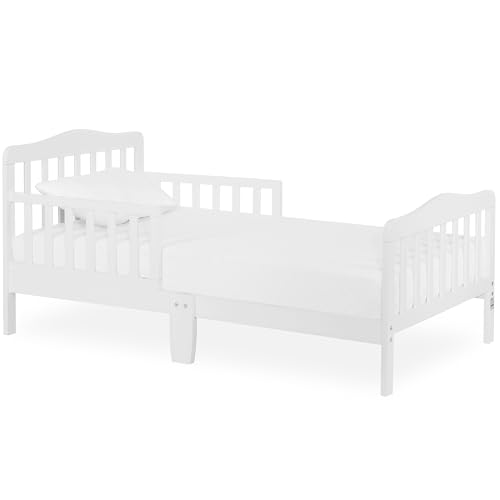
Built-in or attachable rails should extend at least five inches above the mattress on both sides. Some frames use partial rails that still allow easy entry while preventing roll-outs.
Low Profile Height
The mattress platform should sit close to the floor so a boy can step in and out safely. A low center of gravity also makes the bed harder to tip if a child leans over the edge.
Sturdy Construction
Solid wood or heavy-duty metal frames with reinforced joints handle daily wear better than lightweight particleboard. Look for smooth, rounded edges and no exposed hardware.
Safety reminder: Always check that the bed meets current safety certifications for your region, use a firm crib mattress that fits snugly with no gaps, and avoid placing the bed near windows, blind cords, or heavy furniture that could topple.
Guardrails deserve extra attention. Active boys often roll, kick, and twist in their sleep, so a rail that feels secure and stays firmly attached is essential. Some frames include a rail only on one side, assuming the bed is pushed against a wall. That setup can work, but it requires the bed to stay in that position permanently. If you plan to rearrange the room, choose a frame with rails on both sides or purchase an adjustable rail kit.
Popular Toddler Bed Styles for Boys
Toddler beds for boys come in several frame styles, each with distinct advantages. The right choice depends on room layout, the child's personality, and how long you expect to use the bed before moving to a twin.
Classic Wooden Toddler Beds
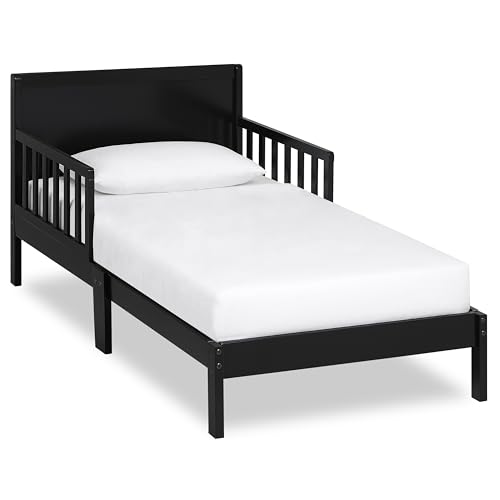
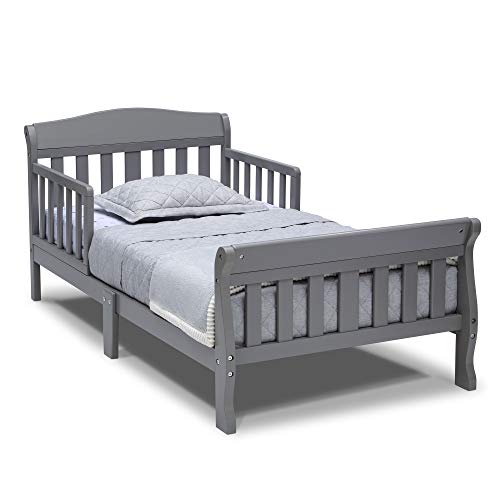
Wooden frames are the most common choice because they are sturdy, warm-looking, and available in finishes that match nursery furniture. A solid wood toddler bed with a simple panel headboard often suits boys from the transition stage through age four or five. Entry-level wooden models use engineered wood, while mid-range and premium options use solid hardwood with reinforced slats. For families who value natural materials, wooden beds are also easier to repair and refinish over time.
Themed and Character Beds
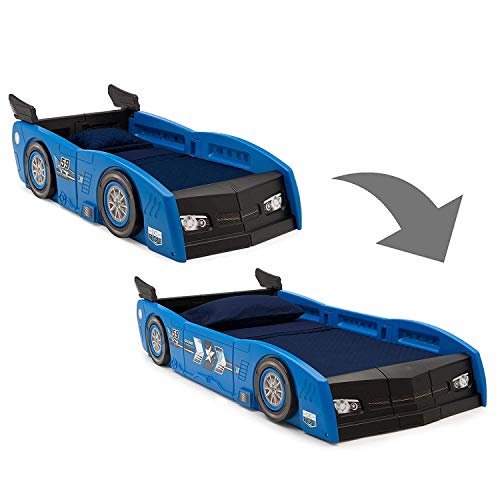
Boys often gravitate toward beds shaped like race cars, fire trucks, or animals. These designs can make bedtime more appealing, especially during the transition period. The trade-off is that themed beds may have a shorter useful life as interests change. If you choose a themed frame, verify that it still meets safety standards and that the novelty does not compromise structural integrity — some novelty beds are decorative shells over a basic frame.
Convertible and Extendable Frames
A convertible toddler bed can later transform into a twin or full-size bed by adding extension panels or swapping the mattress platform. These frames sit in the mid-range to premium tiers but offer long-term utility. For a boy who will grow quickly, a convertible design can be a worthwhile investment because it eliminates the need to buy a second frame within a few years.
Montessori-Style Floor Beds
Floor beds place the mattress directly on a low platform with no rails. They encourage independence and are popular in Montessori-inspired nurseries. However, they are best suited to calm sleepers or supervised settings, since an active boy may roll off the platform. If you like the low-profile concept but want more containment, look for a floor bed with a shallow recessed frame.
Key Buying Factors at a Glance
Use the table below to compare the main considerations before you shop. The "Tier" column reflects relative market positioning, not a specific figure, so the guidance stays useful regardless of when you read this guide.
| Factor | What to Look For | Best For | Tier Guidance |
|---|---|---|---|
| Frame Material | Solid wood, reinforced metal, or high-grade engineered wood | Long-term durability and daily use | Entry-level to mid-range for engineered wood; premium for solid hardwood |
| Guardrails | Built-in rails on both sides or attachable rail kit | Active sleepers and boys new to beds | Essential tier — non-negotiable feature |
| Mattress Compatibility | Standard crib mattress (approx. 28 x 52 in) | Reusing an existing crib mattress | Check frame specs; most are standard |
| Convertibility | Extension panels for twin or full size | Families planning long-term use | Mid-range to premium |
| Footprint | Compact dimensions for small rooms | Apartments and shared bedrooms | Starter tier and up |
| Finish & Edges | Non-toxic finishes, rounded corners, smooth surfaces | Safety and easy cleaning | All tiers should meet this baseline |
Mattress Compatibility and Comfort
Most toddler beds are designed to hold a standard crib mattress, which measures roughly 28 by 52 inches. Reusing the crib mattress is a practical choice, but only if it is still firm and supportive. A mattress that has softened or developed indentations should be replaced, because a firm surface is safer and more supportive for a growing spine.
Fit matters as much as firmness. The mattress should sit snugly inside the frame with no gaps wider than a couple of fingers. A loose mattress can create a dangerous gap where a child could become wedged. If you are buying a new mattress, confirm that it is labeled for toddler bed use and that the dimensions match the frame's interior.
For boys who run hot or tend to kick off blankets, a breathable mattress cover and lightweight bedding can improve comfort. Avoid piling on thick comforters that can bunch up around the face. A fitted sheet and a light blanket are usually sufficient in a temperature-controlled room.
How to Transition a Boy to a Toddler Bed Smoothly
The transition itself can be as important as the bed you choose. Boys who feel involved and prepared tend to adapt faster. Consider these practical steps:
- Introduce the idea early. Talk about the "big boy bed" in the weeks before the switch and let your son help choose bedding or a small pillow.
- Keep the routine consistent. Maintain the same bedtime sequence — bath, story, lights out — so the only change is the sleep surface.
- Place the bed in a familiar spot. If possible, put the toddler bed where the crib was, or close to it, to preserve the room's familiar layout.
- Use a night light. A dim, warm night light can reduce anxiety about the darker, more open sleeping space.
- Be patient with night wakings. Some boys test boundaries for the first week or two. Calmly return them to bed without turning it into a game.
- Secure the room. Anchor furniture, cover outlets, and remove tripping hazards now that your child can get out of bed independently.
Parent tip: keep the crib mattress height in mind
If you are reusing a crib mattress, check that the toddler frame's platform height keeps the mattress top low enough that your son can climb in without help. A platform that sits too high defeats the purpose of a toddler bed and increases fall risk.
Durability, Cleaning, and Long-Term Care
Toddler beds take a beating. Boys jump, climb, and sometimes use the frame as a launch pad. Choosing a durable construction from the start saves frustration later. Solid wood frames with reinforced slats and metal-on-metal hardware tend to hold up better than frames assembled with plastic brackets.
Cleaning is straightforward for most finishes. Wipe wooden frames with a damp cloth and mild soap, and avoid harsh abrasives that can dull the finish. For upholstered headboards, vacuum regularly and spot-clean according to the manufacturer's instructions. Check screws and bolts every few months and tighten them as needed — a wobbly frame is a safety concern, not just an annoyance.
If your son shares a room with a sibling or you are planning for future children, a convertible frame or a well-built classic wooden bed can serve multiple children over time. That long-term view makes a mid-range or premium frame a more sensible investment than replacing an entry-level bed every couple of years.
Space Planning for Boys' Bedrooms
A toddler bed frees up floor space compared with a crib, but the room still needs a safe layout. Leave at least two feet of clear space on the side where your son gets in and out, and keep the path to the door unobstructed. Avoid placing the bed directly under a window or next to a radiator.
If the room is tight, consider a bed with under-bed storage or a frame that sits close to a corner. For families planning ahead, browsing small twin beds for small spaces can help you visualize the next size up and plan a layout that grows with your child. Toddler beds are temporary, so thinking one step ahead saves rearranging later.
Shared bedrooms require extra care. Position the toddler bed so it does not block access to the other bed, and use a room divider or a low shelf to create a sense of separate space if the room allows. Boys sharing a room often sleep better when each has a clearly defined zone.
Common Mistakes to Avoid
Even well-intentioned parents can overlook details that affect safety and comfort. Watch out for these common pitfalls:
- Using an ill-fitting mattress. Gaps around the mattress edges are a hazard. Always match the mattress to the frame's interior dimensions.
- Skipping the guardrail too early. Wait until your son consistently sleeps without rolling out before removing rails.
- Placing the bed near hazards. Keep the bed away from windows, heavy furniture, and dangling cords.
- Ignoring the weight and height limits. Most toddler beds have a maximum weight and height recommendation. Move to a larger bed when your child approaches those limits.
- Buying purely on theme. A character bed is fun, but structural quality and safety certifications come first.
Frequently Asked Questions
When should a boy transition from a crib to a toddler bed?
Most boys transition between 18 months and 3 years, typically when they begin climbing out of the crib or reach about 35 inches in height. The right timing depends on each child's developmental readiness rather than a fixed age. If your son is climbing out of the crib, the transition becomes a safety priority.
What size mattress fits a toddler bed for boys?
Most toddler beds use a standard crib mattress, measuring approximately 28 by 52 inches. Always verify the specific frame requirements, as a few models use proprietary sizing. A snug fit with no gaps is essential for safety.
Are toddler beds for boys safe without a guardrail?
A low-profile bed placed near the floor can work well for calm sleepers, but guardrails are strongly recommended for active boys or restless sleepers. Many frames include built-in rails or offer them as add-ons. If you remove rails, do so only after your son has demonstrated consistent, calm sleep for several weeks.
How long can a boy use a toddler bed?
Most boys use a toddler bed until roughly age 4 or 5, or until they outgrow the crib mattress dimensions and need a twin bed. A convertible design can extend usability further by adding extension panels for a larger mattress.
Can a toddler bed be used for a girl as well?
Yes. Toddler beds are sized for young children regardless of gender. Many frames come in neutral finishes and designs that suit any child. The buying factors in this guide apply equally to beds marketed for boys and girls.
Final Thoughts
Choosing toddler beds for boys comes down to safety, fit, and durability. Prioritize a frame with secure guardrails and a low profile, match it with a firm crib mattress that fits snugly, and prepare the room before the transition. A well-built wooden frame or a convertible design in the mid-range to premium tier will serve your son through several years of growing and changing sleep habits.
Take the time to involve your child in the process, keep bedtime routines consistent, and inspect the bed regularly for loose hardware. With the right bed and a thoughtful transition plan, your son will settle into his new sleep space with confidence — and the whole family will rest easier.