
Small Twin Beds for Small Spaces
Your complete guide to choosing a compact twin bed that maximizes comfort without sacrificing precious floor space.
START EXPLORINGWhy small twin beds matter for compact rooms: When square footage is limited, every inch counts. A standard twin bed measures roughly 38 inches wide by 75 inches long — but the right small twin bed for small spaces can be the difference between a cramped, cluttered room and a functional, restful retreat. Whether you are furnishing a studio apartment, a guest room, a dorm, or a child's bedroom, understanding how twin bed dimensions, frame styles, and clearance requirements interact with your room is the foundation of smart furniture planning.
This guide walks you through the exact measurements you need, the frame types that work best in tight quarters, how to create usable space around a compact bed, and the safety considerations that matter most. By the end, you will know precisely which type of small twin bed fits your room and your sleeping style — so you can move forward with confidence.
What Counts as a Small Twin Bed?
A twin bed is the smallest standard adult bed size sold today. The mattress measures 38 inches wide by 75 inches long. When people search for small twin beds for small spaces, they are typically looking for one of two things: a standard twin mattress paired with a compact frame, or a specialized space-saving design such as a twin platform bed with low clearance, a twin bed with under-bed storage, or a twin bed with a slim profile that fits flush against a wall.
It helps to distinguish between the mattress size and the frame footprint. A twin mattress is always 38 × 75 inches, but the assembled bed can be wider and longer depending on the headboard, footboard, side rails, and any storage drawers. Some frames add 3 to 6 inches on each side, which can push a nominally “twin” bed into a footprint that no longer fits a tight room. When you shop for a compact twin bed, always confirm the assembled dimensions — not just the mattress size.
Compared with other bed sizes, a twin is substantially smaller than a full (54 × 75 inches), queen (60 × 80 inches), or king (76 × 80 inches). For a single sleeper in a small room, a twin often frees up enough floor area for a desk, dresser, or walkway. If two people share the room, a bunk bed designed for small spaces may be a better fit than two separate twin beds. For a single sleeper who wants a little more width, a twin bed collection includes options that add storage or headboard features without changing the mattress size.
Twin Bed Dimensions and Room Clearance Explained
Getting the measurements right is the single most important step when buying a small twin bed. The table below summarizes the standard dimensions you need to plan your layout.
| Measurement | Standard Twin | Why It Matters |
|---|---|---|
| Mattress width | 38 in (96.5 cm) | Determines whether the bed fits between walls or furniture. |
| Mattress length | 75 in (190.5 cm) | Critical for foot traffic and door swing clearance. |
| Typical frame width | 41–44 in (104–112 cm) | Side rails and posts add width beyond the mattress. |
| Typical frame length | 78–82 in (198–208 cm) | Headboard and footboard extend the footprint. |
| Recommended walkway | 24–30 in (61–76 cm) | Minimum clearance for comfortable movement around the bed. |
| Recommended ceiling clearance | 24–30 in above mattress | Especially relevant for bunk and loft configurations. |
How to Calculate Available Space
Measure the length and width of your room, then subtract door swing zones, closet access, and any furniture you cannot move. The remaining area is your usable floor space. A standard twin bed with a simple frame needs a rectangle of roughly 44 × 82 inches, plus a 24-inch walkway on at least one long side. If your room cannot accommodate that rectangle, consider a space-saving bed for small rooms such as a loft, a bed with storage underneath, or a twin bed placed in a corner with only one open side.
Measurement tip: Use painter's tape to outline the bed's footprint on the floor before you buy. Walk around the outline for a few days. This simple exercise reveals whether the walkway feels comfortable and whether doors or drawers will collide with the bed.
Best Twin Bed Frame Types for Small Spaces
The frame you choose determines how much floor space the bed consumes and how the room feels. Below is a comparison of the most practical frame types for a small twin bed.
Platform Frames
A platform frame supports the mattress on a solid or slatted base and typically does not require a box spring. Low-profile platform frames keep the bed visually light and reduce the overall height, which makes small rooms feel less crowded. A solid platform bed with no slats offers a clean, sturdy base that works well in tight quarters. Platform frames with built-in drawers are a popular choice because they convert wasted under-bed space into storage.
Storage Frames
Storage beds integrate drawers or lift-up compartments beneath the mattress. For a small room, this is often the most efficient use of vertical space because it eliminates the need for a separate dresser or under-bed bins. If storage is your priority, review our guide to space-saving beds with storage for configuration options and capacity considerations.
Loft and Bunk Frames
Loft beds raise the sleeping surface above floor level, creating room for a desk, seating, or storage underneath. A space-saving loft bed for small rooms can effectively double the usable floor area of a compact bedroom. For rooms shared by two sleepers, a bunk bed designed for small rooms stacks two twin sleeping surfaces in the footprint of one.
Murphy and Folding Frames
Murphy beds fold into a wall-mounted cabinet, freeing the entire floor when the bed is not in use. These are ideal for multi-purpose rooms such as a home office or studio. However, they require secure wall anchoring and professional installation. A top-rated Murphy bed may be worth considering if your room serves several functions throughout the day.
Simple Metal and Wood Frames
If storage and elevation are not priorities, a straightforward metal or wooden twin frame is the most compact option. Choose a frame with a low headboard and no footboard to minimize the footprint. Verify that the frame is rated for the mattress weight and that the joints are reinforced.
| Frame Type | Best For | Space Impact |
|---|---|---|
| Low-profile platform | Minimalist rooms, easy access | Small footprint, light visual weight |
| Storage frame | Rooms without a dresser | Same footprint, adds usable storage |
| Loft frame | Studios, dorms, kids' rooms | Frees floor area beneath the bed |
| Bunk frame | Shared rooms, two sleepers | Two beds in one footprint |
| Murphy bed | Multi-purpose rooms | Zero floor footprint when folded |
Space-Saving Features and Storage Solutions
Small rooms reward smart storage. The right combination of under-bed, vertical, and multi-function furniture can make a compact twin bed feel like part of an organized system rather than an obstacle.
Under-Bed Storage
Under-bed space is the most underused real estate in a small bedroom. Beds with built-in drawers, lift-up platforms, or open cubbies capture that space without adding furniture. If you prefer a standard frame, choose one with at least 10 to 12 inches of clearance so you can slide in storage bins. For more ideas, explore storage beds for small spaces and space-saving beds with storage.
Vertical Storage
When floor space is limited, build upward. Wall-mounted shelves above the bed, a tall narrow bedside table, or a tall and skinny bedside table can hold essentials without consuming floor area. A smart bedside table with wireless charging consolidates cables and devices, reducing clutter on the nightstand surface.
Multi-Function Furniture
Consider furniture that serves more than one purpose. A swivel bedside tray table with adjustable height can function as a nightstand, a laptop desk, and a breakfast tray. In very small rooms, a sofa bed for small rooms may replace a dedicated guest bed and a seating area at the same time.
Choosing Between a Twin and a Sofa Bed
If the room must serve as both a living space and a bedroom, compare a fixed twin bed with a convertible option. A sofa bed that is actually comfortable can double as seating during the day, though it typically requires more floor clearance when unfolded. For rooms used primarily for sleeping, a fixed twin bed with storage is usually the more space-efficient choice.
Comfort and Mattress Compatibility
A small bed should not mean a compromise on sleep quality. Twin mattresses are available in every major construction type: memory foam, innerspring, hybrid, and latex. The key is matching the mattress to your sleeping position and the frame's support system.
Matching Mattress to Frame
Platform frames support foam and hybrid mattresses directly, provided the slats are closely spaced (no more than 2 to 3 inches apart) or the base is solid. Innerspring mattresses generally require a box spring or a frame with a firm foundation. Always check the mattress manufacturer's warranty requirements, because using an incompatible base can void coverage.
Firmness and Sleeping Position
Side sleepers typically need a softer surface that allows the shoulders and hips to sink slightly, while back and stomach sleepers usually prefer firmer support. Our stomach sleeper guide explains how to choose a mattress that keeps the spine aligned. For side sleepers, a bed rated for side sleepers can provide the pressure relief needed for restful sleep.
Mattress Thickness and Bed Height
In a small room, the combined height of the frame and mattress matters. A very thick mattress on a tall frame can make the bed feel bulky and block sightlines. A mattress of 8 to 12 inches on a low-profile platform frame usually strikes a good balance between comfort and visual space. If you add a topper, account for the extra height when planning clearance around the bed.
Comfort tip: If you are unsure about firmness, look for a mattress with a trial period. A trial lets you test the mattress in your own room — the only environment where you can accurately judge how it interacts with your frame, bedding, and sleep habits.
How to Arrange a Small Room Around a Twin Bed
Placement can make a twin bed feel larger or smaller than it is. These layout principles help you get the most from a compact room.
Choose the Right Wall
Place the headboard against the longest uninterrupted wall, ideally opposite or adjacent to the door rather than directly in the door's swing path. Avoid placing the bed under a window if drafts or direct sunlight disturb sleep, unless you have appropriate window treatments.
Leave a Walkway
Aim for at least 24 inches of clearance on the side you use to get in and out of bed. If the room is too narrow for a walkway on both sides, push the bed into a corner and use the open side for access. A corner placement works especially well with a low-profile platform frame.
Use Vertical Space
Mount shelves, hooks, or a reading light above the bed to keep the floor clear. A touch bedside lamp with USB port can be mounted or placed on a narrow shelf, eliminating the need for a floor lamp.
Keep the Foot of the Bed Clear
If possible, leave space at the foot of the bed so the room does not feel blocked. In very tight rooms, a bed placed lengthwise along a wall may be the only option; in that case, use the wall above the bed for storage and keep the opposite wall free of bulky furniture.
For more layout inspiration, see our guides to studio apartment furniture planning and teenage beds for small rooms.
Safety and Durability Checklist
A small bed is used every day, so build quality and safety matter. Use this checklist before you finalize a purchase.
- Weight capacity: Confirm the frame's rated weight capacity exceeds the combined weight of the mattress and sleeper with a comfortable margin.
- Joint construction: Look for reinforced joints, metal-to-metal connections, and center support legs on larger frames. A sturdy bunk bed should include guardrails and a secure ladder if it is elevated.
- Stability: The frame should not wobble when you sit on the edge or shift your weight. Check that all legs rest flat on the floor.
- Finish and materials: Solid wood and high-grade steel generally outlast particleboard. If the frame is painted or coated, confirm the finish is low-emission and appropriate for indoor use.
- Assembly instructions: A clear manual with labeled parts reduces the risk of improper assembly, which is a common cause of instability.
- Certifications: For children's beds, check for relevant safety certifications and age recommendations. For adult beds, look for independent testing claims where available.
- Wall anchoring: Tall or narrow frames, especially Murphy beds and loft beds, should be anchored to a wall stud according to the manufacturer's instructions.
If you are considering an elevated bed, review solid wood bunk beds with stairs for safer access than a vertical ladder, and sturdy twin-over-twin bunk beds for frame stability options.
Who Benefits Most from a Small Twin Bed?
A twin bed is a practical choice for a wide range of situations. The most common use cases include:
- Studio and small apartments: A twin frees floor area for a seating zone, a workspace, or a dining nook. Pair it with space-conscious seating to create a multi-zone layout.
- Guest rooms: A twin bed accommodates one guest comfortably and leaves room for a dresser or a reading chair. A pull-out sofa bed is an alternative if the room must also serve as a den.
- Children's rooms: Twin beds are the standard size for school-age children and teenagers. A teen bed designed for small rooms can include storage and study features.
- Dorms and shared housing: A space-saving bunk bed for adults stacks two twin beds in a footprint that fits a shared room.
- Home offices and multi-purpose rooms: A Murphy bed keeps the floor clear during working hours and provides a sleeping surface at night.
- Single sleepers who value floor space: Anyone who sleeps alone and wants more room for other activities can benefit from a compact twin setup.
If you need a sleeping surface for occasional guests without dedicating permanent floor space, compare a twin bed with a temporary bed for sleepovers or a top-rated air bed. For everyday use, a fixed twin bed with a quality mattress is generally the more durable and comfortable option.
Ready to Choose Your Small Twin Bed?
Explore our curated selection of compact twin beds, storage frames, and space-saving designs — all selected for small-space living.
VIEW RECOMMENDED OPTIONSFrequently Asked Questions
The standard twin mattress is 38 by 75 inches, which is the smallest conventional adult bed size. A twin XL is longer at 80 inches but the same width, so it is not smaller in footprint. For truly compact spaces, some manufacturers offer narrow twin or cot-sized mattresses, but these are less common and may limit mattress and bedding choices.
Yes. Millions of adults sleep on twin beds, especially in dorms, guest rooms, and small apartments. The key is choosing a mattress that matches your sleeping position and a frame that supports it properly. A twin bed is generally comfortable for one average-sized adult; taller individuals may prefer a twin XL for extra legroom.
Not necessarily. Platform frames with closely spaced slats or solid bases support most foam and hybrid mattresses without a box spring. Skipping the box spring reduces height and cost, and it keeps the bed visually lighter in a small room. Check your mattress warranty to confirm whether a specific foundation is required.
Aim for at least 24 inches of walkway on the side you use to get in and out of bed. Thirty inches is more comfortable if the room allows it. If the bed is placed in a corner, the open side should have at least 24 inches of clearance. Also account for door swing, closet access, and drawer extension if the frame has storage.
A twin bed is 38 inches wide, while a full bed is 54 inches wide — a difference of 16 inches. In a very small room, that 16 inches can mean the difference between a usable walkway and a cramped space. A twin is usually the better choice for one sleeper in a tight room. A full bed may work if the room has enough width for clearance on both sides.
Loft beds are safe when properly assembled, anchored to the wall where required, and used within the manufacturer's weight limits. Look for guardrails, a stable ladder or stairs, and reinforced joints. Children's loft beds should meet applicable safety standards and age recommendations. Always follow the assembly instructions precisely.
Recommended Small Twin Beds for Small Spaces
⚠️ AFFILIATE DISCLOSURE: This website contains affiliate links. As an Amazon Associate, we earn from qualifying purchases. If you make a purchase through these links, we may receive a small commission at no additional cost to you. Read our full affiliate policy.

QEROMY Twin Bed Frame - 18 in Sturdy Platform Bed Frame Twin Size | Heavy Duty Metal Bed Frame No Box Spring Needed, Quick & Easy Assembly, No Noise, Black
Check price on Amazon
NEW JETO Metal Bed Frame,Twin Size Bed Frame with Storage Space,14 Inch | Heavy Duty Sturdy Mattress Foundation,Easy Assembly,No Box Spring Needed, Black
Check price on Amazon
Ziguxiao Twin Bed Frame with Classic Headboard, Black | Strong Metal Slats Support,Under Bed Storage Space,No Box Spring Needed,Easy to Assemble
Check price on Amazon
Kujielan 12 inches Twin Bed Frame with Minimalist headboard, Black | Metal Platform Base with Strong Metal Slats,Mattress Foundation for Under Bed Storage,Easy Assembly
Check price on Amazon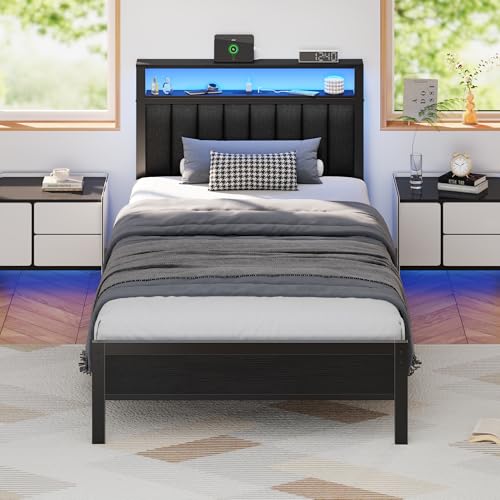
Furnulem Twin Size Bed Frame with Charging Station and LED Lights | Platform Bed with Grey Upholstered Headboard, 2-Tier Storage Shelf, Metal Slats, No Box Spring Needed, Noise-Free, USB+Type-C
Check price on Amazon
Fluest Twin Bed Frame with Storage Drawers, Upholstered Headboard with Charging Station, LED Lights, Fabric Drawers with Wheels, Under Bed Storage, No Box Spring Needed, Easy Assembly, Grey
Check price on Amazon
VASAGLE Twin Size Bed Frame, Metal Platform Bed Frame, 14 Inch | with Mattress Retainers, Heavy Duty, Under Bed Storage, Noise-Free Steel Mattress Foundation, No Box Spring Needed
Check price on Amazon
SHA CERLIN Twin Size Floating Bed Frame with Smart LED Lights, Black | Modern Design Metal Platform Bed with Power Strip, No Box Spring Needed, Noise-Free, Easy Assembly
Check price on AmazonDisclaimer
The information provided on SleepWisePicks is for educational and informational purposes only. We are not medical professionals, and our content should not replace professional medical advice, diagnosis, or treatment. Always consult with your physician or sleep specialist regarding sleep disorders or chronic pain. Some content may use AI assistance. Always check product safety standards and certifications before purchasing. If you do not agree, please do not use this website. Read the full disclaimer.