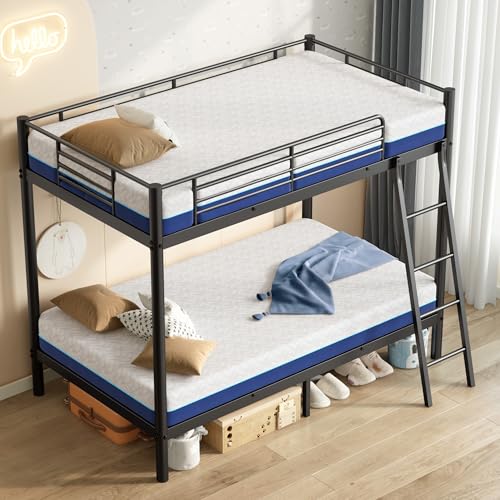
Twin Bunk Beds with Mattress Included: The Complete Buying Guide
Everything you need to know before choosing a twin bunk bed set with mattresses — from safety features and frame materials to mattress compatibility and space planning.
A twin bunk bed with mattress included is one of the most practical furniture investments you can make for a shared bedroom, a guest room, or a small home. Instead of sourcing a frame and two mattresses separately, a bundled set gives you a matched foundation and sleep surfaces in a single purchase — reducing guesswork and assembly headaches.
That said, not all bundled sets are built to the same standard. Frame gauge, guardrail height, ladder design, and mattress quality all vary widely across the market. This guide walks you through the decisions that matter so you can buy with confidence, whether you are furnishing a children's room, a teen bedroom, or a compact vacation property.
Quick answer: The best twin bunk bed sets pair a heavy-duty or reinforced frame with two 6–8 inch mattresses, full-length top guardrails, and a ladder that attaches securely to the frame. Prioritize safety certification and per-bunk weight capacity over decorative extras.
Why Choose a Twin Bunk Bed with Mattress Included?
Buying a bundled bunk bed set solves several problems at once. You get two sleeping surfaces in the footprint of one twin bed, and the mattresses are already matched to the frame's dimensions and weight guidelines. This is especially useful for first-time bunk bed buyers who may not realize that an overly thick mattress can compromise top-bunk guardrail safety.
Space Efficiency
Stacking two twin sleepers vertically frees up floor space for desks, storage, or play areas — ideal for small bedrooms and shared rooms.
Matched Components
The mattresses are sized and specified for the frame, removing the risk of buying a mattress that is too thick or too soft for bunk use.
Single Purchase Convenience
One order, one delivery, and one assembly session instead of coordinating a frame and two separate mattresses from different sellers.
Guest-Ready Flexibility
Bundled sets are a smart choice for vacation homes and guest rooms where you need dependable sleeping capacity without a complex setup.
Types of Twin Bunk Bed Sets
Bundled twin bunk configurations fall into a few broad categories. Understanding the differences helps you narrow your search before comparing individual models.
| Configuration | Best For | Key Consideration |
|---|---|---|
| Standard twin-over-twin | Siblings sharing a room; teen bedrooms | Most common layout; confirm top guardrail height |
| Detachable / separable bunk | Families who may want two separate beds later | Verify the model is explicitly designed to split |
| Bunk with stairs and storage | Kids' rooms needing built-in storage | Larger footprint; check stair depth and drawer clearance |
| Bunk with trundle | Sleepover-friendly guest rooms | Adds a third sleeping surface; trundle mattress may be included or separate |
If you need extra sleeping capacity, a twin bunk bed with trundle and storage extends the usefulness of the set for sleepovers and guests. For rooms where floor space is the primary constraint, explore twin bunk beds for small rooms to compare compact footprints.
Frame Materials and Build Quality
The frame is the backbone of any bunk bed. Because the top bunk carries a sleeper above another person, structural integrity is non-negotiable. Bundled sets generally use one of three frame types:
- Heavy-duty steel frames: The most common choice for bunk beds. Look for reinforced corner joints, a rust-proof finish, and a stated per-bunk weight capacity. Steel frames tend to be the most durable option for active kids and teens.
- Solid wood frames: Attractive and sturdy when built from hardwood or high-grade pine. Check for reinforced slat systems and metal-to-metal connections rather than wood screws alone at load-bearing joints.
- Engineered wood and composite frames: Often found in entry-level and mid-range sets. These can be perfectly serviceable for lighter sleepers, but inspect the assembly hardware and avoid models with thin side rails.
As a rule of thumb, mid-range and premium models offer thicker gauge steel, smoother ladder rungs, and better finish quality than starter-tier sets. If the bed will be used daily by growing children, investing in a higher tier pays off over the life of the furniture.
Mattress Compatibility: What to Expect from Included Mattresses
Bundled mattresses are usually entry-level to mid-range foam or innerspring units. They are serviceable for children and occasional guests, but it helps to set realistic expectations and check a few specifications before buying.
- Thickness: Most bunk sets are designed for mattresses between 6 and 8 inches. A thinner profile keeps the top bunk guardrail at a safe height above the mattress surface.
- Firmness: Medium-firm is the safest default for bunk beds. Very soft mattresses can sag and reduce the effective height of guardrails.
- Support core: Foam cores are common in bundled sets; some models include innerspring or hybrid mattresses. Check whether the mattress is described as suitable for daily use.
- Certification: Look for foam that meets current flammability and emissions standards. Reputable sellers list certifications in the product details.
- Replacement planning: Even well-made bundled mattresses have a finite lifespan. Confirm the frame accepts standard twin mattresses so you can replace them independently later.
Pro tip: If the included mattresses feel too basic for daily adult use, the frame can often be paired with higher-grade twin mattresses down the line. Always confirm the frame's maximum recommended mattress thickness first.
Safety Features That Matter
Bunk bed safety comes down to a handful of design details. Before buying any bundled set, verify each of the following:
Full-Length Guardrails
The top bunk should have guardrails on both sides, with no gap larger than a few inches between the rail and the mattress surface.
Secure Ladder Attachment
The ladder should hook or bolt firmly to the frame, with wide, flat treads rather than thin round rungs that are hard on bare feet.
Reinforced Slat System
Closely spaced slats distribute weight evenly and prevent mattress sagging. Metal slats or thick wooden slats are preferable to thin composite strips.
Stated Weight Limits
Reputable manufacturers publish per-bunk weight capacities. Treat missing weight information as a red flag.
Age guidance also matters. Most safety organizations recommend the top bunk for children aged six and older, with younger children on the bottom bunk. If you are furnishing a room for younger kids, compare twin beds for kids alongside bunk options to see whether a low-profile single bed is a better fit for the current stage.
Buying Checklist: What to Confirm Before You Order
Use this checklist to evaluate any twin bunk bed set with mattresses included:
- Per-bunk weight capacity is stated and suits your sleepers
- Top bunk has full-length guardrails on both sides
- Ladder attaches securely and has wide treads
- Included mattresses are 6–8 inches thick and medium-firm
- Frame accepts standard twin mattresses for future replacement
- Assembly hardware is metal, not plastic, at load-bearing joints
- Finish is described as rust-proof or sealed against moisture
- Product details list applicable safety certifications
- Return policy covers damaged or missing components
Space Planning and Room Fit
A twin-over-twin bunk bed occupies roughly the same floor footprint as a single twin bed, but vertical clearance matters. Leave enough headroom above the top bunk for sitting up comfortably, and keep ceiling fans and light fixtures clear of the upper rail. If the room is tight, measure doorways and stairwells before ordering — assembled bunk frames are bulky, and some models ship in multiple heavy boxes.
For rooms where storage is as important as sleeping capacity, models with built-in drawers or stairs make better use of the footprint. You can compare those layouts in our guide to twin bunk beds with storage drawers. If you are weighing a bunk against other compact options, the broader overview of types of beds for small rooms is a useful starting point.
Who Should Buy a Bundled Twin Bunk Set?
Bundled twin bunk beds suit a wide range of buyers:
- Families with siblings sharing a room: Two sleepers, one footprint, and matched mattresses from day one.
- Guest room and vacation property owners: Dependable sleeping capacity for visiting families without a complex furnishing project.
- Teens and young adults in small apartments: A space-efficient setup that can later be separated if the model is detachable.
- Foster and respite caregivers: Quick, practical sleeping arrangements that meet safety expectations.
Adults who prefer a single-level sleep surface may be better served by a standard twin bed and frame instead. And if you are furnishing a room that may later need two separate beds, a twin-over-twin bunk bed that can be separated offers the most long-term flexibility.
Assembly, Setup, and Care Tips
Most bundled bunk sets ship flat-packed and require two adults for safe assembly. Build the frame on a clear floor area, follow the manufacturer's step order, and tighten all bolts fully before placing mattresses. Once assembled, periodically re-tighten hardware — bunk beds experience more movement than single beds.
- Rotate and flip included mattresses every few months to promote even wear.
- Use a mattress protector on both bunks to extend the life of the included mattresses.
- Keep the ladder clear and teach children to use it one person at a time.
- Check guardrail security monthly and after any rough play.
Frequently Asked Questions
What mattress thickness works best for twin bunk beds with mattress included?
Most sets are designed for mattresses between 6 and 8 inches thick. A thinner profile keeps the top guardrail at a safe height and prevents the mattress from sitting above the frame. Always check the manufacturer's recommended maximum thickness.
Are twin bunk beds with mattress included safe for young children?
Yes, when used correctly. Look for full-length guardrails, a sturdy ladder, and a frame that meets current safety standards. The top bunk is generally recommended for children aged six and older, while younger children should use the bottom bunk.
Can twin bunk beds with mattress included be separated into two beds?
Some models are designed as detachable units that split into two freestanding twin beds. If flexibility matters, look for models explicitly described as separable. Others are built as a single fixed structure.
How much weight can a twin bunk bed support?
Weight capacity varies by model and construction. Heavy-duty steel and reinforced wooden frames generally support more per bunk than lightweight starter-tier frames. Always review the manufacturer's stated per-bunk weight limit.
Should I replace the included mattresses right away?
Not necessarily. Bundled mattresses are usually adequate for children and occasional guests. If the bed will be used daily by adults, consider upgrading to higher-grade twin mattresses — but confirm the frame's maximum thickness first.
Final Thoughts
A twin bunk bed with mattress included is a smart, space-efficient purchase when you choose carefully. Focus on frame durability, guardrail design, ladder security, and mattress thickness rather than decorative extras. Verify weight limits and safety details before ordering, and plan for the day you may want to replace the included mattresses with higher-grade twin models.
With the checklist in this guide, you can compare bundled sets confidently and pick the one that best fits your room, your sleepers, and your long-term plans.