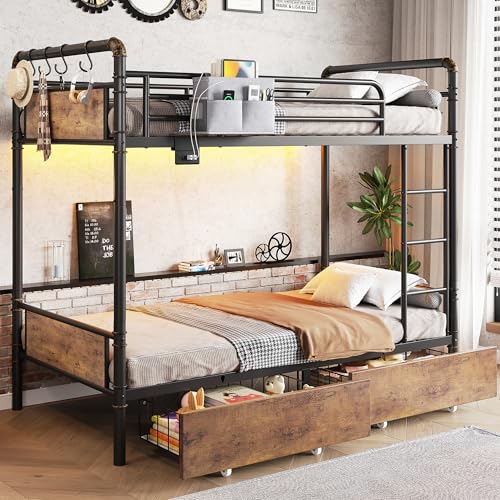
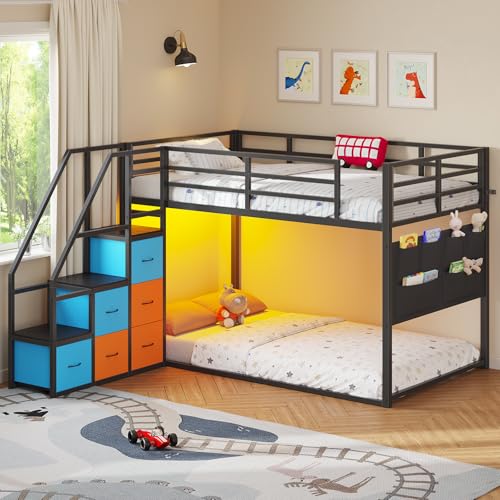
Twin Bunk Beds for Small Rooms
Maximize every square foot of your compact bedroom with a smartly designed twin bunk bed. This guide covers layout planning, safety essentials, storage options, and how to choose the right configuration for tight spaces.
Explore Top PicksWhy twin bunk beds work for small rooms: A twin bunk bed stacks two sleeping surfaces into the footprint of a single twin bed. That vertical stacking frees up floor space for play, study, or storage — making it one of the most efficient furniture choices for compact bedrooms, guest rooms, dorm-style setups, and shared kids' rooms.
Why Twin Bunk Beds Are Ideal for Small Rooms
When floor space is limited, the goal is to use vertical space without sacrificing comfort or safety. Twin bunk beds accomplish exactly that. Each bunk uses a standard twin mattress, so sleepers get a familiar, supportive surface, while the frame stacks them neatly into one compact column. The result is a room that feels open even when it houses two people.
Beyond raw space savings, twin bunk beds for small rooms offer practical advantages that matter in day-to-day living:
- Vertical storage integration — many models include built-in drawers, stairs, or shelving that replace a separate dresser or storage unit.
- Flexible layouts — a bunk bed can sit against a wall or in a corner, leaving the center of the room free for movement and activities.
- Future adaptability — detachable and convertible models can be split into two separate twin beds when needs change. Explore options in our twin bunk beds that come apart guide.
- Cost-efficient use of space — one frame serves two sleepers, which is an efficient long-term investment for growing families or shared rooms.
If you are still comparing bed styles, our overview of types of beds for small rooms and the broader twin beds for small rooms collection can help you weigh bunk beds against alternatives like trundles and loft beds.
Key Measurements Before You Buy
Fit is everything in a small room. Before choosing a twin bunk bed, measure the room and plan the footprint carefully. Standard twin mattresses measure roughly 38 inches wide by 75 inches long, so a twin-over-twin bunk frame typically occupies a footprint close to 42 inches wide by 80 inches long, plus clearance for the ladder or stairs.
Keep these planning dimensions in mind:
- Ceiling height: Allow at least 30 to 34 inches of clearance between the top of the lower mattress and the underside of the upper bunk. Add the upper mattress height to confirm total stack height fits your ceiling.
- Ladder or stair clearance: Leave at least 18 to 24 inches of open floor beside the ladder or staircase for safe climbing.
- Door and window swing: Confirm the frame does not block doors, windows, or closet access.
- Mattress thickness: Use a twin mattress no thicker than 8 to 10 inches on the top bunk unless the manufacturer specifies otherwise. Properly sized bunk mattresses are covered in our twin bunk beds with mattress included resource.
Choosing the Right Configuration
Twin bunk beds come in several configurations, and the right choice depends on room shape, ceiling height, and who will sleep there. Here is how the main options compare for compact spaces:
| Configuration | Best For | Space Consideration |
|---|---|---|
| Twin-over-twin bunk | Two sleepers of similar age or size | Most compact vertical footprint; the classic small-room solution |
| Bunk with stairs and storage | Kids' rooms needing extra storage | Stairs add depth but replace a dresser or shelving unit |
| Bunk with trundle | Occasional third guest | Trundle extends outward when used; keep pull-out clearance free |
| Corner bunk or L-shaped | Narrow rooms with limited wall length | Uses corner geometry efficiently; check both wall measurements |
| Detachable bunk | Rooms that may be reconfigured later | Same footprint as a standard bunk but converts to two twin beds |
For families with younger children, models with stairs and storage combine safe access with practical organization. If you expect overnight guests, a twin size bunk bed with trundle adds a third sleeping spot without permanently expanding the footprint. Rooms with unusual shapes may benefit from a twin corner bed with storage instead.
Storage Solutions That Earn Their Space
In a small room, every piece of furniture must justify the space it occupies. Storage-integrated bunk beds do double duty, and the right configuration can eliminate the need for a separate dresser entirely. Common storage features include:
- Under-bed drawers — built into the lower bunk base, ideal for clothing, bedding, or toys. See twin bunk beds with storage drawers.
- Staircase drawers — each step doubles as a storage compartment, common in twin size bunk beds with stairs.
- Built-in shelving — open cubbies or book niches near the headboard area keep essentials within reach.
- Trundle storage — a pull-out drawer beneath the lower bunk that can hold bedding or serve as an extra bed. Compare twin size bunk beds with storage and bunk beds with trundle and storage.
If storage is your top priority, our guide to twin bunk beds with storage drawers breaks down drawer capacity, glide quality, and layout fit. For a broader look at under-bed organization, see under bed storage ideas that pair well with bunk frames.
Safety Features to Prioritize
Bunk bed safety deserves serious attention, especially in small rooms where clearances are tight. Look for these features when comparing models:
- Full-length guardrails on the upper bunk, with gaps no wider than 3.5 inches to prevent entrapment.
- Sturdy ladder or staircase with anti-slip treads and a secure attachment to the frame.
- Reinforced slat support — closely spaced slats distribute weight evenly and extend mattress life.
- Solid joinery and hardware — mid-range and premium tiers typically use thicker posts, metal-to-metal connections, and corner braces for reduced wobble.
- Weight ratings — check the manufacturer's per-bunk weight limit and match it to the sleepers' needs.
Entry-level frames often meet basic safety standards, while mid-range and high-end tier models generally add thicker guardrails, smoother ladder geometry, and more robust reinforcement. For shared kids' rooms, prioritize guardrail height and stair or ladder stability over decorative details.
Materials and Build Quality by Tier
Twin bunk beds for small rooms are available across several quality tiers. Rather than focusing on any single number, compare what each tier typically delivers in construction and longevity:
- Entry-level tier — solid wood or engineered wood with basic slat support. A reasonable starting point for light use, though frames may show more movement over time.
- Mid-range tier — thicker posts, reinforced corner joints, and smoother finishes. Often the sweet spot for families, with better stability and longer service life.
- Premium and high-end tier — hardwood construction, metal-to-metal bolt systems, and precision-fit joinery. These frames are built for daily use over many years.
- Commercial-grade — heavy-duty steel or hardwood frames designed for high-traffic environments such as dormitories or guest houses.
Metal frames are a popular choice for compact rooms because they are generally slimmer and easier to move. Wood frames offer warmth and blend naturally with bedroom decor. Whichever material you choose, check that the frame includes a stable slat platform so you can use a standard twin mattress without a box spring. If you are pairing a bunk with separate twin beds elsewhere, our twin slat beds overview explains slat construction in more detail.
Maximizing the Rest of the Room
Once the bunk bed is placed, the remaining floor space becomes the room's usable living area. A few planning moves make a small room feel intentional rather than cramped:
- Anchor the bunk against a solid wall and keep the ladder side open. Avoid placing the bed in front of a window if possible.
- Use vertical wall space for shelves, hooks, or a wall-mounted bedside table so nothing competes for floor area.
- Choose a light, consistent color palette for bedding and walls to make the room feel larger. Coordinated twin comforters for bunk beds keep the look tidy.
- Keep pathways clear — aim for at least 24 inches of walking space between the bunk and other furniture.
- Add a mirror on a closet door or wall to visually double the space.
For more layout inspiration, browse unique bunk beds for small rooms and the wider twin size bunk beds collection.
Ready to Compare Twin Bunk Beds?
Browse our curated selection of space-saving twin bunk beds, filtered for compact rooms, storage features, and sturdy construction.
View Recommended ModelsFrequently Asked Questions
What is the smallest twin bunk bed footprint?
A standard twin-over-twin bunk frame typically occupies about 42 inches wide by 80 inches long, making it one of the most compact two-sleeper options available. Models without stairs or extended storage keep the footprint closest to that minimum.
How much ceiling height do I need for a twin bunk bed?
Plan for at least 30 to 34 inches of clearance between the lower mattress surface and the underside of the upper bunk, plus the height of the upper mattress and frame. In most rooms, a ceiling of 8 feet or more comfortably accommodates a standard twin bunk bed.
Can twin bunk beds be separated into two beds?
Yes — detachable and convertible models can be split into two independent twin beds. These are a smart choice for rooms that may be reconfigured as children grow. See our guide to twin bunk beds that come apart.
What mattress thickness works best on a top bunk?
Most manufacturers recommend a twin mattress no thicker than 8 to 10 inches on the upper bunk so the guardrail remains effective. Always follow the frame's specific mattress thickness guidance.
Are bunk beds with stairs safer than ladders?
Stairs generally offer more stable footing and are easier for younger children and adults to use, though they add depth to the frame. Ladders save space but require careful placement and clear climbing room. Both are safe when installed correctly and used within weight limits.