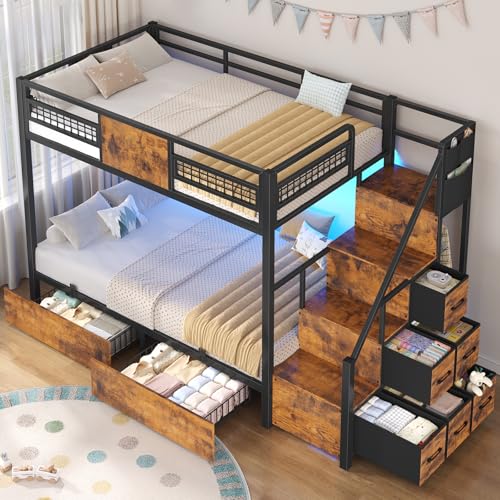
Twin Over Twin Bunk Beds with Stairs and Storage
The complete buying guide for families who need to maximize space, safety, and organization in one smart sleep solution.
Why this guide matters: If you are researching twin over twin bunk beds with stairs and storage, you have likely already decided that a standard bunk bed is not enough. You want easier access for children, built-in organization, and a design that holds up to daily use. This guide breaks down exactly what to look for, how these beds differ from simpler models, and which features genuinely improve safety and everyday convenience.
What Defines a Twin Over Twin Bunk with Stairs and Storage
A twin over twin bunk bed with stairs and storage combines three functions in a single footprint: two twin sleeping surfaces stacked vertically, a staircase instead of a ladder, and integrated storage such as drawers, shelves, or cubbies. This configuration is especially popular in shared children's rooms, guest rooms, and vacation homes where floor space is limited but organization is a priority.
The staircase is the defining upgrade over a traditional ladder-equipped bunk. Stairs are wider, provide a more stable climbing angle, and often include handrails. Many designs also incorporate storage directly into the staircase itself, using each step as a drawer or open cubby. This dual-purpose approach is what separates a well-designed bunk from a basic frame. If you are still comparing broader categories, our guide to twin size bunk beds covers the full range of options available.
Staircase Access
Wide, angled steps with handrails reduce the risk of slips compared to vertical ladders. Stairs are particularly helpful for younger children and for adults who access the top bunk during bedtime routines.
Integrated Storage
Drawers built into the staircase, under-bed storage compartments, and side shelving keep clothes, toys, and bedding organized without requiring additional furniture in the room.
Space Efficiency
Two sleeping areas and storage occupy the floor space of a single twin bed. This makes the design ideal for small bedrooms where every square foot counts.
Structural Reinforcement
Stair-equipped bunks carry more structural load than ladder models. Look for reinforced side rails, thicker slats, and a solid build that meets current safety standards.
Stairs vs. Ladders: Why the Upgrade Matters
Ladders are functional, but they demand balance and confidence. Stairs change the experience entirely. A staircase distributes weight across a wider surface, provides a natural handhold, and allows a child to climb while facing forward. For families with young children, this difference is significant. It is also a practical advantage for adults who change bedding or read bedtime stories on the top bunk.
Storage-integrated stairs take the concept further. Instead of a staircase that simply occupies space, each step becomes a usable compartment. Some designs offer deep drawers that pull out from the side, while others use open cubbies for books and toys. This is especially valuable in rooms where a separate dresser or toy bin would crowd the floor. If you are comparing storage-focused options, our overview of twin bunk beds with storage drawers explains how drawer configurations differ across models.
Key Features to Evaluate Before Buying
| Feature | What to Look For | Why It Matters |
|---|---|---|
| Stair Design | Wide steps, integrated handrail, non-slip surface | Improves safety and confidence for children and adults |
| Storage Type | Drawers in stairs, under-bed compartments, side shelves | Reduces clutter and eliminates the need for extra furniture |
| Frame Material | Solid wood, high-grade steel, or engineered wood with reinforced joints | Determines durability and long-term structural integrity |
| Guard Rails | Full-length rails on top bunk, at least 5 inches above mattress | Prevents falls and meets safety guidelines |
| Weight Capacity | Higher capacity for top and bottom bunks | Accommodates older children and adults safely |
| Assembly Complexity | Clear instructions, labeled parts, included tools | Reduces setup time and frustration |
| Safety Certification | Compliance with current bunk bed safety standards | Ensures the bed has passed independent testing |
Safety note: Always verify that the top bunk has full-length guard rails on both sides and that the mattress sits at least five inches below the top of the rail. Stairs should have a handrail and non-slip treads. Check the manufacturer's weight limits and assembly instructions carefully. These details are not optional for households with young children.
Who Benefits Most from This Configuration
Twin over twin bunks with stairs and storage serve several types of households. Families with two children sharing a room benefit from the dual sleeping surfaces and the built-in organization. Guest rooms and vacation properties gain flexible sleeping capacity without sacrificing floor space. Even adults in small apartments occasionally choose this setup for a child's room or a multi-purpose space.
If you are specifically furnishing a compact bedroom, our guide to twin bunk beds for small rooms explores layout strategies and footprint considerations. For households that may eventually need separate beds, it is worth noting that some models can be divided into two standalone twin beds. Our article on twin over twin bunk beds that can be separated explains which designs support that flexibility.
Storage Configurations Compared
Not all storage is equal. The most common configurations fall into three categories:
- Stair drawers: Each step conceals a pull-out drawer. This is the most space-efficient design because it uses the staircase volume that would otherwise be empty.
- Under-bed compartments: The lower bunk area includes drawers or open storage beneath the bottom mattress. This works well for larger items like bedding or off-season clothing.
- Side shelving and cubbies: Vertical storage along the side of the frame or at the end of the staircase. Useful for books, small toys, and bedside items.
The best choice depends on what you need to store and how often you need to access it. Drawers in the stairs are convenient for daily items, while under-bed compartments suit less frequently used belongings. Some premium models combine all three, offering a genuinely complete storage solution.
Materials and Build Quality
Bunk beds endure more stress than standard beds. Two sleeping surfaces, a staircase, and storage compartments all place additional demands on the frame. Solid wood construction, high-grade steel, and reinforced engineered wood are the materials most likely to hold up over time. Avoid frames with thin slats or visible gaps at the joints. A sturdy bunk should feel solid when you push against the frame.
The staircase deserves particular attention. Check that the steps are securely attached to the main frame and that the handrail is anchored into the structural members, not just the surface. If the storage drawers are part of the staircase, confirm that the drawer slides are rated for repeated use. These details separate a durable bunk from one that loosens over time.
Frequently Asked Questions
Are stairs safer than ladders for young children?
Yes. Stairs provide a wider climbing surface, a more natural angle, and usually a handrail. Children can climb facing forward rather than turning sideways, which reduces the risk of slips. For households with children under six, stairs are strongly preferable to a ladder.
How much storage does a stair-equipped bunk typically provide?
Most designs offer between three and four storage compartments, either as drawers in the steps, under-bed drawers, or side cubbies. The exact capacity varies by model, but the combined storage is usually enough for a child's clothing, toys, and bedding accessories.
Can adults use the top bunk?
It depends on the weight capacity and the size of the sleeping surface. Many twin over twin bunks are rated for adults on both levels, but you should always check the manufacturer's stated limits. Stair access makes the top bunk more practical for adults than a ladder does.
Do these beds require a box spring?
Most modern bunk beds use a slat system and do not require a box spring. The slats support the mattress directly. Check the manufacturer's recommendation, as some designs work best with a specific mattress thickness or type.
How difficult is assembly?
Assembly complexity varies. Models with labeled parts, clear instructions, and included tools are manageable for two people in a few hours. Stair-equipped bunks have more components than simple frames, so set aside adequate time and follow the sequence in the manual.
Ready to Compare Your Options?
Explore our curated selection of twin over twin bunk beds with stairs and storage. Each option is evaluated for safety features, storage capacity, and build quality.
Explore Bunk Bed OptionsFinal Considerations Before You Decide
The right twin over twin bunk bed with stairs and storage should match your room layout, your children's ages, and your organizational habits. Measure the available floor space, including the clearance needed for the staircase and any drawers that pull out. Confirm that the top bunk has full guard rails and that the stairs are securely attached. If you are comparing this configuration to other space-saving designs, our guide to twin bunk beds with trundle and storage offers an alternative approach that adds a third sleeping surface.
Take your time with the decision. A well-chosen bunk bed serves a family for years, and the combination of stairs and storage is one of the most practical investments you can make for a shared bedroom.