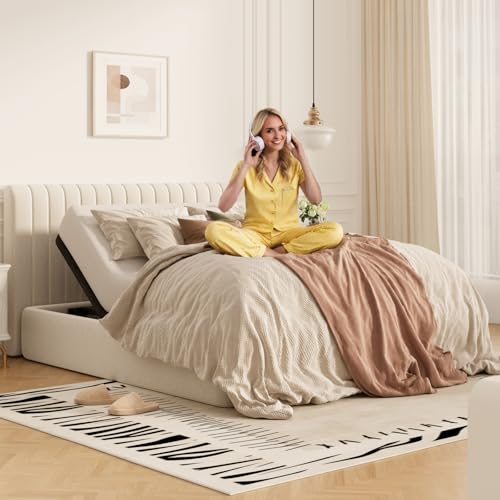
Beds for Adjustable Bed Frames
Everything you need to know before pairing a bed with an adjustable base — compatibility, frame construction, clearance, and setup considerations explained in plain language.
EXPLORE COMPATIBLE OPTIONSWhy this guide matters: An adjustable bed frame can transform comfort, but the wrong bed can block the mechanism, create noise, or void a warranty. This guide walks you through the bed types, frame features, and measurement checks that make an adjustable base work properly — so you can choose with confidence.
Understanding How Adjustable Bed Frames Work With Beds
An adjustable bed frame — often called an adjustable base — is a motorized platform that raises and lowers the head and foot sections. It is designed to sit inside a compatible bed or to be used on its own as a standalone platform. The critical point is that the base must have room to articulate without hitting the bed frame's rails, slats, or storage compartments.
Many shoppers assume any standard bed will work. In practice, the bed frame's interior dimensions, deck design, and clearance determine whether the adjustable base fits and moves freely. If you are still comparing bed frame categories, the broader bed frames buying guide provides useful context on materials and construction.
Bed Types That Work Best With Adjustable Bases
Not every bed style is compatible. The table below compares common bed types by how well they accommodate an adjustable base, along with the key considerations for each.
| Bed Type | Compatibility | Best For | Key Consideration |
|---|---|---|---|
| Platform beds with slats (open deck) | High | Most adjustable base owners | Slats must be spaced widely enough and removable if the base sits inside |
| Metal bed frames | High | Durable, open-frame setups | Confirm interior width and that crossbars do not block articulation |
| Upholstered bed frames | Moderate to high | Bedrooms where style matters | Check that the upholstered rails do not pinch the base or reduce clearance |
| Panel beds | Moderate | Traditional bedroom designs | Solid deck or tight rails can obstruct the adjustable mechanism |
| Storage beds with drawers | Low to moderate | Small rooms needing storage | Drawer boxes and fixed bases often leave no room for the base to move |
| Sleigh beds | Low to moderate | Classic bedroom aesthetics | Curved rails and footboards can restrict the foot section's travel |
| Canopy beds | Moderate | Statement bedrooms | Compatibility depends on the deck and rail design, not the canopy itself |
If you want a deeper dive into specific compatible models and frame styles, see the dedicated guide on bed frames that are compatible with adjustable beds. For shoppers comparing fit-focused options, the article on bed frames that fit adjustable beds covers measurement details in more depth.
Key Features to Look For in a Compatible Bed
When evaluating a bed for an adjustable base, focus on the structural details that affect fit and movement. These are the features that separate a smooth pairing from a frustrating one.
Open frame design
The bed should have an open interior rather than a solid platform deck. Slatted bases work well when the slats can be removed or are spaced to allow the adjustable base to sit inside. A solid deck prevents the base from being installed at all in most cases.
Adequate interior dimensions
Measure the interior width and length of the bed frame and compare them to the adjustable base's outer dimensions. The base should fit with a small amount of tolerance — not so tight that it binds, and not so loose that it shifts. Many adjustable bases are sized to drop into standard bed frames, but interior dimensions vary by manufacturer.
Clearance for articulation
The head and foot sections of an adjustable base rise and lower. The bed frame's rails, footboard, and any crossbars must not block that movement. Check the base manufacturer's clearance requirements and confirm the bed frame provides enough open space above the deck and around the perimeter.
Sturdy rail construction
An adjustable base adds weight and moving parts. The bed frame should have reinforced rails and solid joinery. Heavy-duty construction is especially important for larger sizes where the base and mattress carry more load.
No built-in storage conflicts
Storage beds with drawers or lift-up compartments usually leave no room for an adjustable base. If storage is a priority, consider a bed with separate under-bed storage that does not occupy the interior space where the base needs to sit.
Pre-purchase compatibility checklist
- Confirm the adjustable base's outer dimensions against the bed frame's interior dimensions
- Verify the bed frame has an open deck or removable slats
- Check clearance above the deck for the head and foot sections to rise
- Ensure no crossbars, drawers, or storage boxes obstruct the base's path
- Confirm the mattress is flexible and rated for adjustable bases
- Review the bed frame's weight capacity relative to the base plus mattress
- Check both manufacturers' warranty terms for compatibility requirements
Mattress and Bedding Considerations
The bed frame is only part of the equation. The mattress must flex with the adjustable base, and the bedding should stay in place as the base moves. A traditional innerspring mattress with a rigid border or a box spring is generally unsuitable.
Look for mattresses labeled as adjustable-base compatible — typically memory foam, latex, or flexible hybrid designs. These materials bend without cracking or sagging at the hinge points. Pairing the base with the right bedding also matters: fitted sheets with deep pockets and flexible mattress protectors reduce the chance of sheets popping off during articulation. For bedding that stays put, see the guide on bed sheets for adjustable beds.
If you are also evaluating mattress delivery formats, the bed-in-a-box comparison explains how compressed mattresses perform on adjustable bases.
Setup, Safety, and Placement Tips
Proper setup protects both the adjustable base and the bed frame. Follow the base manufacturer's installation instructions and keep these practical points in mind:
- Place the base on a level floor. An uneven floor can cause the mechanism to strain or bind.
- Leave room around the bed. The base needs space to articulate, and the bed frame should not be pushed tight against a wall on the moving side.
- Secure the mattress. Use a retainer bar or the base's mattress stop to prevent sliding as the head section rises.
- Route cables safely. Keep power cords away from moving parts and out of walkways.
- Test the full range of motion. Before regular use, raise and lower both sections through their complete range to confirm nothing obstructs movement.
If you need extra height or access support around the bed, related guides on bed risers for adjustable beds and bed surround for adjustable beds cover accessories that pair well with these setups.
Who Should Consider an Adjustable Bed Frame Setup
Adjustable bases are popular with people who want to elevate the head for reading, watching television, or breathing comfort, and with those who need to raise the legs for circulation support. They are also common in home care settings and for anyone managing back discomfort. If back support is a priority, the guide on beds for people with back pain offers additional context on matching sleep surfaces to comfort needs.
For households that need a coordinated bedroom setup, bedroom sets for adjustable beds explains how to align the bed, nightstands, and surrounding furniture with an adjustable base.
Common Mistakes to Avoid
- Buying a solid-deck platform bed. The adjustable base cannot be installed inside a solid deck.
- Reusing a box spring. Box springs flex and interfere with articulation; skip them entirely.
- Ignoring interior dimensions. A base that is too wide will not fit, and one that is too narrow will shift.
- Overlooking clearance. A footboard or crossbar that looks fine at rest can block the foot section when raised.
- Choosing a rigid mattress. A mattress that does not flex will crack or develop permanent hinge-point damage.
Frequently Asked Questions
Do adjustable bed frames require a special bed?
Not always. Many adjustable bases work inside standard bed frames, but the frame needs an open design, adequate clearance, and a compatible mattress. Platform beds with solid decks and storage beds with fixed bases often block the mechanism.
Can I use an adjustable base with a box spring?
No. A traditional box spring flexes and interferes with the articulation of an adjustable base. Use a flexible mattress designed for adjustable beds instead, and skip the box spring entirely.
What clearance does a bed frame need for an adjustable base?
Most adjustable bases need several inches of clearance beneath the deck and open space around the frame. Check the base manufacturer's clearance specification and measure your bed frame's interior dimensions before purchase.
Will an adjustable bed frame fit inside a standard queen bed?
Many queen adjustable bases are designed to drop into standard queen bed frames, but interior dimensions vary. Confirm both the base dimensions and the frame's interior width before ordering.
Final Thoughts
Choosing a bed for an adjustable bed frame comes down to three checks: an open frame design, correct interior dimensions, and enough clearance for the mechanism to move. Get those right, pair the base with a flexible mattress, and the setup will deliver the comfort and adjustability you are looking for. Use the compatibility checklist above as a quick reference during shopping, and explore the recommended options below to compare products that suit this category.