
Bed Risers for Adjustable Beds: Complete Guide
Learn how to safely raise your adjustable bed for easier transfers, more under-bed storage, and better ergonomics — with the right risers for your frame.
SEE TOP OPTIONSWhy this guide matters: An adjustable bed is a significant investment in your sleep health, but its factory height doesn't suit every room or every sleeper. Bed risers for adjustable beds let you fine-tune height without replacing the frame — as long as you choose the right type. This guide explains compatibility, safety limits, and which riser categories work best for motorized bases.
Quick Picks by Tier
These descriptors reflect market positioning, not numeric figures. Match the tier to your priorities: stability, height range, or storage capacity.
Best for Stability
Heavy-duty steel risers — professional-grade construction with reinforced corners, ideal for motorized bases that shift during articulation.
Best for Height Range
Stackable mid-tier risers — let you dial in 2, 3, or 5 inches without swapping hardware, a solid choice for shared bedrooms.
Best for Under-Bed Storage
Extra-tall high-end tier risers — lift the frame enough to clear storage bins, with wider bases to spread load across the floor.
Best for Hard Floors
Non-slip essential tier risers — rubberized bases that protect hardwood and resist sliding on tile or laminate.
What Are Bed Risers for Adjustable Beds?
Bed risers are support blocks placed under each leg or corner of a bed frame to increase overall height. On a standard fixed bed, they're straightforward. On an adjustable bed — a motorized base that articulates the head and foot sections — risers must handle two extra stresses: dynamic movement and concentrated load at the base joints.
Unlike a static frame, an adjustable base flexes throughout the night. That motion transfers lateral force to the risers, which is why general-purpose risers may wobble or crack over time. Purpose-built bed risers for adjustable beds are designed with wider footprints, interlocking tops, and materials rated for repeated load cycling.
Most adjustable bases rest on four to six contact points rather than traditional legs, so riser placement matters. Check your base's manual for the designated support locations — placing risers under a non-reinforced section can void the warranty or damage the frame.
Why Raise an Adjustable Bed?
Easier Transfers and Reduced Strain
A higher mattress surface means less bending at the hips and knees when getting in or out. This is particularly useful for sleepers recovering from surgery, living with arthritis, or caring for an aging parent. If mobility support is your primary concern, pair risers with bed rails for home care for a safer setup.
More Under-Bed Storage
Adjustable bases often sit low to the floor, leaving little clearance. Risers create room for luggage, seasonal bedding, or storage bins — a practical benefit in small bedrooms and studio apartments.
Better Ergonomic Alignment
Some sleepers find that a slightly elevated frame improves the angle of entry and exit, and complements the natural recline of an adjustable base when watching TV or reading in bed.
Accommodating Taller Sleepers and Taller Mattresses
Deep pillow-top mattresses sit higher on the base, and taller sleepers often prefer a raised profile. Risers let you correct the combined height without changing the mattress.
Compatibility: Which Risers Fit Adjustable Bases?
Not every riser works with a motorized base. Before you choose, verify three things: the base's contact-point type, the frame's weight rating, and the floor surface.
Contact Point Types
- Standard legs: Most adjustable bases use square or round legs with a defined diameter. Cup-style risers that cradle the leg are the most secure option.
- Flat platform feet: Some bases sit on wide flat feet rather than legs. These require platform-style risers with a broad, flat top and anti-slip pad.
- Recessed corner supports: A few high-end bases use recessed corner blocks. Look for risers with a raised lip that locks into the recess.
Weight Rating
Adjustable bases are heavier than standard frames, and the mattress adds more. Always choose risers rated well above your combined base-plus-mattress weight. Heavy-duty and commercial-grade risers are the safest bet for king and California king setups. If your household includes heavier sleepers, review our guide to beds for heavy people for related reinforcement tips.
Frame Compatibility
If you're still choosing a base, it helps to understand which frames pair well with motorized units. See our overview of bed frames that are compatible with adjustable beds and beds that accommodate adjustable bases before you buy risers.
Types of Bed Risers for Adjustable Beds
1. Cup-Style Risers (Essential to Mid-Tier)
A recessed cup holds the leg in place, preventing lateral slip as the base articulates. Best for bases with standard square or round legs. Choose models with reinforced walls rather than thin plastic shells.
2. Stackable Risers (Mid-Tier to High-End Tier)
Interlocking modules stack to achieve multiple heights. Useful if you want to experiment with 2-inch increments. Ensure each module locks securely — a loose stack is a tipping hazard on a moving base.
3. Platform Risers (Mid-Range to Premium)
Flat, wide tops designed for bases with platform feet. The broad surface distributes load and reduces pressure points on flooring. Look for rubberized undersides on hard floors.
4. Heavy-Duty Steel Risers (Professional-Grade)
Fabricated from high-grade steel with welded or bolted construction. These are the most durable option for large adjustable bases and are often used in home-care settings. They typically offer the highest weight ratings and the most stable footprint.
5. Adjustable-Height Risers (High-End Tier)
Some premium models allow continuous height adjustment via a threaded mechanism or telescoping column. These are the most flexible but require careful setup to ensure all four corners are level.
Riser Type Comparison
| Tier | Best For | Typical Material | Stability on Moving Base |
|---|---|---|---|
| Essential tier | Light use, hard floors, basic height boost | Reinforced polymer | Moderate |
| Mid-range | Stackable height tuning, shared bedrooms | Polymer with rubber base | Good |
| High-end tier | Platform feet, large bases, storage clearance | Composite or steel-reinforced | Very good |
| Professional-grade | King bases, home-care use, maximum load | High-grade steel | Excellent |
Safety Rules for Raising an Adjustable Bed
- Never exceed the riser's weight rating. Add the base weight, mattress weight, and occupant weight, then leave a safety margin.
- Keep all four corners level. A single mismatched riser creates a rocking motion that stresses the motor and frame joints.
- Check the base manufacturer's guidance first. Some warranties exclude damage caused by third-party risers. A quick call to customer service can save you a claim later.
- Use anti-slip pads. On hardwood, tile, or laminate, rubberized bases are essential. On carpet, a wider footprint prevents sinking.
- Re-tighten after the first week. Bolted or stacked risers settle under load. Inspect them again after a month, then seasonally.
- Reconsider if you have young children or pets. A raised moving base is a climbing hazard. If the bed is in a family room, skip risers or choose a low-profile option.
If your goal is simply to make an existing high bed easier to climb, a dedicated step solution may be safer than risers on an already-tall frame. See our guide to bed steps for high beds for adults for alternatives.
How to Install Risers on an Adjustable Base
- Clear the bed. Remove the mattress, bedding, and anything under the frame.
- Unplug the base. Disconnect power before lifting to avoid straining the motor harness.
- Recruit a helper. Adjustable bases are heavy and awkward. Two people should lift each corner.
- Place risers at designated support points. Refer to the base manual — not every corner may be a load-bearing point.
- Lower gently and check level. Use a spirit level across the frame. Adjust any riser that isn't seated flush.
- Test articulation. Run the head and foot sections through their full range while watching for movement or lift at the risers.
- Reinstall the mattress and reconnect power. Do a final stability check before use.
If your base sits inside a decorative frame, review our guide to bed surround for adjustable beds to make sure added height doesn't interfere with the surround panels.
Matching Risers to Your Bedroom Setup
Bedding and Sheets
Raising the bed changes the drop length needed for sheets and skirts. Deep-pocket sheets and longer skirts keep the look clean. Explore bed sheets for adjustable beds for fitted options that stay put during articulation.
Bedroom Furniture
A taller bed shifts the visual balance of the room. Nightstands should sit at or slightly below mattress height for easy reach. Browse bedroom bedside cabinets and bedroom furniture to coordinate proportions.
Small Rooms and Studios
Risers are especially useful in compact spaces where under-bed storage replaces a dresser. See beds with storage for small rooms and beds for studio apartments for layout ideas that pair well with raised frames.
Complete Bedroom Sets
If you prefer a coordinated look, a bedroom set for adjustable beds can ensure the headboard, frame, and risers work together without custom fitting.
Related Guides on SleepWisePicks
Frequently Asked Questions
Can you put risers under an adjustable bed?
Yes, but only with risers rated for the dynamic load of a motorized base. Standard risers designed for static frames may crack or slip as the base articulates. Check the base manual for approved support points and weight limits before installing.
How high can I safely raise an adjustable bed?
Most manufacturers recommend keeping added height modest — typically a few inches — to preserve stability. Taller lifts increase tipping risk, especially on carpet or when the head section is raised. Heavy-duty steel risers and platform-style bases improve safety at greater heights.
Will risers void my adjustable bed warranty?
It depends on the manufacturer. Some warranties exclude damage from third-party accessories. Review your warranty terms and contact customer service before installing risers, particularly on premium or luxury bases.
Do risers work on carpet?
Yes, but choose risers with a wide footprint to prevent sinking into pile. Avoid thin-legged designs that concentrate load. On thick carpet, consider platform-style risers with a broad base plate.
What's the difference between bed risers for adjustable beds and standard risers?
Adjustable-bed risers typically have wider bases, interlocking tops, and higher weight ratings to handle articulation forces. Standard risers are designed for static frames and may not stay seated when the base moves.
Can I use risers on only one end of the bed?
It's not recommended. Raising only the head or foot end creates an uneven load and can damage the motor or frame over time. If you need an incline, use the adjustable base's built-in articulation instead.
How do I stop risers from sliding on hardwood floors?
Choose risers with rubberized or non-slip bases. You can also place a rubber furniture pad between the riser and the floor. Avoid felt pads, which slide easily under a moving base.
Do I need risers if my adjustable bed already sits high?
Not necessarily. If transfers are comfortable and under-bed clearance meets your storage needs, risers add risk without benefit. Assess your actual ergonomic needs before adding height.
Recommended Bed Risers for Adjustable Beds
⚠️ AFFILIATE DISCLOSURE: This website contains affiliate links. As an Amazon Associate, we earn from qualifying purchases. If you make a purchase through these links, we may receive a small commission at no additional cost to you. Read our full affiliate policy.

Dunjug 8 Pack Heavy Duty Bed Risers, Adjustable Bed Lifters with Elevation Heights of 4, 8 & 12 Inches, Stackable Furniture Risers Blocks for College Dorms, Table, Couch and Desk Legs Lifting, Black
Check price on Amazon
Bed Risers 8 Pack Heavy Duty Non Slip - 3, 5, 8 Inch Furniture Lift, Couch | Recessed cup grips each leg, 4 small and 4 large in black, holds 1,300 lbs total under a desk, table, sofa or bookshelf
Check price on Amazon
EclatBain Adjustable Bed Risers 3&4.3&5.3 Inch, 4000 lbs, 4 Pack Black | Square Heavy-Duty Furniture Risers, Lift to 1.5, 3, 4.3, 5.3 Inch, Support up to 4000 lbs, for Desk, Sofa, Chair Legs
Check price on Amazon
Yireehome Adjustable 8-12 inch Bed Legs Metal Replacement Heavy Duty Leg M8 M10 Thread 4Pcs Support Leg for Adjustable Bed Frame, Sofa, Cupboard, Desk
Check price on Amazon
Home It Adjustable Bed Risers - Elevation in 3, 5 or 8 Inch - 4 Pack, Black | Heavy Duty Furniture Risers Supports 1,300 lbs - Stable Anti-slip for Under-Bed Storage, College Dorm, Sofa Table and Couch
Check price on Amazon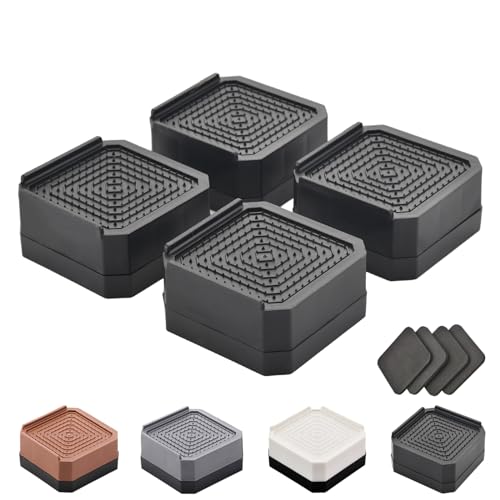
EclatBain Adjustable Bed Risers 1.5 Inch, 4000 lbs, 4 Pack Black | Square Heavy-Duty Furniture Risers, Lift to 1.5, 3, 4.3 Inch, Support up to 4000 lbs, for Desk, Sofa, Chair Legs
Check price on AmazonDisclaimer
The information provided on SleepWisePicks is for educational and informational purposes only. We are not medical professionals, and our content should not replace professional medical advice, diagnosis, or treatment. Always consult with your physician or sleep specialist regarding sleep disorders or chronic pain. Some content may use AI assistance. Always check product safety standards and certifications before purchasing. If you do not agree, please do not use this website. Read the full disclaimer.