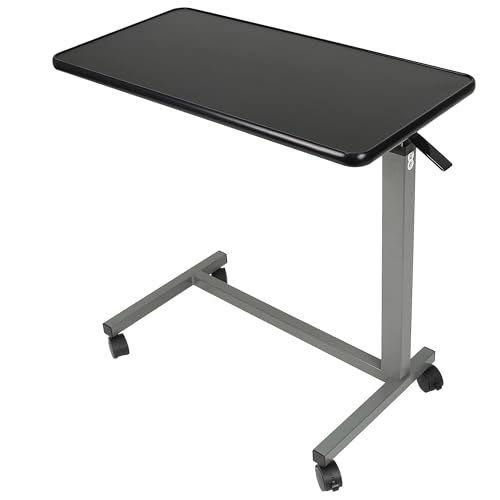
Adjustable Height Bedside Table: Your Complete Buying Guide
Discover how a height-adjustable nightstand can transform your bedroom ergonomics, support your bedtime routine, and adapt to your changing needs.
START READINGWhy an Adjustable Height Bedside Table Matters
A bedside table is one of the most-used pieces of furniture in any bedroom, yet it is also one of the most overlooked. Most people choose a nightstand based on appearance alone, only to discover later that it sits too low for comfortable reach, clashes with the height of their mattress, or forces them to stretch awkwardly in the dark. An adjustable height bedside table solves these problems by letting you fine-tune the surface to match your bed, your body, and your daily habits.
The concept is simple: instead of a fixed leg height, the table uses a mechanism that raises or lowers the top surface within a defined range. This flexibility is especially valuable in households where multiple people share a bed, where the mattress height changes over time, or where the bedside table doubles as a workspace, a reading station, or a support surface for medical equipment.
Beyond convenience, the right height supports better posture and reduces strain on your shoulders, neck, and lower back when you reach for a glass of water, a book, or your phone. For anyone who spends time sitting up in bed to read, work, or eat, the ergonomic benefit alone makes an adjustable model a worthwhile investment in long-term comfort.
Quick tip: The ideal bedside table surface sits roughly level with your mattress top or slightly above it. An adjustable model lets you hit that sweet spot precisely, even after you change your mattress or add a topper.
Adjustment Mechanisms Explained
Not all adjustable height bedside tables work the same way. The mechanism determines how easy the table is to adjust, how stable it feels, and how well it will hold up over years of daily use. Here are the most common types you will encounter.
Manual Pin-and-Hole Systems
These tables use a series of pre-drilled holes in the legs or support posts, with pins or bolts that lock the surface at fixed intervals. They are simple, robust, and rarely fail, but they require you to lift the top and reposition the pins each time you want a change. Entry-level and mid-range models often use this approach because it is reliable and straightforward to manufacture.
Twist-Lock and Compression Mechanisms
Common on smaller side tables and overbed designs, a twist-lock collar loosens to allow the post to slide, then tightens to lock the height in place. These are quick to adjust and offer a continuous range rather than fixed steps. The quality of the collar and the internal grip material matters a great deal; premium models use reinforced clamps that hold firmly without wobble.
Gas-Lift and Spring-Assisted Columns
Gas-lift columns let you raise or lower the table with minimal effort, often using a lever or foot pedal. They feel smooth and premium, and they are popular on high-end tier and luxury models. The trade-off is complexity: the gas cylinder is a wear component, so choose a table with a reputable mechanism and a solid warranty.
Crank and Gear Systems
A hand crank drives a geared column that raises or lowers the surface smoothly. This design is common on larger bedside tables and overbed tables because it can support more weight without straining the user. The crank action is slower than a gas lift but extremely reliable and easy to control precisely.
Motorized and Remote-Controlled Columns
The most advanced option, motorized columns let you adjust height with a button, remote, or even a smartphone app. They are ideal for people with limited mobility or for beds that are themselves adjustable. Motorized tables sit at the top-tier and luxury end of the market and typically include memory presets, anti-collision sensors, and quiet operation.
Key Features to Compare Before You Buy
Once you understand the mechanisms, the next step is to compare the features that affect daily usability. Use the checklist below to evaluate any adjustable height bedside table you are considering.
Height Range
Check the minimum and maximum height. A useful range should overlap with your mattress height and extend a little above and below it. If you have an adjustable bed that raises the head section, look for a table with a generous upper limit so the surface stays reachable when the bed is inclined.
Surface Area and Shape
A compact square or round top works well in small bedrooms, while a rectangular surface gives you room for a lamp, a book, and a glass of water. If you plan to use the table as a mini workspace, prioritize depth as well as width. Models with a swivel top add flexibility in tight corners.
Storage Options
Drawers, open shelves, and hidden compartments all add utility. A single drawer is enough for essentials like glasses, a charger, or medication, while a shelf keeps frequently used items within easy reach. If you prefer a clean look, a table without drawers keeps the silhouette minimal and the adjustment mechanism visible and easy to access.
Stability and Weight Capacity
An adjustable table is only as good as its base. Look for a wide, weighted base or a C-shaped foot that slides under the bed for extra stability. Check the stated weight capacity and leave a margin for safety, especially if you plan to rest a laptop or a heavy lamp on the surface.
Integrated Power and Charging
Many modern bedside tables include built-in outlets, USB ports, or wireless charging pads. These features reduce cable clutter and keep your devices topped up overnight. If you rely on a CPAP machine, a tablet, or multiple gadgets, a table with a charging station is a practical upgrade.
Mobility and Locking Casters
If you need to move the table between the bed and a chair, locking casters make it easy to reposition and secure. This is especially useful for overbed tables and for bedrooms shared by people with different routines.
Quality Tiers at a Glance
To help you navigate the market without getting lost in specifications, we group adjustable height bedside tables into four broad quality tiers. Each tier reflects the materials, mechanism sophistication, and overall build quality rather than any specific figure.
| Tier | Typical Mechanism | Best For | What to Expect |
|---|---|---|---|
| Entry-Level | Manual pin-and-hole or basic twist-lock | Occasional use, guest rooms, simple setups | Functional adjustment, basic materials, straightforward assembly |
| Mid-Range | Refined twist-lock, crank, or light gas-lift | Daily use, reading in bed, shared bedrooms | Smoother adjustment, sturdier base, more storage and finish options |
| Premium | Gas-lift or geared crank with reinforced columns | Ergonomic priority, adjustable beds, long-term use | Solid build, precise height control, integrated charging, refined finishes |
| Luxury | Motorized or remote-controlled columns | Limited mobility, smart bedrooms, flagship setups | Effortless adjustment, memory presets, premium materials, quiet operation |
As a general rule, mid-range models offer a noticeable step up in smoothness and stability compared with entry-level tables, while premium and luxury tiers focus on precision, convenience, and long-term durability. Choose the tier that matches how often you will adjust the table and how much weight it will carry.
Matching Your Adjustable Table to Your Sleep Setup
The best adjustable height bedside table depends on the bed it will sit beside. Here are the most common scenarios and what to prioritize in each.
Standard Bed with a Fixed Mattress Height
If your bed stays at a constant height, a manual pin-and-hole or twist-lock table is perfectly adequate. Focus on matching the surface to your mattress top and choose a model with a footprint that fits your available floor space. A table with a drawer or shelf adds convenience without overcomplicating the setup.
Adjustable Bed with a Raising Head Section
When the head of the bed inclines, a fixed-height nightstand quickly becomes unreachable. Look for a table with a high maximum height and a base that can slide close to the mattress. A swivel top or a C-shaped foot helps you keep essentials within reach as the bed moves. For more specialized options, explore our guide to a bedside table for an adjustable bed.
Small Bedrooms and Tight Corners
Space is often the limiting factor. A compact adjustable table with a round or narrow top and a single post base fits into tight gaps. If you need to maximize every inch, our roundup of bedside tables for small bedrooms offers additional layout ideas.
Shared Beds and Mixed Routines
When two people share a bed but have different heights or habits, an adjustable table on each side lets each person set their own comfortable surface. If you prefer a matched pair, consider a bedside table set of 2 with independent height adjustment.
Reading, Working, and Eating in Bed
For activities that require a stable, elevated surface, an overbed-style table with a crank or gas-lift column is ideal. It can be raised above the mattress and positioned over your lap, then lowered and pushed aside when not in use. If you also need storage, look for models that combine adjustment with drawers or shelves.
Care and Medical Support
For hospital-style beds or home care setups, an adjustable table that can be positioned over the bed and locked securely is essential. Our guide to a bedside table for a hospital bed covers the stability and safety features to prioritize.
Materials and Build Quality
The materials determine how the table looks, how much it weighs, and how well it withstands daily use. Here is what to consider for each major component.
Top Surface
Solid wood and wood veneer offer warmth and durability, while engineered wood with a laminate finish is practical and easy to clean. Glass tops look modern and are simple to wipe down, but they show fingerprints and require careful handling. Metal tops, often powder-coated, are rugged and suited to utility-focused setups.
Frame and Column
The column and frame carry the load, so look for high-grade steel or solid hardwood construction. A reinforced collar, a tight-tolerance telescoping section, and a weighted base all contribute to stability. Rust-proof finishes are a plus in humid climates or if the table will sit near a window.
Base and Feet
A wide base spreads the load and resists tipping. Adjustable leveling feet keep the table steady on uneven floors, while locking casters add mobility. Felt pads protect hard floors and reduce noise when you reposition the table.
Hardware and Fittings
Drawer slides, hinges, and locking pins should feel solid and operate smoothly. Metal hardware outlasts plastic in high-use areas, and a well-fitted drawer that closes flush is a sign of careful manufacturing. Check that replacement parts are available if the mechanism is complex.
Safety and Stability Tips
An adjustable table introduces moving parts, so a few practical precautions keep it safe and reliable.
- Respect the weight limit. Distribute weight evenly across the surface and avoid leaning heavily on one edge.
- Lock the height before use. Confirm that pins, collars, or levers are fully engaged before placing items on the table.
- Keep the base clear. Do not trap cables, bedding, or clothing under the base or column, as this can affect stability.
- Check the mechanism regularly. Tighten bolts, inspect gas-lift cylinders, and lubricate moving parts according to the manufacturer's instructions.
- Anchor tall or top-heavy models. If the table is tall and narrow, use an anti-tip strap or wall anchor for extra security.
- Keep children in mind. Avoid leaving the table at an unstable height, and choose models with rounded edges in family bedrooms.
Remember: A stable base and a properly locked mechanism are the two most important safety factors. If the table wobbles at any height, stop using it until you can tighten or repair the adjustment system.
Frequently Asked Questions
Ready to Choose Your Adjustable Bedside Table?
Compare top-rated adjustable height nightstands and find the one that fits your bed, your routine, and your room.
View Recommended Options