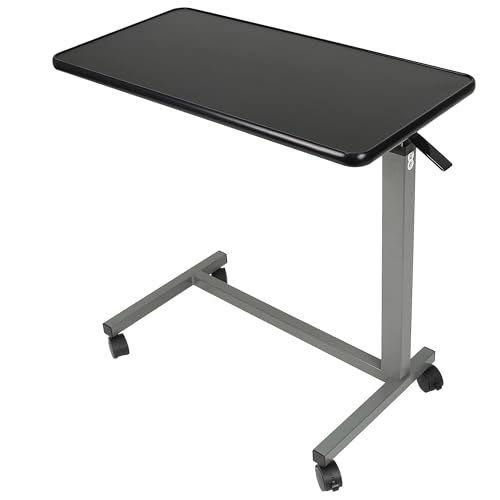
Bedside Table for Hospital Bed: The Complete Buyer's Guide
A hospital bed changes how a room works. Heights shift, rails move, and everyday items need to stay within safe reach. The right bedside table bridges that gap, turning a clinical setup into a comfortable, functional recovery space. This guide walks you through every feature that matters before you choose.
Explore Recommended OptionsWhy a Standard Nightstand Falls Short
A regular nightstand is built for a fixed-height bed. Hospital beds are different. The sleeping surface rises and lowers for care, meals, and transfers, and side rails often block the space where a nightstand would normally sit. A table that cannot adapt to those changes forces the user to stretch, twist, or call for help, which defeats the purpose of bedside independence.
Height is the first mismatch. A table set for a low bed becomes unusable when the bed is raised, and a table set for a raised bed becomes a tipping risk when the bed lowers. Stability is the second issue. Hospital bed frames and rails create unusual contact points, and a lightweight table can slide or topple when bumped. A purpose-built unit addresses both problems with an adjustable column and a base designed to sit safely beside or over the frame. If you are also upgrading the sleeping surface itself, our best mattresses guide covers the comfort side of the equation.
Key Features to Look For
The features below separate a table that works in a hospital bed setup from one that merely looks the part. Prioritize them in this order: height range, base stability, top surface, then storage.
Adjustable Height Range
The table's column should span the full range of the bed's travel. A spring-loaded or crank-adjusted column lets you reposition the surface in seconds, keeping items within reach whether the bed is flat or raised for care.
Stable Base Design
A wide, low-profile base or a C-shaped leg that slides under the bed frame prevents tipping. Look for non-marking casters or rubber feet that grip the floor without scratching it.
Swivel or Tilt Top
A swiveling or tilting top lets the user pull the surface toward them for reading, meals, or medication without moving the whole table. This is especially valuable for users with limited mobility.
Edge Guards and Rails
A raised lip or low rail around the top surface stops cups, phones, and pill bottles from sliding off when the bed is adjusted or the table is bumped.
Weight Capacity
Hospital setups often hold more than a book and a glass. Check that the table supports the weight of a meal tray, medical devices, and personal items without wobbling.
Easy-Clean Surface
A smooth, sealed top wipes clean quickly, which matters in recovery and care settings where spills and sanitizing are routine.
Types of Bedside Tables for Hospital Beds
There is no single design that fits every room. The three main types below cover most hospital bed setups, and each has a clear best-fit scenario.
1. Overbed Tables
An overbed table straddles the bed on a C-shaped base, placing the surface directly in front of the user. This is the classic choice for meals, reading, and laptop use, and it works well when the user spends long periods in bed. The trade-off is floor space at the side of the bed, since the base needs clearance to slide under the frame. A swivel-top version adds flexibility for getting in and out of bed. If you want a stationary companion piece beside the bed as well, a bedside table with drawers can hold personal items that do not need to move.
2. Adjustable-Height Nightstands
These look like a conventional nightstand but include a height-adjustable column or a lift mechanism. They suit users who want a more residential look and who mainly need a stable surface at the side of the bed rather than over it. Because they sit beside the frame rather than over it, they pair well with beds that have side rails. A unit with a pull-out shelf adds a small work surface without taking up permanent floor space. For setups that need a precise height match, compare options in our adjustable-height bedside table collection.
3. Swivel-Top and Multi-Position Tables
A swivel-top table combines a fixed base with a rotating surface, letting the user bring the top toward them and push it away without moving the base. This is the most forgiving design for users with limited reach and for rooms where the bed position changes often. Multi-position models may also tilt, which helps with reading and with holding a tablet or book at a comfortable angle. If the bed itself is adjustable, our guide to a bedside table for an adjustable bed covers the matching considerations in more detail.
Comparing Quality Tiers
Bedside tables for hospital beds range from basic utility units to heavy-duty care-grade models. The table below uses neutral tier descriptors so you can match the build quality to your situation without relying on transient market figures.
| Tier | Best For | Typical Build |
|---|---|---|
| Entry-Level | Occasional use, short recovery periods, guest rooms | Lightweight frame, basic height adjustment, simple top surface |
| Mid-Range | Daily use, longer recovery, home care setups | Reinforced column, swivel or tilt top, edge guards, sturdier base |
| Premium | Long-term care, heavy daily use, multi-user households | Heavy-duty frame, smooth crank or gas-lift adjustment, sealed easy-clean top, locking casters |
| Commercial-Grade | Care facilities, clinical environments, high-turnover use | Steel construction, high weight capacity, sanitizable surfaces, precision height control |
A mid-range model usually offers a noticeably smoother adjustment mechanism and a more stable base than an entry-level unit, which matters when the table is used every day. Premium and commercial-grade tiers add durability and load capacity for situations where the table is moved constantly or shared among users.
How to Choose the Right Table
Work through the checklist below before you commit. Each item maps to a real-world problem that shows up after the table is in the room.
- Measure the bed's height range. Record the lowest and highest positions of the sleeping surface and confirm the table's adjustment range covers both with room to spare.
- Check the base clearance. If you want an overbed design, measure the gap under the bed frame and the floor to confirm the base will slide in without scraping.
- Confirm the side-rail situation. Rails can block a nightstand's top drawer or the path of an overbed table. Decide whether the table sits over the bed or beside it based on rail position.
- Match storage to the user. A user who manages medication daily needs a drawer or compartment within easy reach. A user who mainly needs a surface for meals can skip storage and keep the top clear.
- Test the movement mechanism. Spring-loaded and gas-lift columns adjust with one hand, while crank mechanisms are slower but more controlled. Choose based on who will operate the table.
- Verify stability under load. A table that wobbles when a meal tray is placed on it is a spill waiting to happen. Look for a wide base and a reinforced column.
If the user also needs a place for personal items that stays put, pair the adjustable table with a fixed storage piece such as a bedside cabinet with shelf. The combination covers both the moving surface and the stationary storage that a hospital bed setup usually needs.
Safety Considerations
Safety is not a footnote in this category. A table that tips or rolls unexpectedly can cause injury, especially for a user with limited mobility. Keep these points in mind:
Locking casters are essential on any table that moves. A wheel that rolls while the user leans on the surface turns a stable support into a fall risk. Check that the casters lock firmly and that the locking mechanism is easy to engage with a foot. Non-marking casters protect flooring, and rubber feet are a good alternative for tables that stay in one place.
Weight distribution matters too. A top-heavy table with a small base is unstable even if it holds the rated load. Look for a base that is wider than the top surface, and avoid stacking heavy items on one edge. Edge guards reduce the chance of items sliding off during adjustment, and a smooth, sealed top makes spills easy to clean before they become a slip hazard.
Frequently Asked Questions
What is a bedside table for a hospital bed?
A bedside table for a hospital bed is a specialized surface designed to sit beside or over a hospital bed. It provides a stable place for personal items, meals, medication, and medical devices while accommodating the height and adjustability of the bed frame.
Does a hospital bedside table need to be height adjustable?
Yes. Height adjustability is one of the most important features because hospital beds raise and lower. An adjustable table keeps items within safe, comfortable reach regardless of the bed's position, which supports independence and reduces strain.
How do I choose the right bedside table for a hospital bed?
Consider the table's height range, base stability, swivel or tilt capability, storage needs, weight capacity, and whether it must fit over the bed or beside it. Match the table to the bed's height range and the user's mobility level, and confirm that the base clears the frame and rails.
Can I use a regular nightstand with a hospital bed?
A regular nightstand can work if the bed stays at a fixed height and the user has good reach. In most hospital bed setups, however, the bed height changes and side rails interfere, so a purpose-built adjustable table is safer and more practical.
What is the difference between an overbed table and a bedside table?
An overbed table straddles the bed and places the surface directly in front of the user, which is ideal for meals and reading. A bedside table sits beside the frame and works best for items the user wants to keep within arm's reach at the side of the bed. Many setups benefit from having both.
Ready to Compare Your Options?
Browse recommended bedside tables for hospital beds below. Each listing includes the features covered in this guide so you can match the tier and design to your room and mobility needs.
View Recommended Tables