Bedside Table for Adjustable Bed: Your Complete Guide
Discover how to choose the right bedside table for your adjustable bed — matching height, mobility, storage, and smart features to your sleep setup.
Adjustable beds have transformed how we rest, read, and recover. But once the bed articulates, a standard nightstand often becomes awkward — items slide, reach becomes strained, and the table may not align with the raised mattress surface. This guide explains exactly what to look for in a bedside table for adjustable bed setups, so every item remains comfortably within reach whether you are flat, reclined, or sitting upright.
Why an Adjustable Bed Needs a Different Bedside Table
Traditional nightstands are designed around a fixed mattress height. When an adjustable bed raises the head section, the mattress surface moves upward and forward, often leaving a standard table too low and too far back. The result is a nightly stretch that disrupts relaxation. A purpose-chosen bedside table for adjustable bed solves this by keeping essentials — glasses, medication, a book, or a remote — at the correct ergonomic level in every position.
Beyond height, adjustable beds often come with remote controls, charging cables, and accessories that need a dedicated surface. A well-matched table gives you a stable platform without clutter spilling onto the mattress. If your bed frame is still being finalized, our beds buying guide covers frame compatibility so the table and bed work together from day one.
Key Features to Prioritize
Adjustable Height
The single most important feature. Choose a table whose surface can rise to match the mattress when the head section is elevated, then lower for flat sleeping positions.
Swivel or Articulating Top
A swivel-top model lets you pull the surface toward you without moving the entire table — ideal when the bed is reclined and reaching sideways is uncomfortable.
Locking Casters
Wheels make it easy to reposition the table as the bed articulates, while locking mechanisms keep it stable during use. Look for smooth-rolling, floor-friendly casters.
Built-in Charging
Adjustable bed remotes, phones, and tablets all need power. A table with USB ports or a charging station reduces cable clutter and keeps devices topped up overnight.
Storage & Drawers
A drawer or shelf keeps medication, reading glasses, and small essentials organized. Consider a model with a locking drawer if privacy or child safety matters.
Sturdy Build
Lamps, books, and electronics add weight. Choose solid construction — high-grade steel or reinforced wood — so the table stays stable even when bumped.
Types of Bedside Tables for Adjustable Beds
Not every table suits every bedroom layout. Below are the main categories, along with the situations where each shines brightest.
1. Height-Adjustable Bedside Tables
These models use a manual crank, gas lift, or electric mechanism to raise and lower the tabletop. They are the most direct answer for adjustable bed owners because the surface can be tuned to the bed's current position. Our detailed guide on bedside tables with adjustable height explains the mechanisms and what to check before buying.
2. Overbed Tables
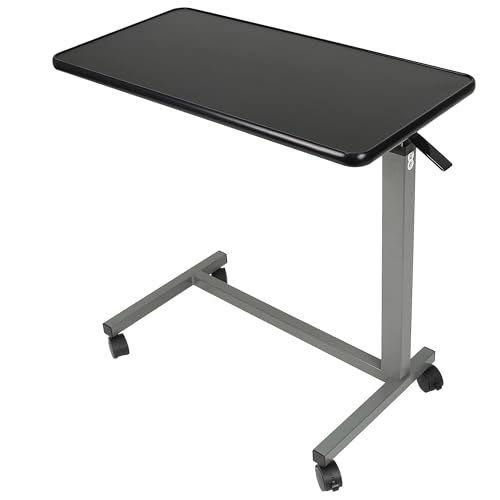
An overbed table extends a flat surface across the mattress, making it easy to eat, read, or work while reclined. Many overbed designs include adjustable height and a tilting top. They are especially popular for people recovering from surgery or managing limited mobility — see our bedside table for hospital bed guide for medical-grade considerations.
3. Swivel-Top Nightstands
A swivel top rotates toward you, so you can access items without leaning. This is a low-effort upgrade that pairs well with adjustable beds, especially in compact rooms. Browse bedside tables with swivel tops for models that combine rotation with drawer storage.
4. Mobile Tables with Casters
Wheels let you reposition the table as the bed moves. Locking casters keep it fixed during use. This category overlaps with overbed and height-adjustable tables, so check the wheel quality and whether the casters lock.
5. Storage-Focused Nightstands
If you prefer a traditional look but need more capacity, storage-heavy models with drawers and shelves work well when the height is right. Explore bedside tables with a drawer and shelf or bedside tables with lots of storage for options that keep essentials tidy.
Feature Comparison by Tier
To help you weigh options without getting lost in specifications, the table below groups common configurations by market tier. Use it as a starting point, then narrow down based on your room and routine.
| Configuration | Tier | Best For | Key Trait |
|---|---|---|---|
| Basic fixed-height nightstand | Essential Tier | Flat-bed use, simple bedrooms | Straightforward storage, no adjustability |
| Height-adjustable table with casters | Balanced Tier | Daily adjustable bed users | Matches mattress height, easy repositioning |
| Swivel-top nightstand with USB charging | Balanced Tier | Tech-heavy bedrooms, compact rooms | Rotating access plus device charging |
| Overbed table with tilt and height control | Premium Tier | Recovery, reading, working in bed | Crosses the mattress, highly versatile |
| Electric height-adjustable nightstand | Premium Tier | Frequent position changes | Push-button height control, refined design |
| Solid-wood storage nightstand with adjustable shelf | Luxury Tier | Design-focused bedrooms with adjustable beds | Premium materials, integrated organization |
How to Measure for the Right Fit
Getting the height right is the difference between a table that works and one that frustrates. Follow these steps:
- Measure the mattress surface height when the bed is flat and when the head section is raised. Note both figures.
- Choose a table height that falls between those two figures, or one that can be adjusted to cover the range.
- Check the gap between the bed frame and the wall. A table with a slim profile or casters fits better in tight spaces.
- Confirm the reach distance from your sleeping position to the tabletop. A swivel top or overbed design reduces the need to stretch.
- Verify floor clearance if the table has wheels, and make sure the casters roll smoothly on your flooring.
For small bedrooms, our guide to bedside tables for small bedrooms covers narrow profiles and wall-mounted alternatives that pair well with adjustable beds.
Power, Charging, and Cable Management
Adjustable beds rely on powered remotes, and most sleepers keep a phone or tablet nearby. A table with integrated charging keeps cables off the floor and reduces the risk of tripping in the dark. Options include:
- Bedside tables with a built-in charger for phones and wearables.
- Models with both outlets and USB ports for lamps and devices.
- Wireless charging stations for cable-free nightstands.
- Power outlet nightstands when you need to plug in a CPAP machine or bed accessory.
If your adjustable bed remote uses a dedicated charging cradle, check that the tabletop has enough flat space and a nearby outlet. A pull-out shelf can add temporary surface area when you need it.
Pairing Your Table with Bedside Lighting
A bedside table is only as useful as the lighting above it. When the bed articulates, a fixed wall light may no longer illuminate your book. Consider a bedside reading light with an adjustable arm, or a bedside lamp with a focused beam. Wall-mounted options such as wall-mounted reading lights free up tabletop space and stay aligned with your reading position even as the bed rises.
For tech-friendly setups, a bedside table lamp with a USB port combines illumination and charging in one footprint — a practical choice for adjustable bed owners who want fewer cables.
Style, Materials, and Bedroom Harmony
Function comes first, but the table should also suit your bedroom's design. Wood finishes warm up the room, metal frames suit modern interiors, and upholstered or painted options can match a specific palette. If you are building a cohesive look, explore bedside cabinets and chests of drawers for larger storage, or bedside table dressers when you need a compact dresser-and-nightstand hybrid.
For a bolder statement, a black and gold bedside table or a gold bedside table adds contrast without compromising functionality. Set-of-two options such as bedside tables set of 2 keep both sides of the bed coordinated — useful in a primary bedroom with a shared adjustable bed.
Safety and Accessibility Considerations
Adjustable beds are often used by people with limited mobility or those recovering from surgery, so safety details matter. Look for rounded corners, stable bases that resist tipping, and locking casters. If medication is stored nearby, a bedside table with a locking drawer adds security. For sleepers who need extra support getting in and out of bed, a bedside sleeper or bedside sleeper that attaches to the bed is a separate but related accessory worth reviewing.
Keep the tabletop free of clutter so items are easy to locate in low light, and route charging cables behind the table rather than across the floor. These small habits make a meaningful difference in nightly safety.
Ready to Complete Your Adjustable Bed Setup?
Browse our curated selection of bedside tables and accessories designed to work with adjustable beds. Compare features, check availability, and find the configuration that fits your bedroom.
Explore Recommended OptionsFrequently Asked Questions
Related Guides to Explore
If you are still refining your bedroom setup, these related guides offer practical next steps:
- Bedside table buying guide — a broad overview of styles and functions.
- Bedside tables with storage — keep essentials organized and out of sight.
- Bedside tables without drawers — minimal profiles for compact spaces.
- Bedside tables with a charging station — power up devices overnight.
- Bedside tables with drawers, set of 2 — coordinate both sides of the bed.
- Bedside tables with shelves above — vertical storage for small rooms.
- Bedside tables with wicker drawers — a relaxed, textured look.
- Bedside cabinet shelves — combine cabinet storage with open display.
For broader bedroom planning, the bedroom decor section and the sleep health library cover everything from room layout to nighttime routines that support deeper rest.